Inflation in the Czech Republic is set to pick up over the next few quarters and could approach 4% early next year, as regulated prices swing from a drag on consumer prices to a key source of pressure.
Czech inflation seen near 4% early next year
Long-term Inflation Expectations
That matters because it changes the inflation story for households, businesses and policymakers at a time when price gains had only just returned to the upper half of the central bank’s tolerance band. The shift also suggests that today’s brief disinflation is unlikely to last, with regulated energy and utility costs poised to keep inflation above target for much of 2027.
Sentiment Indicators
The outlook shows annual inflation rising from 1.7% in July to 2.5% in September, with the average for the third quarter at 2%, matching the second quarter. For the rest of this year, inflation is expected to remain near 3% by year-end, helped by still-elevated core inflation and a smaller fading benefit from falling food, drink and tobacco prices.
The biggest inflection point comes at the start of 2027, when inflation is forecast to accelerate close to 4% largely because regulated prices stop suppressing the index. Those prices have been negative year-on-year since early this year after the state fully took over the POZE fee, but that effect will drop out of the comparison and electricity, gas and heat are also expected to get more expensive amid conflict in the Middle East.
On average, regulated prices are projected to rise 5.6% next year. Even after the jump moderates, overall inflation is expected to remain above 3% for most of 2027 before easing back toward the 2% target only in early 2028, helped by tight monetary policy.
The broader price backdrop is still not benign. Foreign cost pressures remained strong in the third quarter as oil and other commodities became more expensive, while domestic cost pressures stayed elevated because wage growth is still running above productivity. Firms are also beginning to pass earlier cost increases through into prices, lifting margins in the near term.
For investors, the implications run through rates, bonds and consumer spending. Czech inflation staying above target for longer keeps the case for restrictive policy intact, supports higher-for-longer interest rates and limits the room for an aggressive easing cycle.
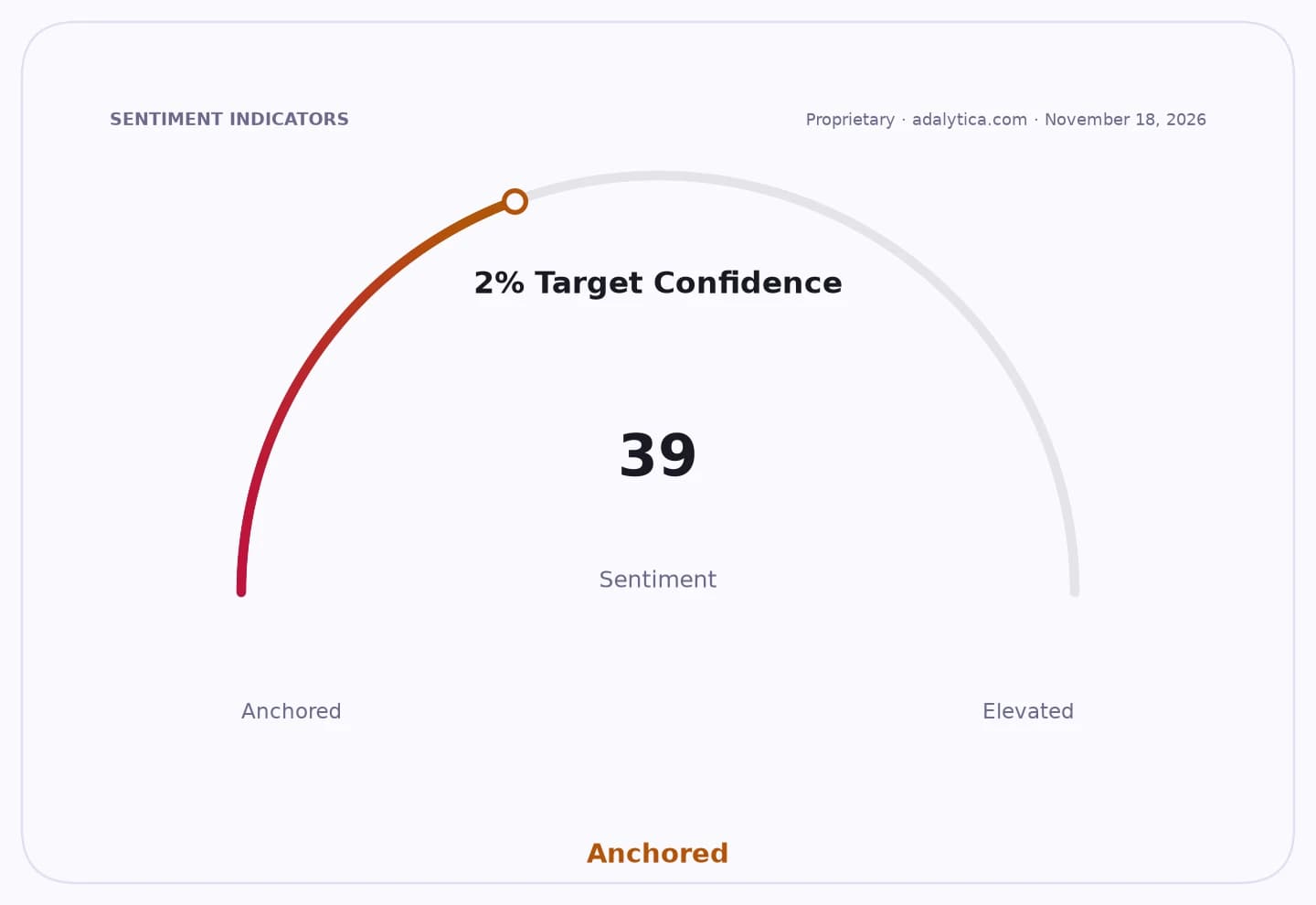
That is reflected in market pricing and fund flows, with inflation-protected assets remaining in focus as the path back to target gets pushed out. Adalytica’s gauge of confidence in the Fed’s 2% inflation target and long-term inflation expectations also points to fragile conviction around disinflation, underscoring how sensitive markets remain to any renewed price pressures.
The immediate risk is that the next inflation prints confirm the turnaround rather than challenge it. If regulated prices, energy costs and wage pressures behave as projected, the return to target will be slower than hoped and policy will stay tight well into 2027.
| Entity | Gains | Losses |
|---|---|---|
| Czech utilities and energy suppliers | ▲Higher regulated tariffs | ▼Households and businesses |
| Inflation-protected bondholders | ▲Sticky price backdrop | ▼Nominal bond bulls |
| Czech policymakers | ▲Stronger case for tight policy | ▼Borrowers seeking lower rates |
| Retail consumers | ▲None | ▼Real purchasing power |