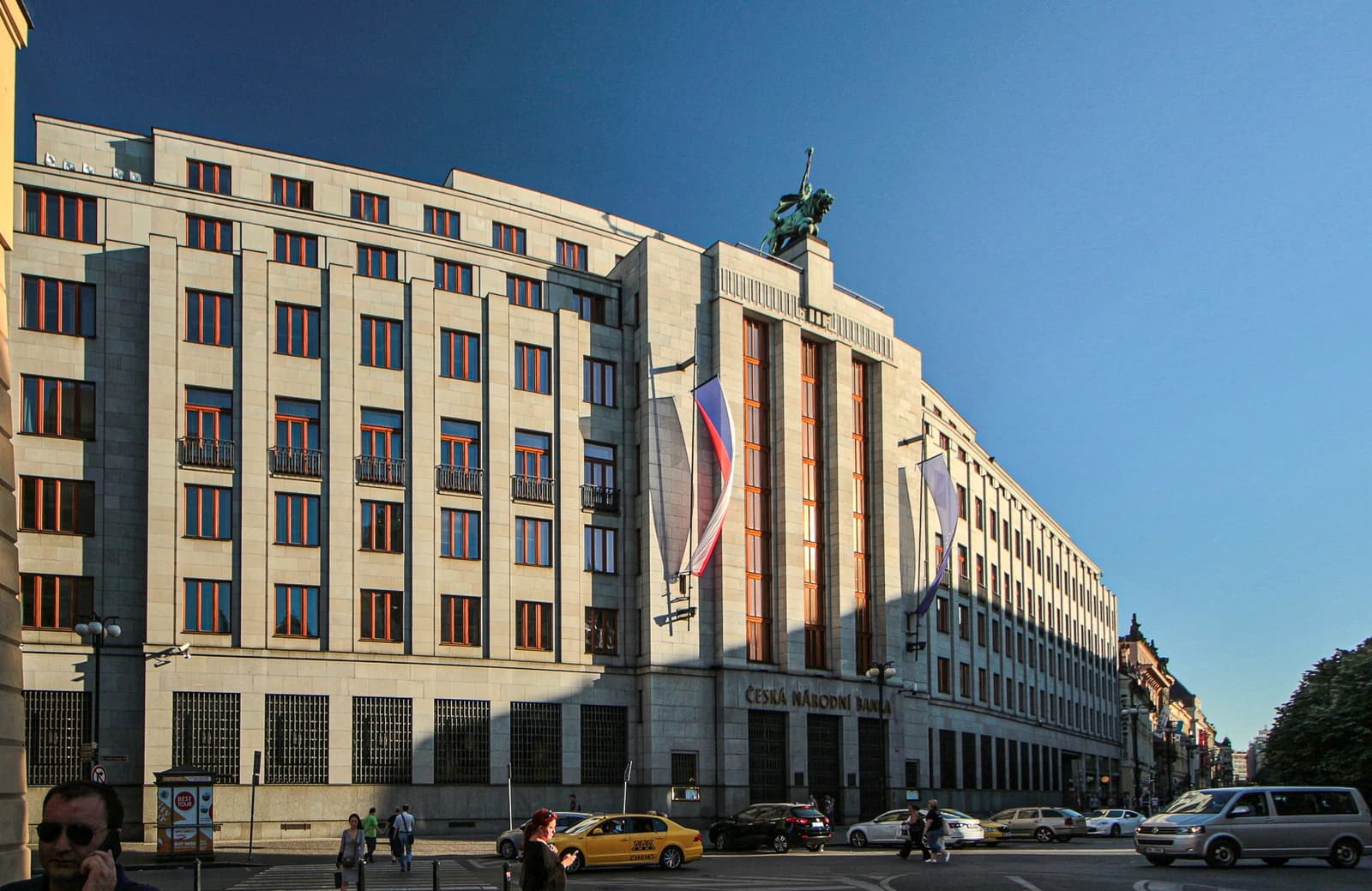
Wage growth in the Czech Republic remained brisk in the second quarter, but a steep revision to first-quarter data means the labour market is now looking less inflationary than it first appeared, reducing pressure on the Czech National Bank.
Czech wages revised lower, easing CNB pressure

Average nominal wages rose 6.4% year on year in Q2, up from a revised 6.1% in Q1 rather than the originally reported 8.1%, while real wages increased 4.3% as inflation eased, according to the data. The revision, driven by a new statistical data source, removes much of the surprise that had made early-year pay growth look like a stronger source of price pressure and suggests the central bank may give the wage figures less weight when setting policy.
Sentiment IndicatorsⓘProprietary · adalytica.com · September 3, 2026
This is a snapshot — live sentiment, awareness and momentum for 130+ markets update continuously in the dashboard.Open AlphaPulse

That matters because wage growth has been one of the clearest domestic risks to disinflation. Before the revision, the first quarter pointed to a labour market still running hot enough to keep services inflation sticky. With the earlier numbers lowered by about 2 percentage points, the pass-through into inflation now looks smaller, even though Q2 nominal wage growth still exceeded market expectations of 7.2% only after adjustment effects are stripped out. The Czech central bank had expected 7.3%.
The more important detail for policymakers is momentum. Seasonally adjusted, quarter-on-quarter nominal wage growth accelerated to 2% in Q2 from 1.5% in Q1, showing pay pressures have not disappeared. But statisticians and economists are now warning that the data may remain noisy for the rest of the year, making the wage series a less reliable guide for the CNB than inflation readings, national accounts or labour-market slack.
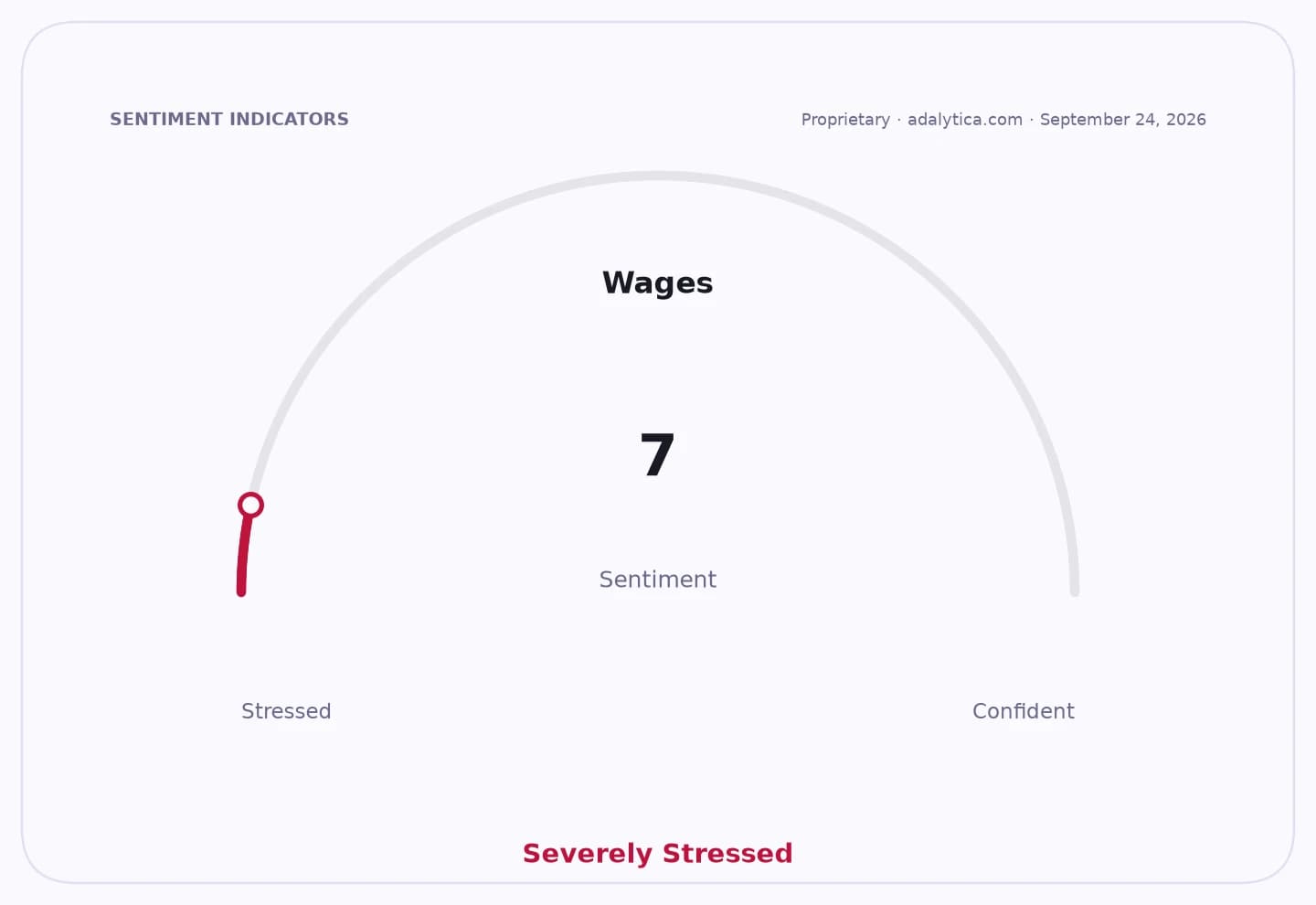
Wages — 30-day sentimentadalytica.com
Explore this data interactively — full history, time series and cross-market comparisons.Open AlphaPulse

For investors, the revision reduces the odds that wages alone will force a more hawkish stance from the central bank. That should matter for Czech rates, the koruna and domestic bond yields, which are highly sensitive to any sign that pay growth is feeding a broader inflation cycle. The wage data still support household spending, one of the main drivers of Czech growth this year, but the case for an abrupt inflation resurgence has weakened.
The split between sectors also matters. Public-sector wages rose 6.9% in the past year, ahead of 6.1% in the private sector, while employment continued to shift toward services and away from industry. That mix suggests the economy is still being reshaped by domestic demand and a gradual easing in industrial labour demand, rather than an across-the-board wage spiral.
Real gross wages now sit above pre-pandemic levels and have been rising steadily for more than three years, helping households recover lost purchasing power after the 2021-2023 inflation shock. Even so, analysts expect nominal wage growth to slow from here as productivity catches up, labour-market tightness eases and monetary conditions stay restrictive. On that basis, wage growth should remain above 6% this year on average, but could slip below that threshold in 2027.
For the CNB, the key question is not whether wages are still growing strongly, but whether the revised data confirm that inflationary momentum is less intense than previously thought. If that reading holds, the bank may lean more heavily on inflation and broader activity data than on wages alone when deciding how long to keep policy tight.
| Entity | Gains | Losses |
|---|---|---|
| Czech households | ▲Higher real pay | ▼None immediate |
| Czech National Bank | ▲Less wage-driven inflation pressure | ▼Less clarity from noisy data |
| Domestic bond bulls | ▲Lower hawkish risk | ▼None if wage momentum persists |
| Exporters/industrials | ▲Slower labour cost pressure | ▼Continued service-sector wage competition |