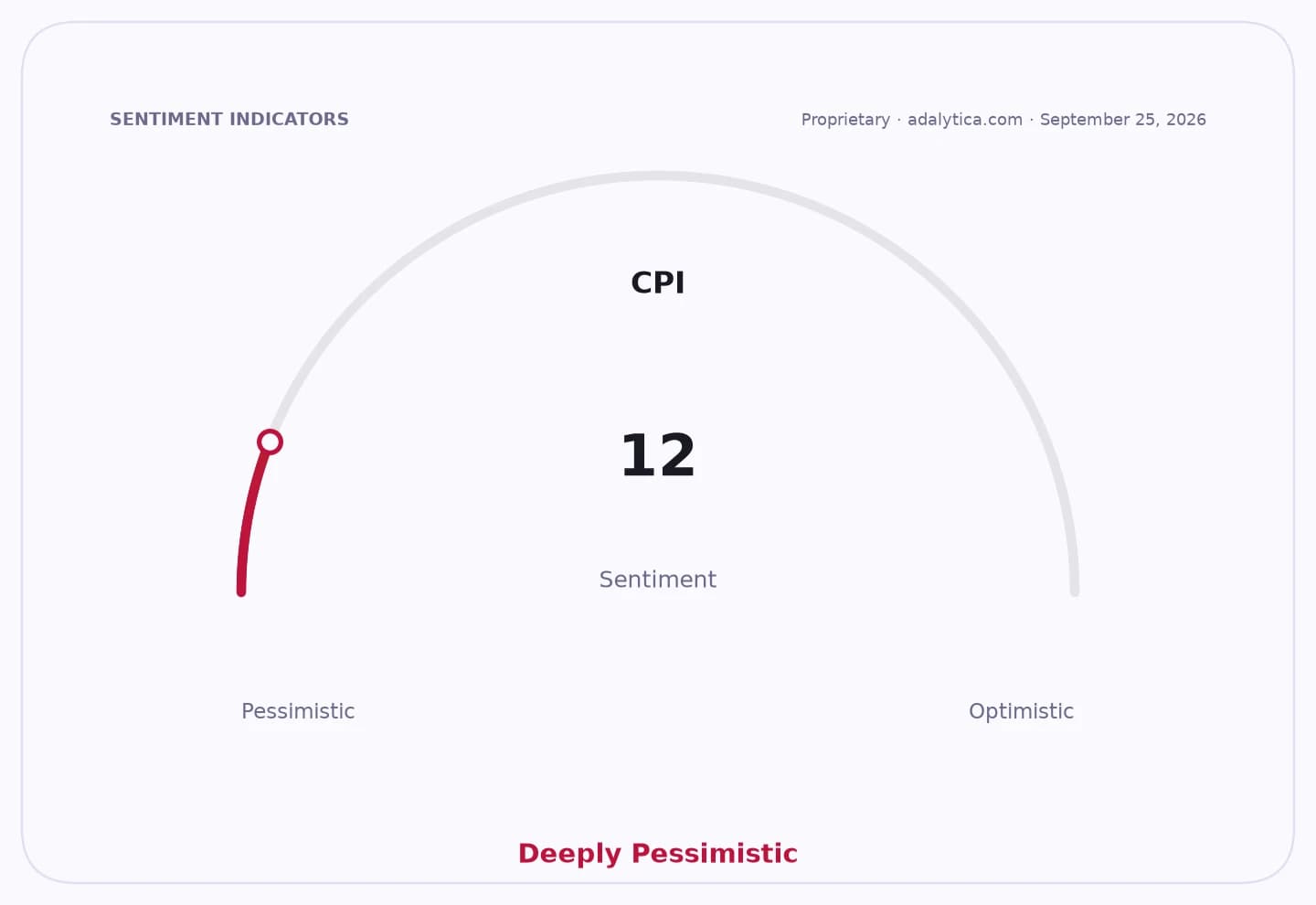
Regulators’ push to stop collectors from leaning on family and friends for payment is tightening a part of the credit system that has long relied on informal pressure, with broader implications for lenders, fintechs and payment processors exposed to stressed borrowers.
Debt Collection Rule Tightens Pressure on Payments

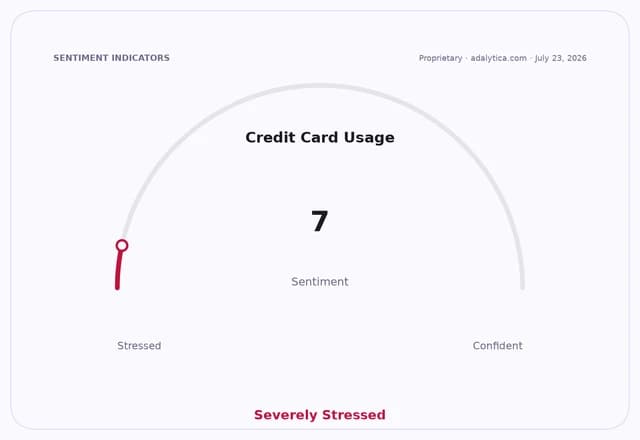
The change matters economically because it raises the cost of collecting delinquent debt and narrows the tools available to recover balances, just as consumer credit sentiment is deteriorating sharply. Adalytica’s Credit Card Usage Sentiment gauge shows “Extreme Fear,” with sentiment at 7 and awareness still elevated at 89, pointing to a market that is both highly attuned to credit stress and increasingly wary of household spending power.
For companies that sit in the payments and receivables chain, the rule shift can translate into lower recovery rates, higher servicing costs and more pressure on margins. That is especially relevant for firms such as Repay Holdings, which depends on transaction flows tied to bill payment and debt servicing, and for larger processors like Global Payments and PayPal, whose volumes ultimately reflect the health of consumer and small-business spending. PayPal’s shares have rebounded sharply from February lows, but the stock remains sensitive to any sign that credit strain is starting to crimp discretionary transactions.
The market backdrop underscores the tension. Global Payments has recovered from a steep spring selloff but is still trading below its 200-day moving average, suggesting the longer-term trend has not fully healed even after a recent rally. Repay, by contrast, remains deeply under pressure, with the shares well below both its 50-day and 200-day moving averages and its RSI readings near oversold territory, a sign investors are still pricing in a difficult operating environment. PayPal’s momentum is much stronger, with the shares extended well above both moving averages and RSI readings in overbought territory, which leaves less room for disappointment if consumer credit worsens.

The broader policy direction also fits a global pattern: authorities are leaning harder on debt sustainability, fair collection practices and borrower protection after years of elevated borrowing costs. That can be constructive for borrowers and reputationally helpful for lenders, but it tends to reduce the aggressiveness of collections and can force firms to invest more in compliance, data systems and alternative repayment channels.
For investors, the key question is whether tighter collection rules are a manageable compliance issue or an early warning that consumer credit performance is softening enough to hit revenues across payments, specialty finance and servicing businesses. The bullish view is that clearer rules can improve long-term industry discipline and favor scaled players with strong compliance infrastructure. The bearish view is that slower recoveries, weaker contact strategies and rising delinquency pressure will erode earnings quality before volumes stabilize.
What to watch next is whether policymakers extend similar limits to other collection practices and whether lenders begin to report higher charge-offs or lower recovery rates. If that happens, the impact would reach beyond debt collectors and into the valuations of payments companies, card networks and consumer lenders that rely on a healthy flow of repayments to support growth.
| Entity | Gains | Losses |
|---|---|---|
| Borrowers | ▲Less harassment risk | ▼Less informal pressure |
| Regulators | ▲Stronger consumer protection | ▼Higher enforcement burden |
| Payments firms | ▲Clearer compliance rules | ▼Higher collection costs |
| Credit investors | ▲Better conduct standards | ▼Weaker recovery rates |