A new study adds a fresh twist to the global food inflation story: decades of focusing on yield, not nutrition, may have left fruits and vegetables cheaper in real terms but less nourishing, with implications for public health, food policy and grocery demand.
Deep Science Ventures study on food nutrient density

Researchers at Britain’s Deep Science Ventures said wheat, apples and carrots have roughly halved in price versus the 1960s, yet much of that apparent affordability has come from breeding and farming methods that boosted output at the expense of mineral density and other nutrients. The study argues that people now need to eat roughly twice as much fruit and vegetables as 60 years ago to get the same intake of minerals such as potassium, magnesium and copper.
Sentiment IndicatorsⓘProprietary · adalytica.com · October 21, 2026
This is a snapshot — live sentiment, awareness and momentum for 130+ markets update continuously in the dashboard.Open AlphaPulse
That matters economically because it suggests the food system has been optimizing for calories and farm-gate productivity while quietly raising the cost of “effective” nutrition. In a period when global food inflation is expected to remain under pressure through 2027, any decline in nutrient density means households may need to spend more to obtain the same health benefits, even when sticker prices on produce appear manageable.
The report said grain yields per hectare have risen 215% since the 1960s, helping reduce undernutrition in developing countries from 35% to 12%. But it also says that gains in tonnage have come with a deterioration in nutritional quality, with some wheat, carrot and apple varieties losing 20% to 50% of key nutrients. Less than a third of wheat varieties developed since the 1960s can meet daily zinc requirements, the researchers said, while women would need to eat four slices of wholemeal bread to get only a third of their daily selenium needs.
For investors, the message extends beyond agriculture. Food producers, grocers and health-care systems all sit in the path of a nutrition squeeze. Processed-food companies may still benefit from cheaper calories, but retailers and branded-food groups could face growing demand for more nutrient-rich products, fortified offerings and traceable supply chains. At the same time, pharmaceutical weight-loss drugs such as Ozempic and Mounjaro could amplify the issue by reducing food intake among millions of adults, increasing the risk that lower consumption is matched by lower nutrient intake.
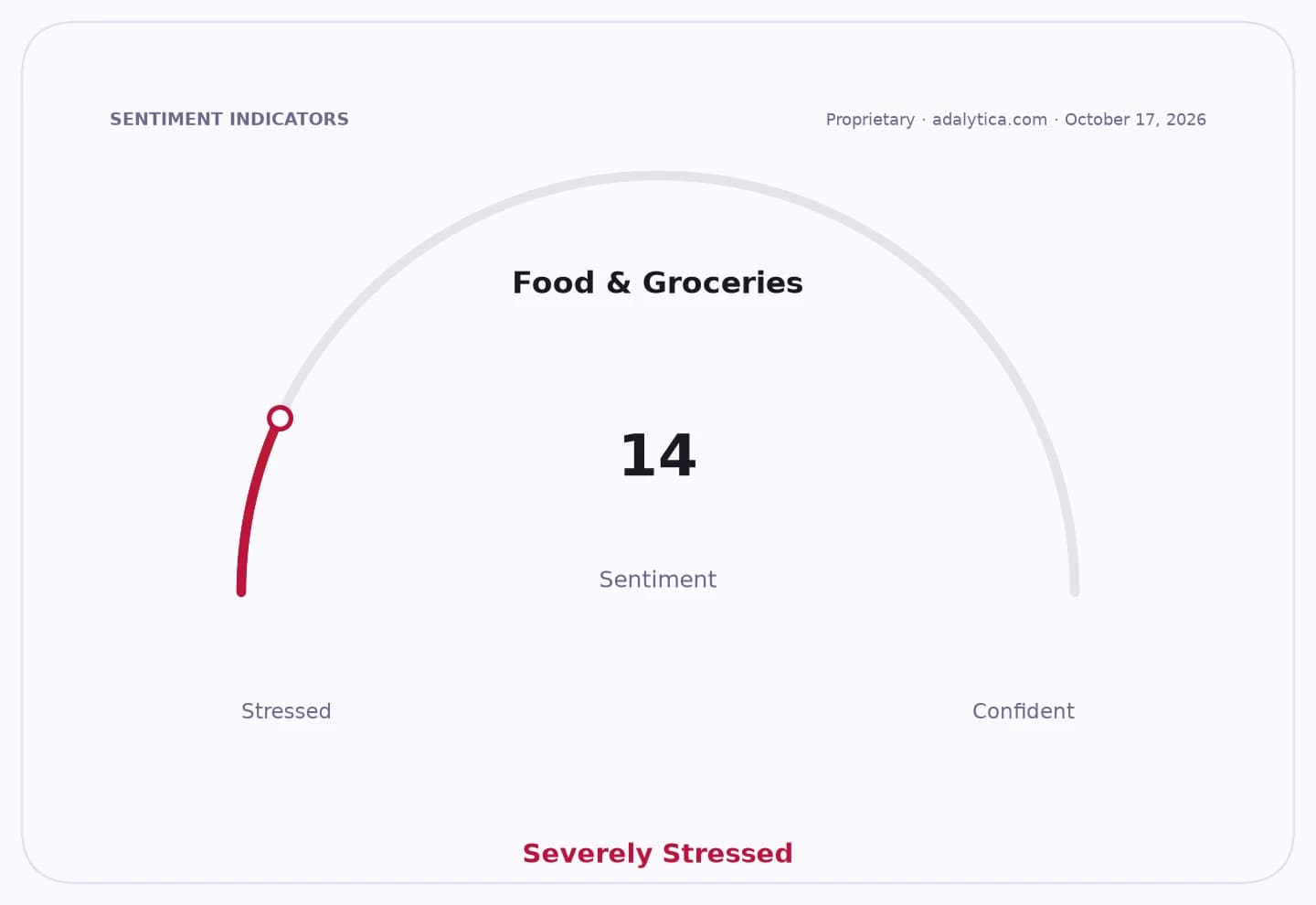
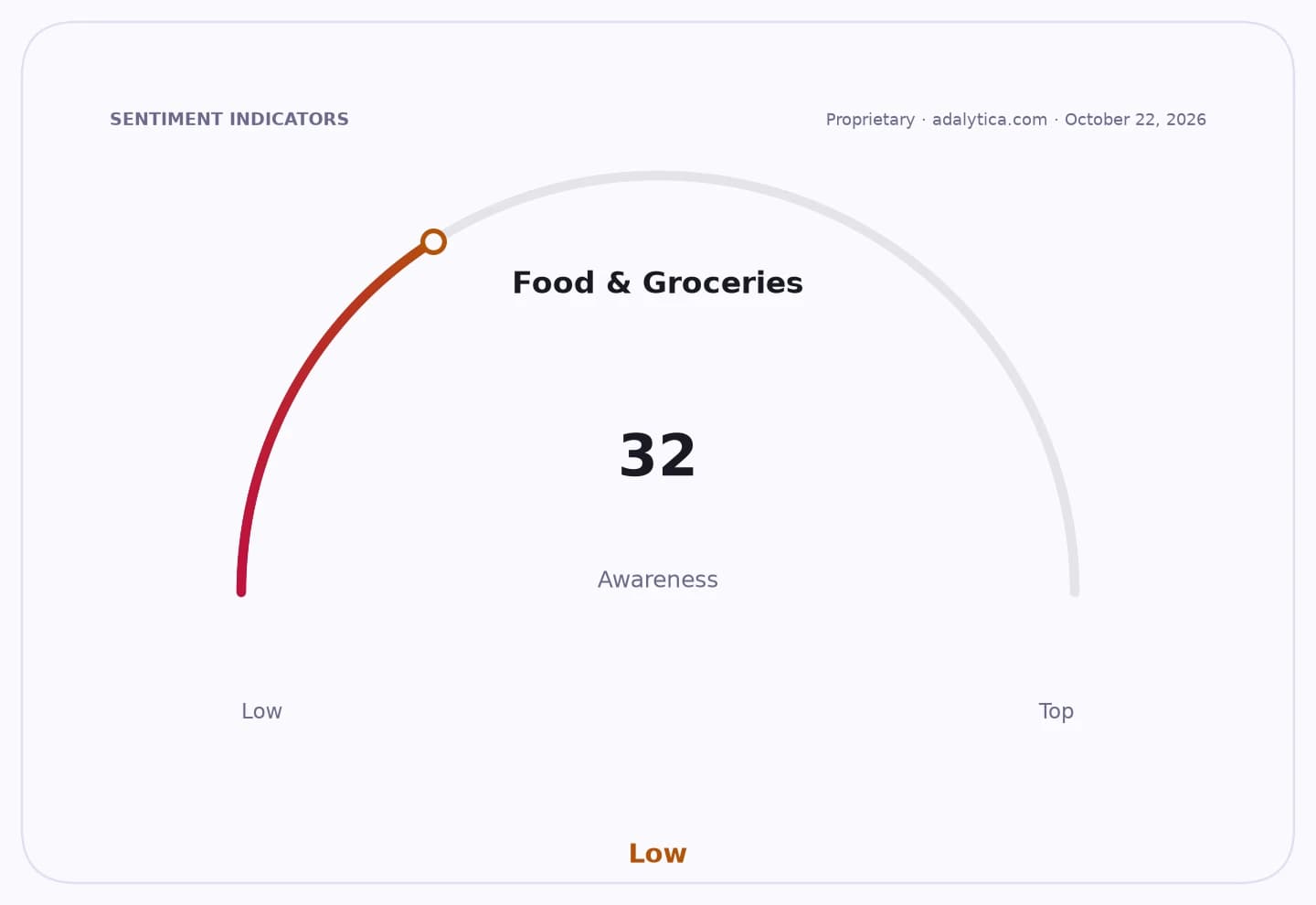
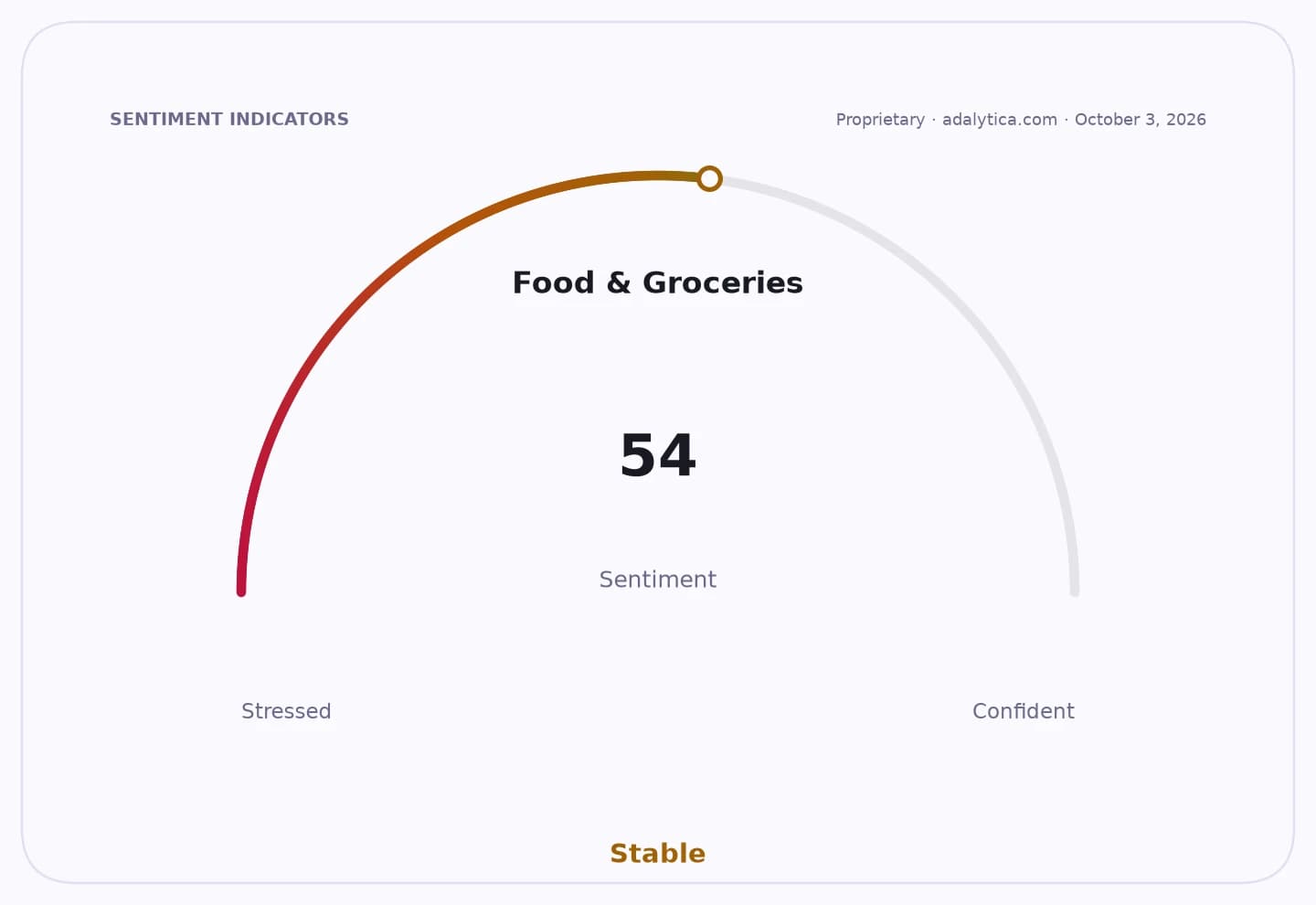
The study’s warning lands against a backdrop of already fragile food markets. Global food prices remain vulnerable to supply shocks, conflict and climate stress, while governments are struggling to balance affordability with resilience. Adalytica’s Food and Grocery Spending Sentiment gauge shows elevated fear around food spending, even as attention to consumer prices remains high, underscoring how quickly households react to any deterioration in the grocery bill.
The policy response, the researchers argue, will have to come from the soil rather than the checkout aisle. Restoring soil health, they said, could improve nutritional density, output and climate resilience at the same time. That makes soil restoration, fertilizer policy and regenerative agriculture increasingly relevant to investors looking at farm inputs, specialty crops and food security over the next decade.
The bull case is that better soil and crop-quality investment can create a premium market for nutrient-dense foods and resilient supply chains. The bear case is that if nutrient decline continues while food inflation stays elevated, consumers will pay more for less nutritional value, deepening pressure on lower-income households and public health budgets.
| Entity | Gains | Losses |
|---|---|---|
| Regenerative agriculture | ▲Policy support and investment | ▼Conventional yield-only farming |
| Grocery retailers | ▲Demand for fortified products | ▼Margin pressure from higher input costs |
| Consumers | ▲Better nutrition if reform happens | ▼More cost per unit of nutrition |
| Public health systems | ▲Lower deficiency burden | ▼Higher treatment costs from poor diets |