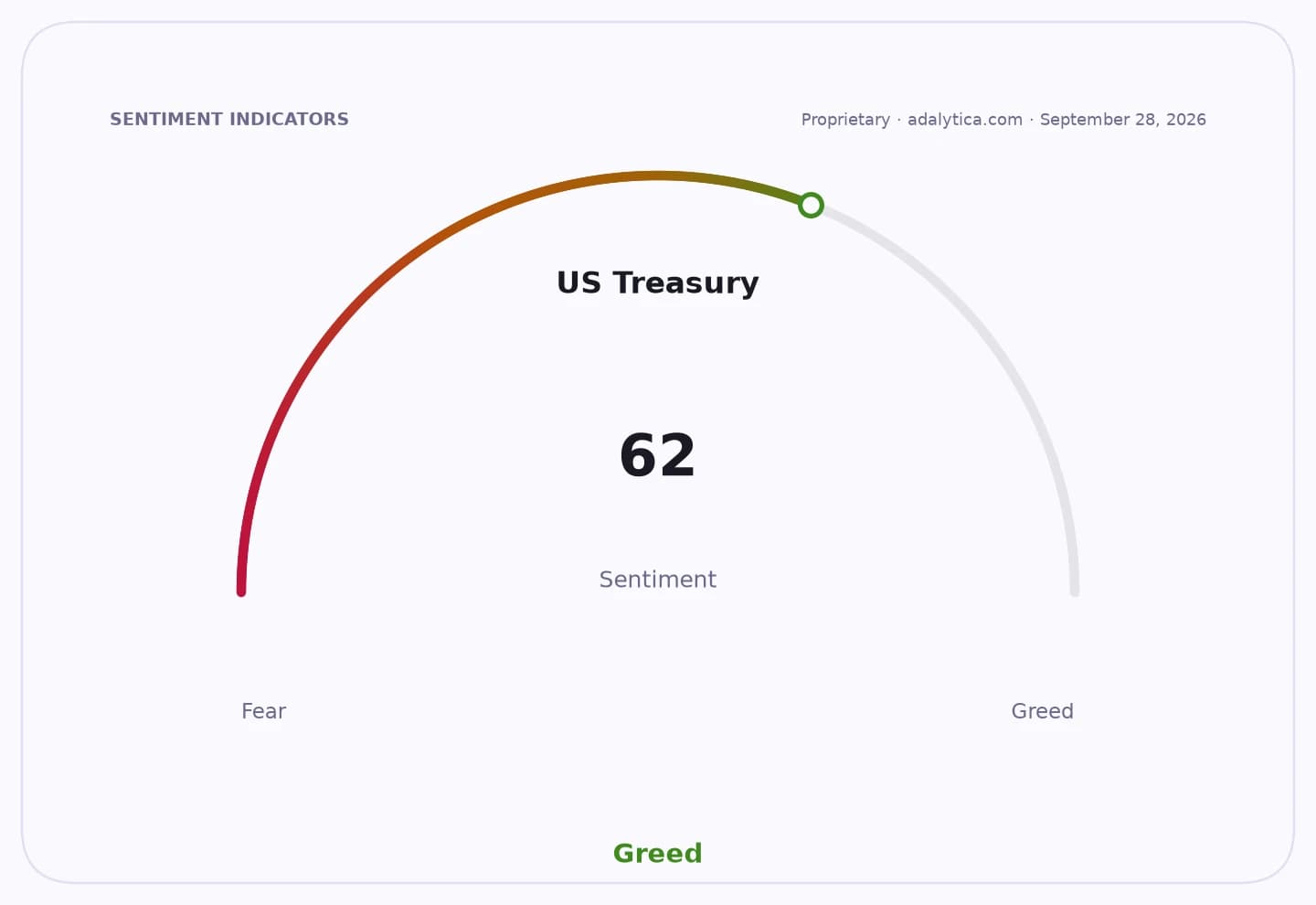
The dollar slipped on Friday as crude oil prices eased and Japan stepped up warnings against yen weakness, trimming a sharp recent rally in the greenback even as expectations for another Federal Reserve rate hike kept the currency on course for a second straight weekly gain.
Dollar slips as yen warnings and oil ease
The move matters because it captures the two forces now driving foreign exchange markets: oil is retreating enough to take some pressure off inflation, while central banks are still signaling that policy may need to stay tighter for longer. That keeps Treasury yields elevated and the dollar supported, but it also makes the currency vulnerable to short, fast corrections when positioning looks extended.
Sentiment IndicatorsⓘProprietary · adalytica.com · October 1, 2026
This is a snapshot — live sentiment, awareness and momentum for 130+ markets update continuously in the dashboard.Open AlphaPulse

The dollar index fell 0.34% to 100.95, on track for its biggest daily drop in three weeks. That left it heading for a weekly gain, though, after comments from Fed officials reinforced bets that the U.S. central bank may not be done raising rates. CME FedWatch showed markets pricing about a 66% chance of an October hike, up from 58% a week earlier.
Oil’s pullback helped ease some of the immediate dollar support from inflation fears. Global crude prices fell more than 1% as the prospect of a truce between the United States and Iran offset supply concerns tied to Houthi attacks on Saudi Arabia. Even so, oil remains above $100 a barrel, a level that still keeps upward pressure on prices and preserves the case for tighter monetary policy.
US Dollar — 30-day sentimentadalytica.com
Explore this data interactively — full history, time series and cross-market comparisons.Open AlphaPulse

That combination has left the dollar caught between two competing narratives. On one side is the bull case: stronger U.S. data, including a better-than-expected rise in capital goods orders, points to resilient business investment, while Treasury yields have climbed as markets handicap more policy tightening. On the other is the bear case: after several days of gains, the dollar looks stretched, and any easing in energy prices or profit-taking can trigger a pause.
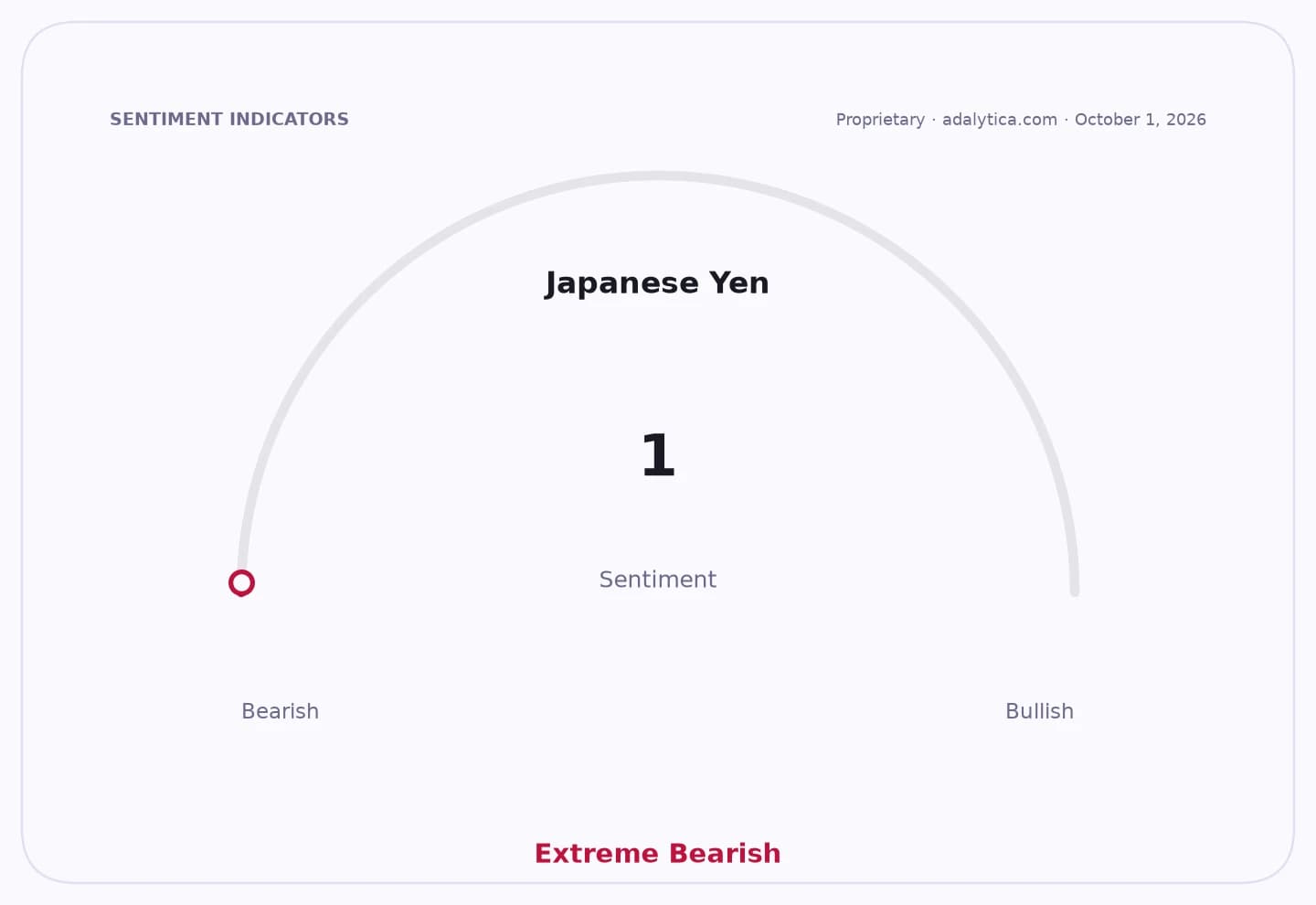
Against that backdrop, the yen delivered the clearest currency move. The Japanese unit strengthened 1.09% to 157.13 per dollar after Finance Minister Satsuki Katayama said President Donald Trump had raised concern about yen weakness in talks with Prime Minister Sanae Takaichi, reinforcing the shared U.S.-Japan stance behind July’s joint intervention. Katayama also said she and U.S. Treasury Secretary Scott Bessent would remain in close contact.
The remarks mattered because they revived a familiar risk for traders: that Japanese authorities could intervene again if the yen weakens too far, too fast. Japan’s last rate increase to a 31-year high was not enough to persuade markets that the Bank of Japan is prepared to tighten aggressively, but the threat of official action has become a more immediate constraint on speculative short yen positions.
The yen was still headed for a second weekly decline, underscoring how far policy divergence continues to favor the dollar over the Japanese currency. But Friday’s bounce showed that intervention rhetoric can still overpower the broader yield story, at least temporarily, especially when the dollar has been rising quickly.
Sterling also firmed 0.24% to $1.3247 after hawkish comments from Bank of England Governor Andrew Bailey, while the offshore yuan weakened to 6.725 per dollar as a Trump-Xi meeting in Washington produced no obvious breakthrough on trade, AI, Taiwan or the Iran war.
For investors, the key takeaway is that FX markets remain hostage to the intersection of energy, yields and policy signaling. If oil keeps easing and U.S. rate expectations hold near current levels, the dollar may stay bid but choppy. If Japanese officials continue to press their intervention case, the yen could outperform on rallies even without a major shift in domestic monetary policy.
| Entity | Gains | Losses |
|---|---|---|
| U.S. dollar bulls | ▲Higher yields, Fed hike bets | ▼Profit-taking, oil-led inflation easing |
| Japanese yen | ▲Intervention warnings, official support | ▼Wide U.S.-Japan rate gap |
| Oil exporters | ▲Higher benchmark prices | ▼Crude price pullback |
| Importers / risk assets | ▲Slightly lower energy costs | ▼Persistent dollar strength and volatility |