Japanese rubber futures logged their strongest weekly gain since April as a sliding yen made yen-priced contracts cheaper for overseas buyers, outweighing soft demand signals and keeping the market supported.
Japanese Rubber Futures Rise on Weak Yen

The move matters because rubber is highly exposed to currency swings in Japan, where exporters and commodity traders often use a weaker yen to lock in better margins and boost foreign buying power. With the yen briefly touching 158 to the dollar and market talk growing that it could test 160, the currency backdrop is now doing more for prices than the underlying demand picture.
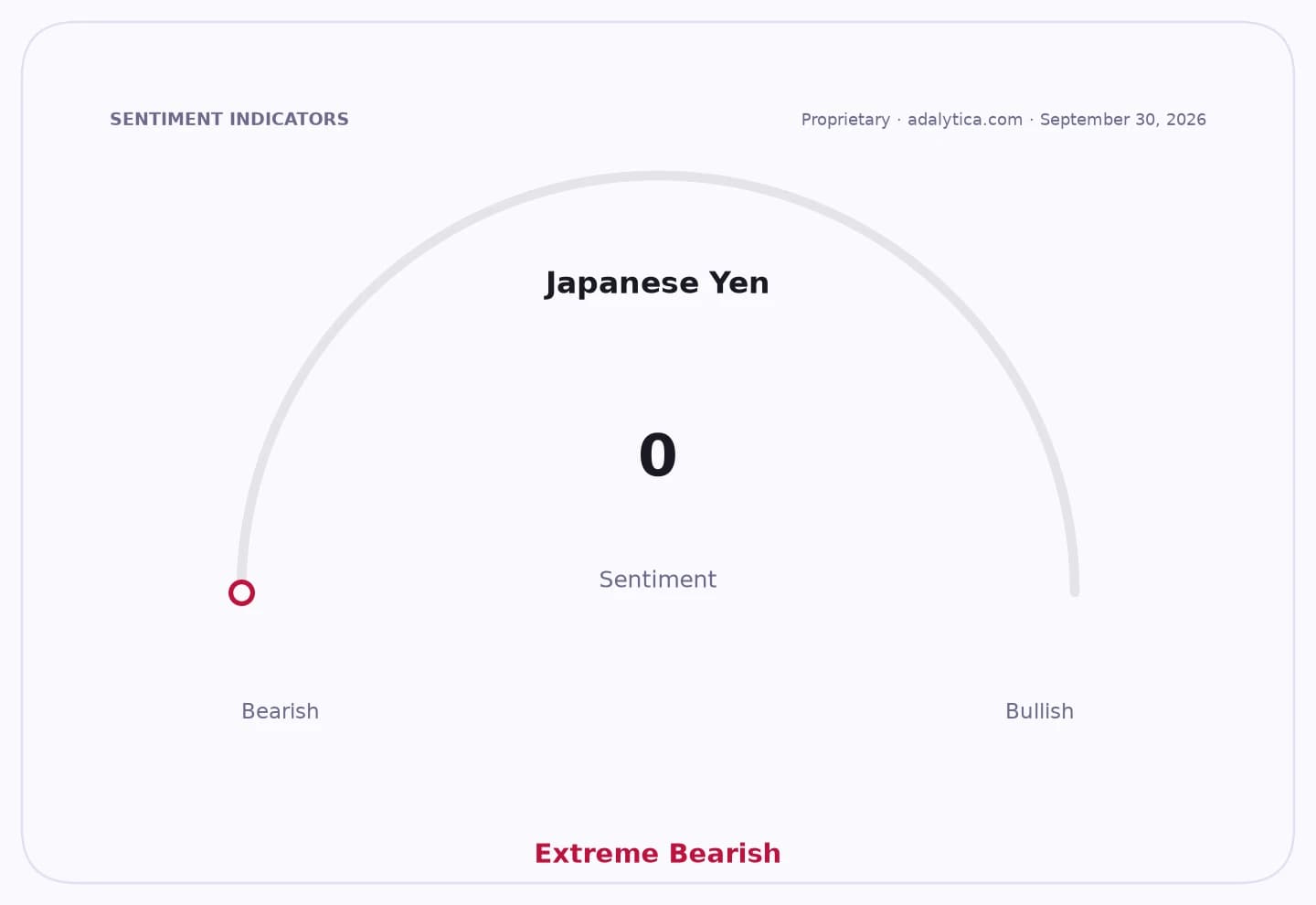
Sentiment IndicatorsⓘProprietary · adalytica.com · September 30, 2026
This is a snapshot — live sentiment, awareness and momentum for 130+ markets update continuously in the dashboard.Open AlphaPulse
The yen’s weakness has become a broader macro story, not just a foreign-exchange one. Japan’s recent Bank of Japan rate increase has done little to reverse the slide, and the currency has stayed under pressure even as Finance Minister Katayama and Prime Minister Takaichi have signaled concern about depreciation. That keeps intervention risk on the table and adds a policy layer to commodities pricing across Japan.
For investors, the implication is straightforward: a weak yen tends to support domestic commodity futures and exporters, while squeezing importers and adding volatility to hedging costs. Adalytica’s Japanese yen trade signals show “Extreme Fear,” underscoring how quickly sentiment has deteriorated as the currency lost ground over the past month.
Equity markets in Japan are reacting to the same currency dynamic, with the Nikkei rising 495 points to 65,513, while broader risk appetite remains uneven. Commodities tied to imported inputs, including oil, gas and rubber, are drawing attention as traders reassess whether yen depreciation can continue to offset sluggish end-user demand.
The next catalyst is whether Tokyo steps in verbally or directly to slow the yen’s decline. If the currency keeps weakening toward 160 per dollar, rubber futures could stay firm even without a clear pickup in consumption, but any policy response would likely spark a sharp reversal.
| Entity | Gains | Losses |
|---|---|---|
| Japanese rubber futures | ▲Price support from weak yen | ▼Demand-led upside |
| Japanese exporters | ▲Better overseas competitiveness | ▼Higher hedging volatility |
| Importers/consumers | ▲Lower local prices if yen stabilizes | ▼Higher import costs |
| Japanese authorities | ▲Opportunity to justify intervention | ▼Pressure if yen keeps sliding |