The dollar’s sharp rise in bank trading on July 28 underscores how quickly geopolitical stress and policy uncertainty can reprice currency markets, even as the informal market showed only a modest pullback.
Dollar Strength Signals Ongoing FX Stress
That split matters because it signals two different forces at work. In the banking system, demand for dollars is being driven by a rush into cash and hedges, a dynamic that usually tightens local liquidity and raises the cost of imports and dollar-linked obligations. In the black market, the slight decline suggests some short-term relief in retail demand, but not a reversal of the underlying pressure that has pushed households and businesses to seek hard currency outside official channels.
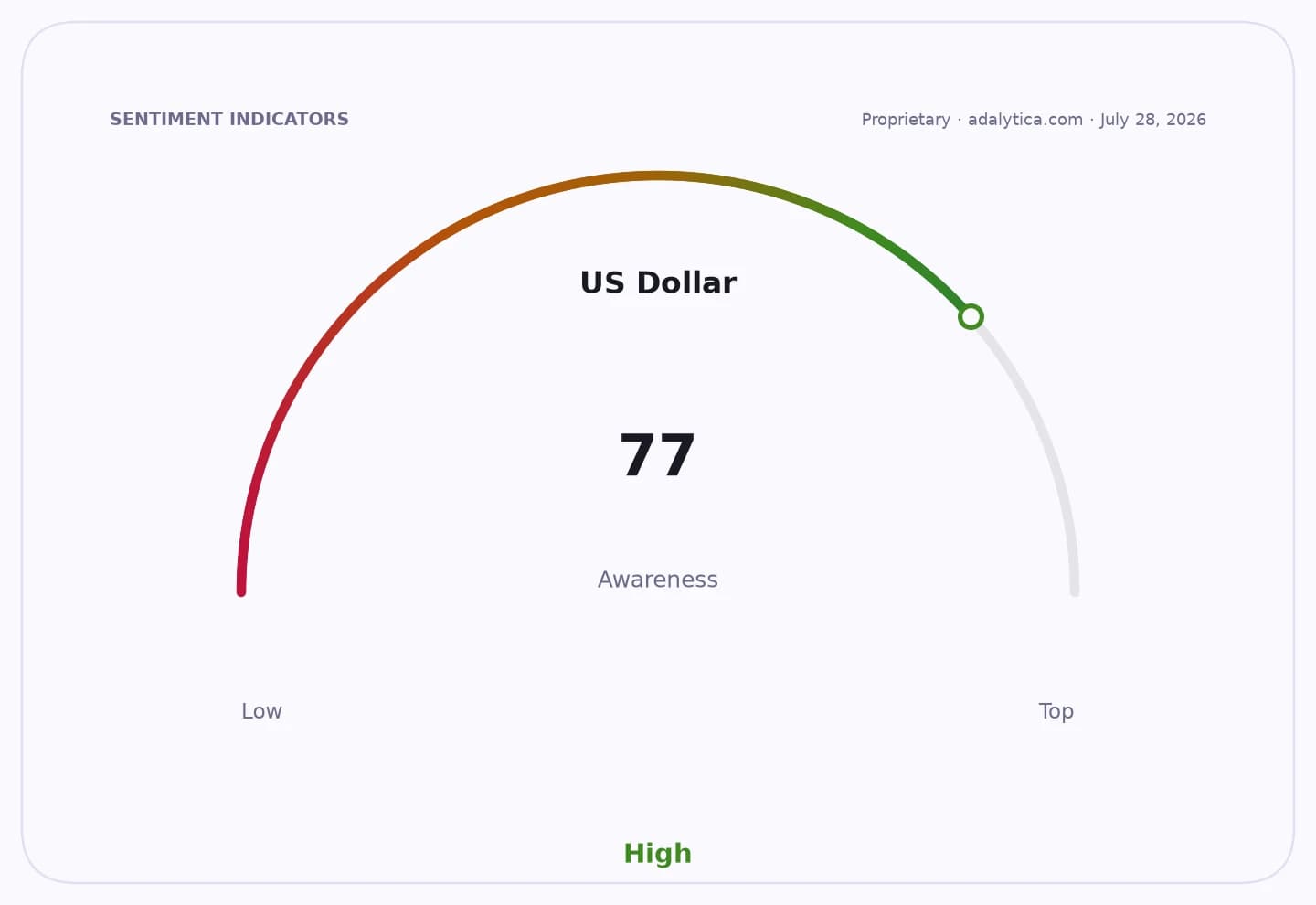
Sentiment IndicatorsⓘProprietary · adalytica.com · July 28, 2026
This is a snapshot — live sentiment, awareness and momentum for 130+ markets update continuously in the dashboard.Open AlphaPulse
The broader market backdrop remains dollar-positive. Conventional technical indicators on the U.S. Dollar Index show it holding above its 50-day and 200-day moving averages, with the RSI still in neutral-to-firm territory and the MACD hovering just above its signal line. That points to a market that is still technically supported rather than exhausted. The move also fits the larger safe-haven trade captured in Adalytica’s FX Safe Haven Trading Signals, which show extreme greed for defensive currency positioning even as proprietary dollar sentiment has fallen to extreme fear. In practical terms, that combination often reflects elevated stress rather than complacency: traders are buying protection, but conviction in the dollar’s near-term direction is becoming more one-sided.
The economic implications are immediate. A stronger bank rate raises the local-currency cost of settling trade invoices, servicing foreign debt and stocking imported goods. It can also worsen the transmission of inflation, particularly where businesses are forced to source foreign exchange at a premium. The black-market discount to bank rates, meanwhile, is a sign that the formal market still does not fully satisfy demand, leaving parallel pricing to absorb residual pressure. That divergence is usually a warning flag for policymakers because it points to fragmentation in FX liquidity rather than a clean adjustment.
For investors, the message is that the currency market is being pulled by risk aversion, not by confidence in domestic fundamentals. Importers, retailers and companies with dollar liabilities face higher working-capital needs if bank pricing stays firm. Exporters and firms with foreign-currency revenues may benefit, but only if they can convert proceeds at attractive levels and avoid policy intervention. Equity investors should also watch for second-round effects: a sharper dollar often hits consumer margins, raises financing stress for leveraged borrowers and can pressure banks or corporates exposed to FX mismatch.
The Reuters-style readthrough is that the market is not pricing a single event, but a broader repricing of risk. The dollar’s rise in banks, combined with only a modest easing in the black market, suggests demand remains elevated across channels. If geopolitical tensions persist and the Federal Reserve keeps investors guessing on the policy path, the main risk is that the gap between official and informal pricing widens again, reinforcing inflationary pressure and keeping local assets under strain.
| Entity | Gains | Losses |
|---|---|---|
| Dollar bulls | ▲Safe-haven demand | ▼Volatility risk |
| Importers and dollar debtors | ▲Slight black-market relief | ▼Higher bank FX costs |
| Exporters with hard-currency revenue | ▲Stronger conversion rates | ▼Policy intervention risk |
| Local consumers | ▲Temporary easing in parallel market | ▼Imported inflation pressure |