The U.S. dollar weakens further in morning trade, with the DXY down 0.41% to 100.50, while Vietnam’s State Bank nudges its central VND/USD reference rate higher by 8 dong to 25,233, underscoring how global currency moves are feeding directly into local policy settings.
Dollar Weakness Pressures Vietnam’s Central Rate

The move matters because a softer dollar can briefly ease pressure on emerging-market currencies, but it also reflects a market still wrestling with shifting rate expectations, geopolitical risk and uneven inflation trends. For trade-heavy economies like Vietnam, even modest changes in the dollar can affect import costs, export pricing and capital flows.
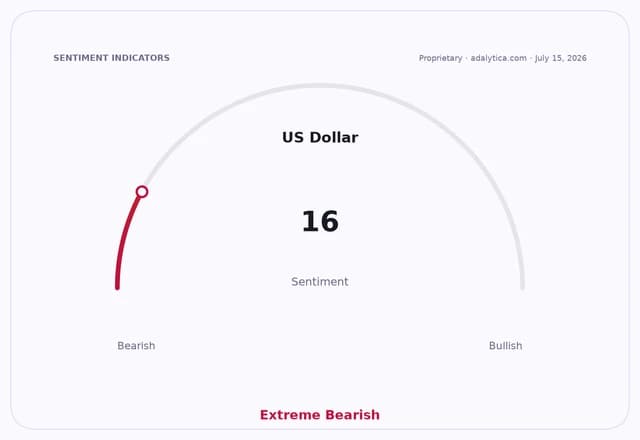
Sentiment IndicatorsⓘProprietary · adalytica.com · July 15, 2026
This is a snapshot — live sentiment, awareness and momentum for 130+ markets update continuously in the dashboard.Open AlphaPulse
Dollar weakness is visible across currency-linked funds and technical gauges. The Invesco DB US Dollar Index Bullish Fund, which tracks the greenback, slips to 28.25 on July 15 after hitting 28.50 two days earlier, while the currency sits below its 50-day moving average of 27.98 only modestly above its 200-day average of 27.4, suggesting the trend is cooling rather than breaking down. The iShares MSCI Japan ETF, a yen proxy, edges lower to 56.53, while the ProShares UltraShort Euro ETF falls to 30.49 as the dollar retreats.
Adalytica’s U.S. Dollar Trade Signals show sentiment at 16, labeled “Fear,” down 84% over the past month, with FX volatility signals at 7, or “Extreme Fear,” even as the 1-day change improves slightly. That combination points to a market that sees continued dollar fragility but not necessarily a clean, one-way move.

For investors, the key question is whether the greenback’s latest decline becomes a durable trend or just another reversal in a choppy macro tape. That will depend on upcoming U.S. inflation data, Federal Reserve commentary and any fresh escalation in the Middle East, which could quickly flip demand back toward the dollar and lift volatility across currencies, commodities and emerging-market assets.
| Entity | Gains | Losses |
|---|---|---|
| Vietnam exporters | ▲softer VND costs | ▼imported input inflation |
| EM currencies | ▲short-term relief | ▼dollar rebound risk |
| U.S. importers | ▲cheaper foreign goods | ▼weaker currency hedge value |
| Dollar bulls | ▲lower hedge demand | ▼near-term momentum |