The Dominican Republic is moving to reopen trade terms with Washington over rice, a politically sensitive shift that could reshape a protected food market and determine whether domestic growers can withstand the final phase of DR-CAFTA tariff cuts.
Dominican Republic Seeks Rice Trade Renegotiation

President’s Ministry José Ignacio Paliza said the government is pursuing a renegotiation of the Dominican Republic-Central America-U.S. free trade agreement to defend local rice production from the accord’s liberalization schedule. The issue matters because rice is not just another crop in the Dominican economy: it is a staple food, a source of income for thousands of rural families and a pillar of farm activity across more than 20 provinces.
Sentiment IndicatorsⓘProprietary · adalytica.com · October 25, 2026
This is a snapshot — live sentiment, awareness and momentum for 130+ markets update continuously in the dashboard.Open AlphaPulse
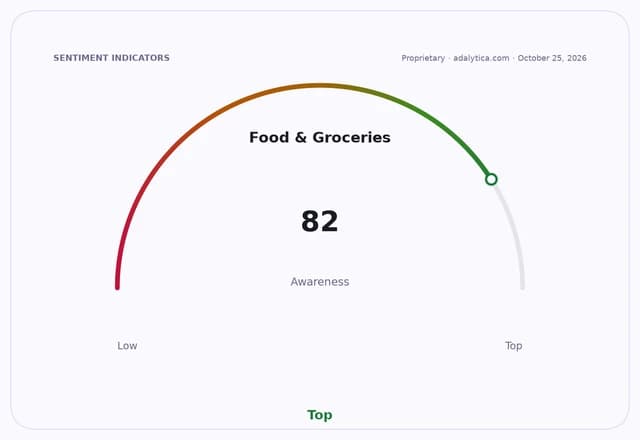
For investors, the immediate implication is clear: trade protection is no longer a theoretical policy debate, but a live risk to the economics of imported rice, local milling, agribusiness margins and food inflation. If the government secures any delay, quota change or safeguard mechanism, domestic producers would gain pricing power and visibility over demand. If it fails, U.S. rice could enter on better terms, forcing a sharper reset in the local market and pressuring farm incomes, transporters and processors tied to the domestic supply chain.
The timing is critical. Dominican farmers have warned that the last step in tariff elimination under DR-CAFTA would leave them exposed to cheaper U.S. rice, arguing that scale, costs and competitiveness all tilt against local production. Their concern is not simply about profits; it is about whether the country can continue to produce enough of its own staple without handing pricing control to imports. That makes rice a food-security issue as much as a trade issue.
The government has not said which provisions it wants changed or what Washington’s response might be, but the direction is unmistakable: Santo Domingo is trying to carve out protection before the market opens further. That is the kind of policy pressure that can create winners and losers well beyond the farm gate, especially if it feeds into broader debates over food prices, rural employment and subsidy policy.
This also fits a wider global pattern. Governments facing food inflation and volatile crop markets are becoming less willing to accept unconditional liberalization when staple foods are at stake. With rice prices already sensitive to supply shocks and weather risks, the Dominican move underscores how quickly agricultural trade can turn from a technical legal framework into a macroeconomic defense line.
Our thesis is that the market underestimates how often food policy becomes industrial policy. If the renegotiation advances, the investable opportunities sit with domestic producers, storage, milling and logistics tied to protected supply chains. If it stalls, imported grain suppliers and price-sensitive consumers benefit, while local farmers face a margin squeeze. Either way, this is a catalyst to watch closely because it could redefine the Dominican rice market for years, not months.
| Entity | Gains | Losses |
|---|---|---|
| Dominican rice farmers | ▲Tariff protection, pricing support | ▼Import competition |
| U.S. rice exporters | ▲Open market access if talks fail | ▼Possible market restrictions |
| Dominican consumers | ▲Stable supply if policy works | ▼Higher prices if protection rises |
| Agribusiness and millers | ▲Demand visibility under policy clarity | ▼Margin pressure from cheaper imports |