The Dow Jones Industrial Average sank to its weakest level in more than five months on Wednesday as a 5.09% yield on the 10-year Treasury and a near-certain December Fed rate hike kept pressure on interest-rate-sensitive blue chips.
Dow Falls as 10-Year Yield Tops 5%
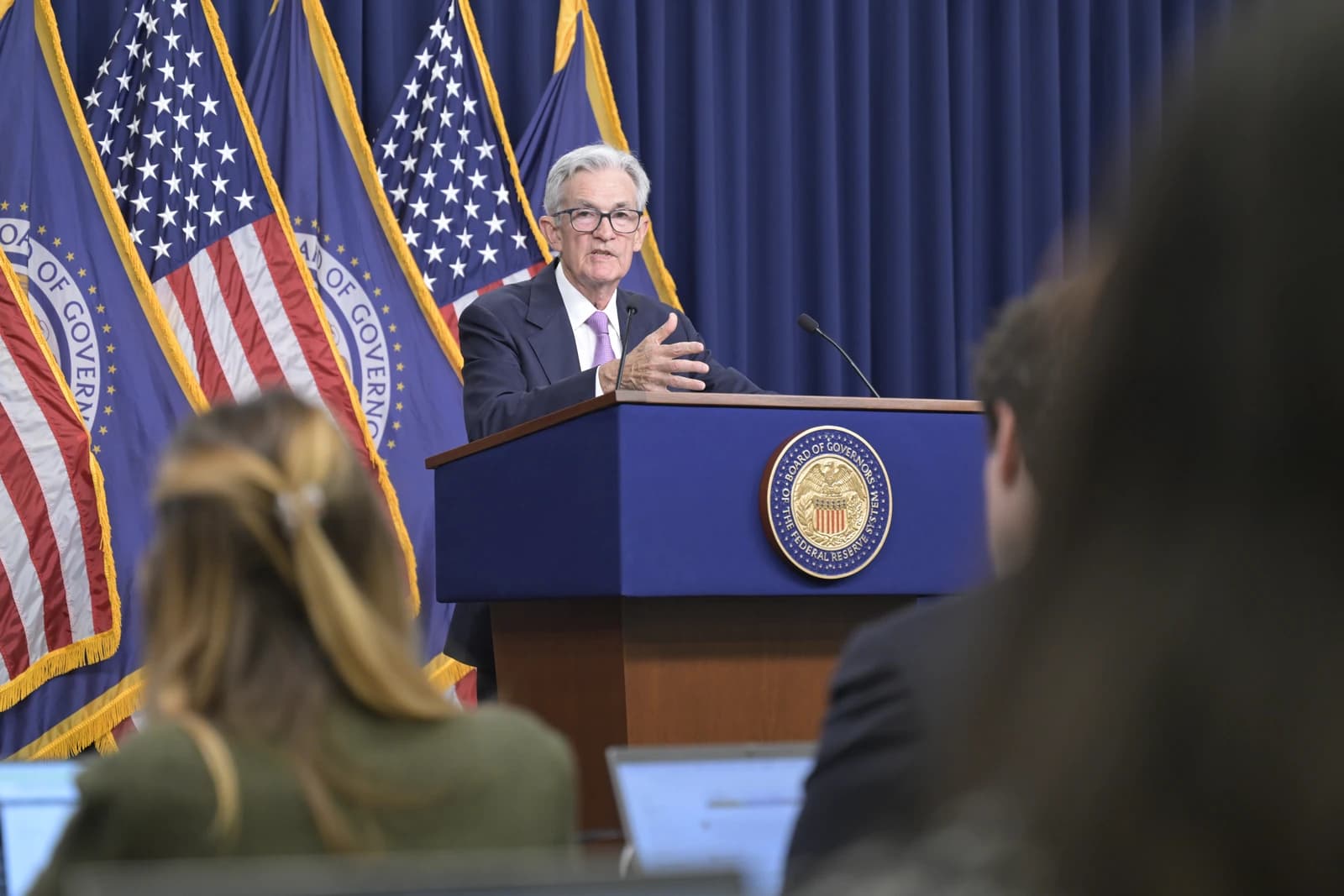
The index was last down 1.27% at about 50,115, extending a two-day decline to more than 2.9% and underscoring how quickly higher borrowing costs are being repriced into equities. The move mattered because the Dow is packed with mature industrial, financial and consumer companies whose valuations and earnings are more exposed to discount-rate pressure than the megacap growth names that have helped cushion the broader market this year.
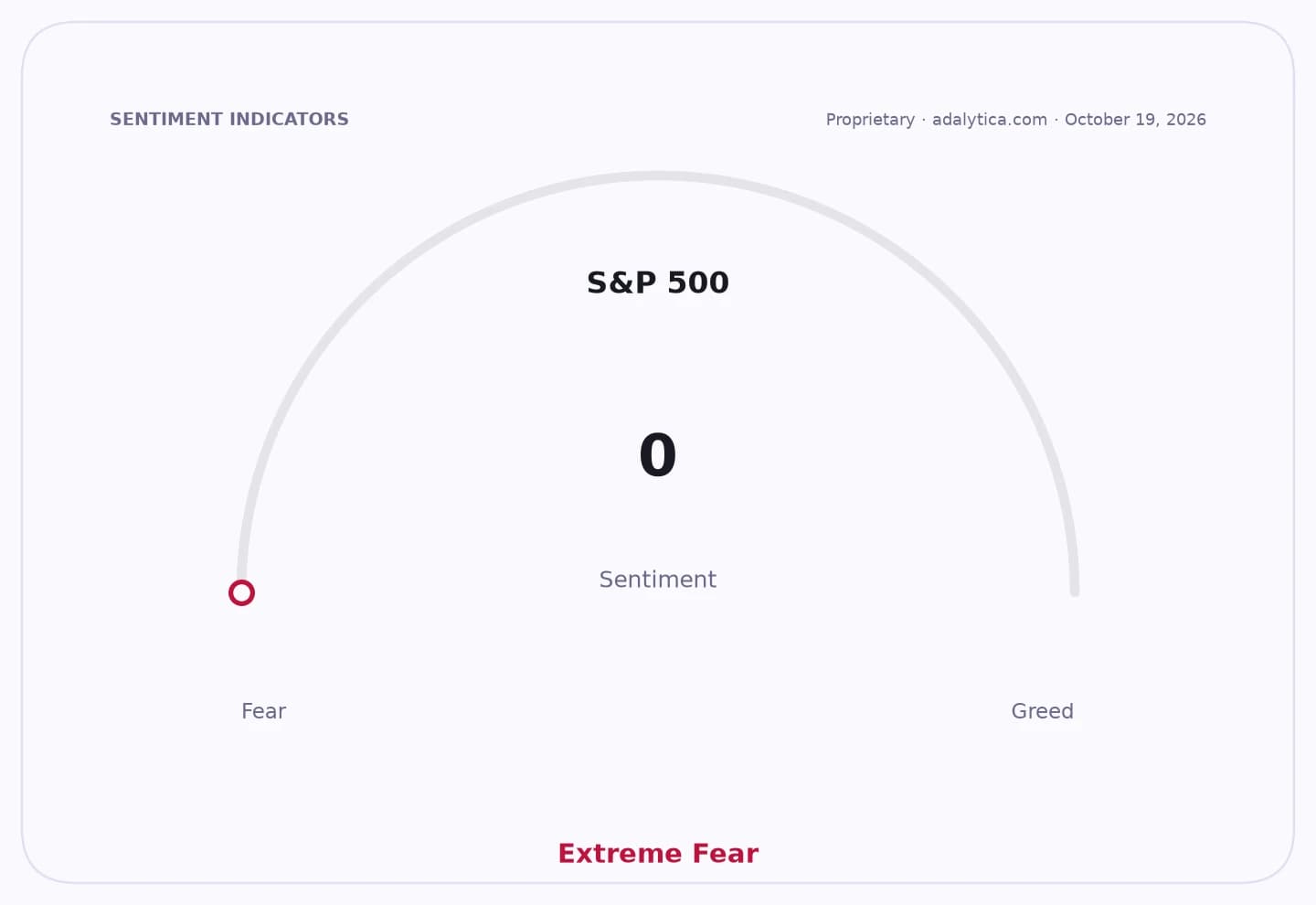
Sentiment Indicators
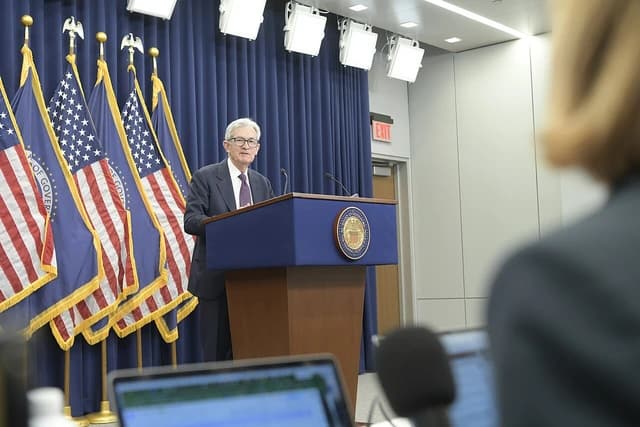
The contrast with the Nasdaq 100 was telling. While the tech-heavy index was nearly unchanged, the Dow and, to a lesser extent, the S&P 500 came under heavier selling, suggesting investors are rotating away from economically sensitive and dividend-heavy shares as the bond market reasserts itself. The 10-year yield at 5.09% leaves equities competing against a government bond return that is now compelling by historical standards, particularly for income-focused investors who once relied on the Dow’s large-cap components as bond proxies.
Markets are also treating a December Federal Reserve hike as almost fully priced in, with CME FedWatch implying a 96% probability. That reduces the chance of a near-term relief rally and shifts attention to how long earnings can absorb tighter financial conditions. A stronger dollar, trading near a 19-month high, adds another layer of pressure for multinationals by making overseas sales less valuable when repatriated.
DGS10 vs FEDFUNDS — macro contextadalytica.com
Explore this data interactively — full history, time series and cross-market comparisons.
US Treasury
The rate backdrop is especially important for the Dow because the index is less insulated by secular growth narratives than the Nasdaq. Higher yields raise the hurdle for stock valuations, increase financing costs for cyclical companies and can damp demand in industries tied to consumer spending and capital investment. That makes Wednesday’s slide less about one isolated headline than about a broader repricing of risk assets under a sustained restrictive policy regime.
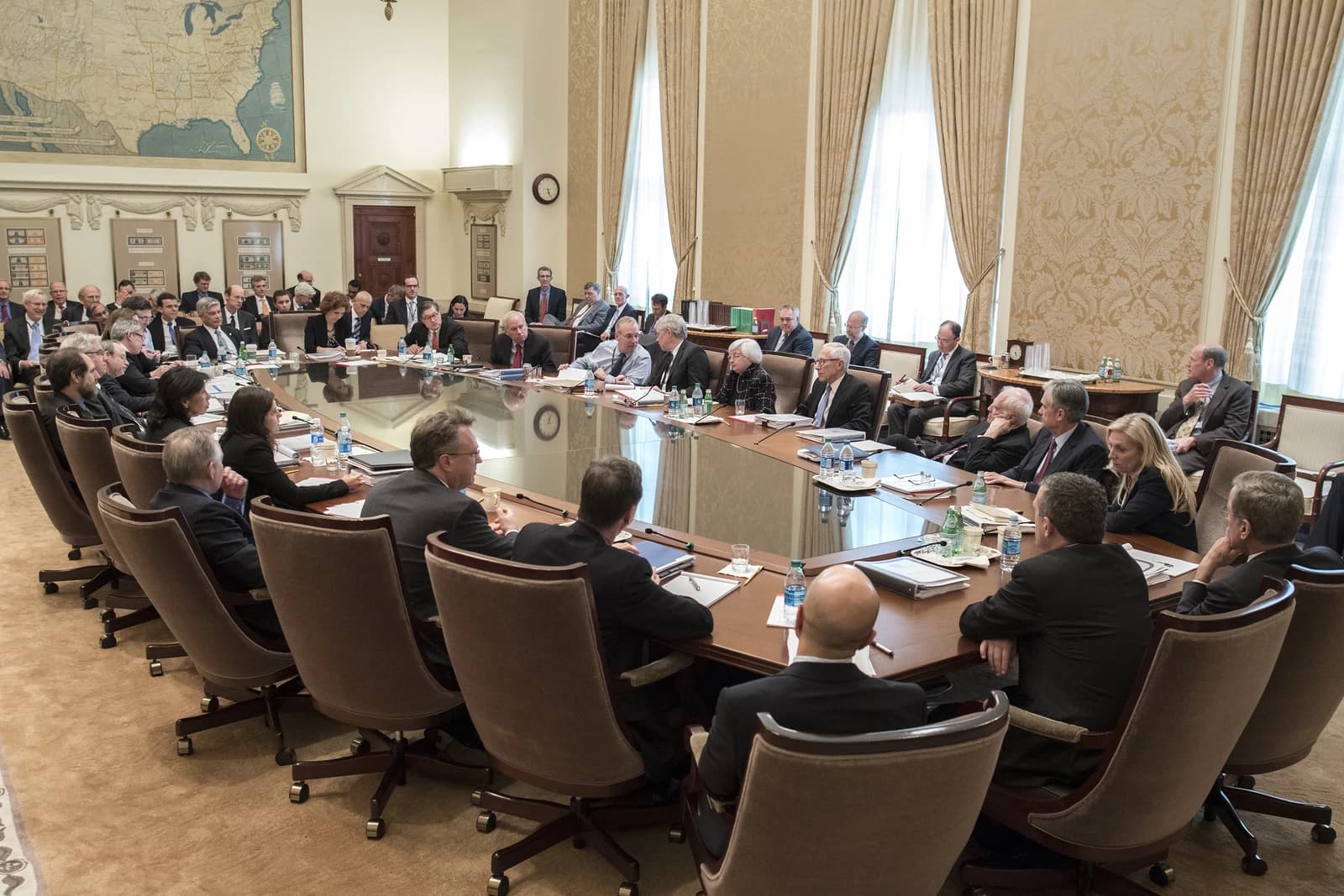
The next catalyst is the Federal Reserve’s latest meeting minutes, due later on Wednesday, which may offer clues on how broadly policymakers support another hike and how long rates may remain elevated. Until then, the market message is clear: with 10-year Treasuries above 5% and a December move widely expected, the Dow is being asked to prove it can withstand a higher-for-longer rate environment.
| Entity | Gains | Losses |
|---|---|---|
| Treasury bond investors | ▲Higher yield income | ▼Equity valuations |
| Cash-rich defensive holders | ▲Relative safety | ▼Rate-sensitive cyclicals |
| Fed hawks | ▲Policy credibility | ▼Borrowing-sensitive stocks |
| Dow constituents | ▲None | ▼Pricing power and multiples |