Russia has accused the Netherlands of being drawn directly into the Ukraine war after Dutch weapons maker Destinus said its cruise missiles and drones were used in the attack that damaged the Crimea bridge, underscoring how the conflict is now hitting European defense firms and raising the geopolitical cost of supplying Kyiv.
Dutch firm says its missiles hit Crimea bridge

That matters because the bridge linking Russia to occupied Crimea is not just infrastructure; it is a military lifeline and a symbol of Moscow’s claim on the peninsula. If Ukrainian forces can repeatedly strike strategic assets with weapons built by private European companies, the war is moving deeper into a phase where Western industrial capacity is a battlefield variable, not just a back-office support function.
Sentiment Indicators
Moscow’s response was predictable but still significant. The Russian embassy in The Hague suggested Dutch authorities were “participating in the conflict” after Destinus confirmed seven Ruta cruise missiles and Da Vinci drones were used in Tuesday’s strike. Destinus, which publicly backed Ukraine, said it was “proud” to aid Kyiv’s war effort and even posted images of damage to the bridge infrastructure.
The Dutch foreign minister rejected Russia’s allegation and said Moscow was trying to divide European states through its embassy network. That exchange matters far beyond diplomatic rhetoric. It shows the Kremlin is widening its message campaign against European capitals that benefit from or tolerate private-sector support for Ukraine, even when the weapons involved are not directly supplied by governments.
For investors, the more important takeaway is that defense demand is becoming more distributed and more commercial. Ukraine’s long-range attack relied on a mix of domestically produced and foreign-made systems, highlighting how private suppliers now sit inside the strategic supply chain. That is bullish for the broader European and U.S. defense ecosystem, especially companies with exposure to drones, loitering munitions, cruise missiles, sensors and electronic warfare.
The market has already been rewarding defense exposure. The U.S. defense ETF ITA is up sharply from its spring lows and was near 69 on Wednesday, while the aerospace and defense ETF XAR has also clawed back from a sharp selloff, though it remains well below its 200-day moving average. In other words, the sector has not fully priced in a prolonged era of infrastructure warfare, where missile defense, strike systems and drone production remain in constant demand.
This is where the second-order opportunity lies. The market still tends to think about Ukraine as a headline risk, but the real investment story is an industrial rearmament cycle that is likely to persist. Europe is being forced to harden supply chains, expand munitions output and accelerate procurement, while private defense innovators gain political relevance and repeat demand.
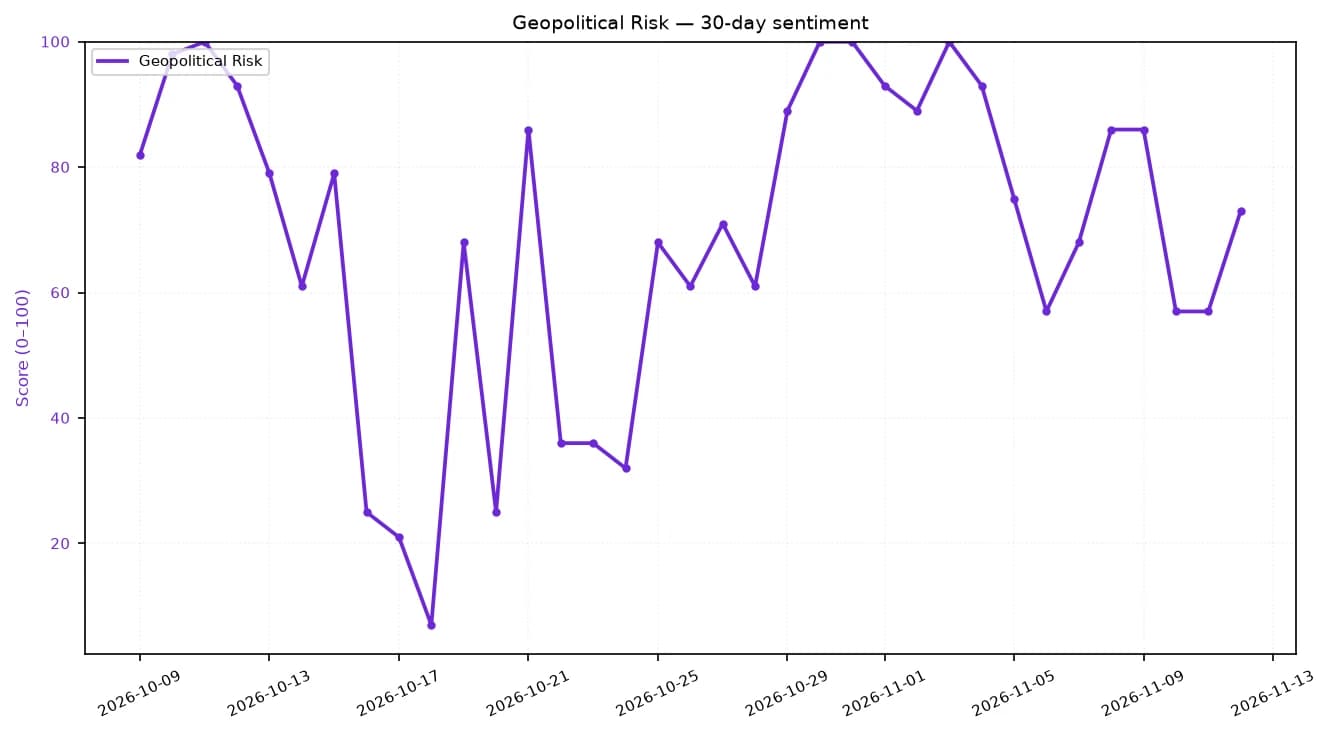
Adalytica’s Global Stability Sentiment gauge sits in “Fear” and “Extreme Fear,” reflecting a market still sensitive to geopolitical shocks. That kind of environment tends to support defense names, especially when conflict escalation increases the perceived value of precision strike capability and homeland protection.
I believe the market underestimates how much this war is reshaping defense capital flows. Every escalation around Crimea, and every Russian effort to politicize the role of European suppliers, reinforces the case for owning the picks-and-shovels of modern warfare. Investors should keep exposure to defense primes, missile suppliers and drone enablers on the radar now, before the next escalation pushes procurement even higher.
| Entity | Gains | Losses |
|---|---|---|
| Defense contractors | ▲Higher orders | ▼Political scrutiny |
| Ukraine | ▲Strike capability | ▼Retaliation risk |
| Russia | ▲Domestic propaganda | ▼Strategic vulnerability |
| ITA / XAR holders | ▲Sector tailwind | ▼Near-term volatility |