Ukraine’s already thin air-defense shield faces fresh pressure as Starlink restrictions complicate battlefield communications just as the country struggles to replace exhausted Patriot missile stocks, raising the risk that Russian strikes can do more damage and that Kyiv’s Western backers will have to spend faster to fill the gap.
Ukraine Air-Defense Pressure Supports Lockheed and RTX

The timing matters economically because air defenses are one of the most expensive and supply-constrained parts of the war effort. Patriots are a scarce U.S.-made system that Ukraine relies on to intercept missiles and drones, and any disruption to the communications network that supports warning, targeting and coordination lowers the effectiveness of those weapons even when batteries are available.
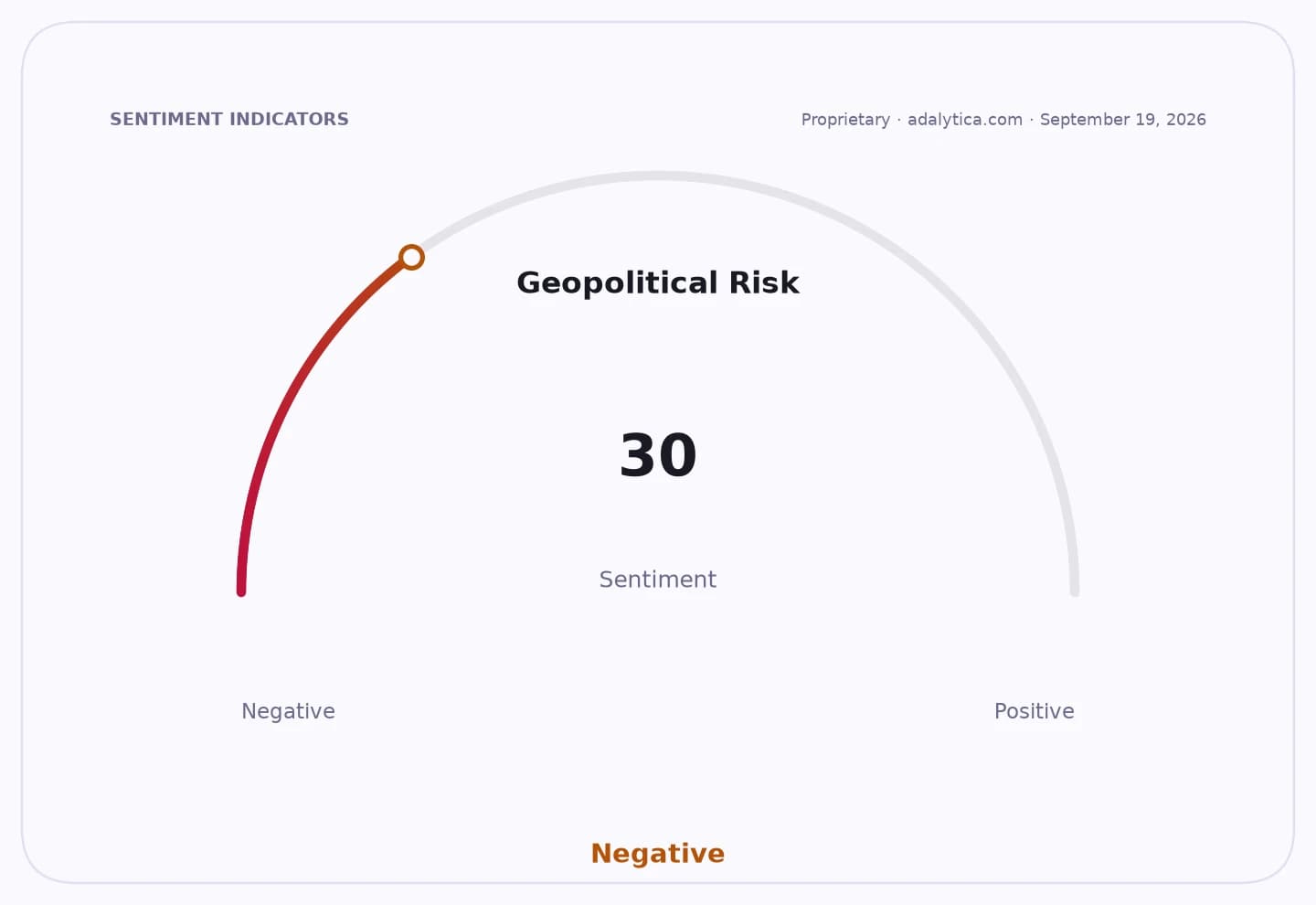
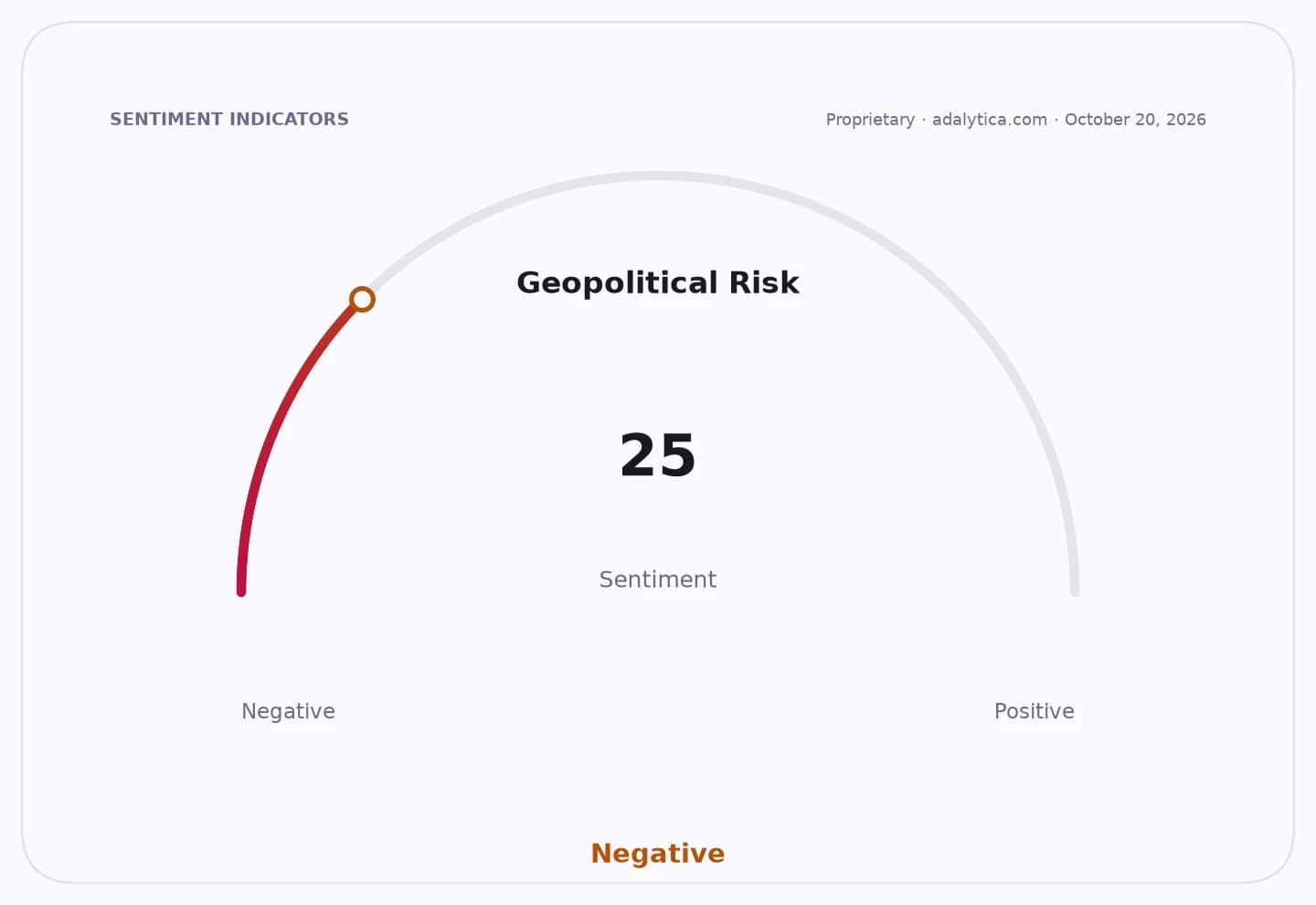
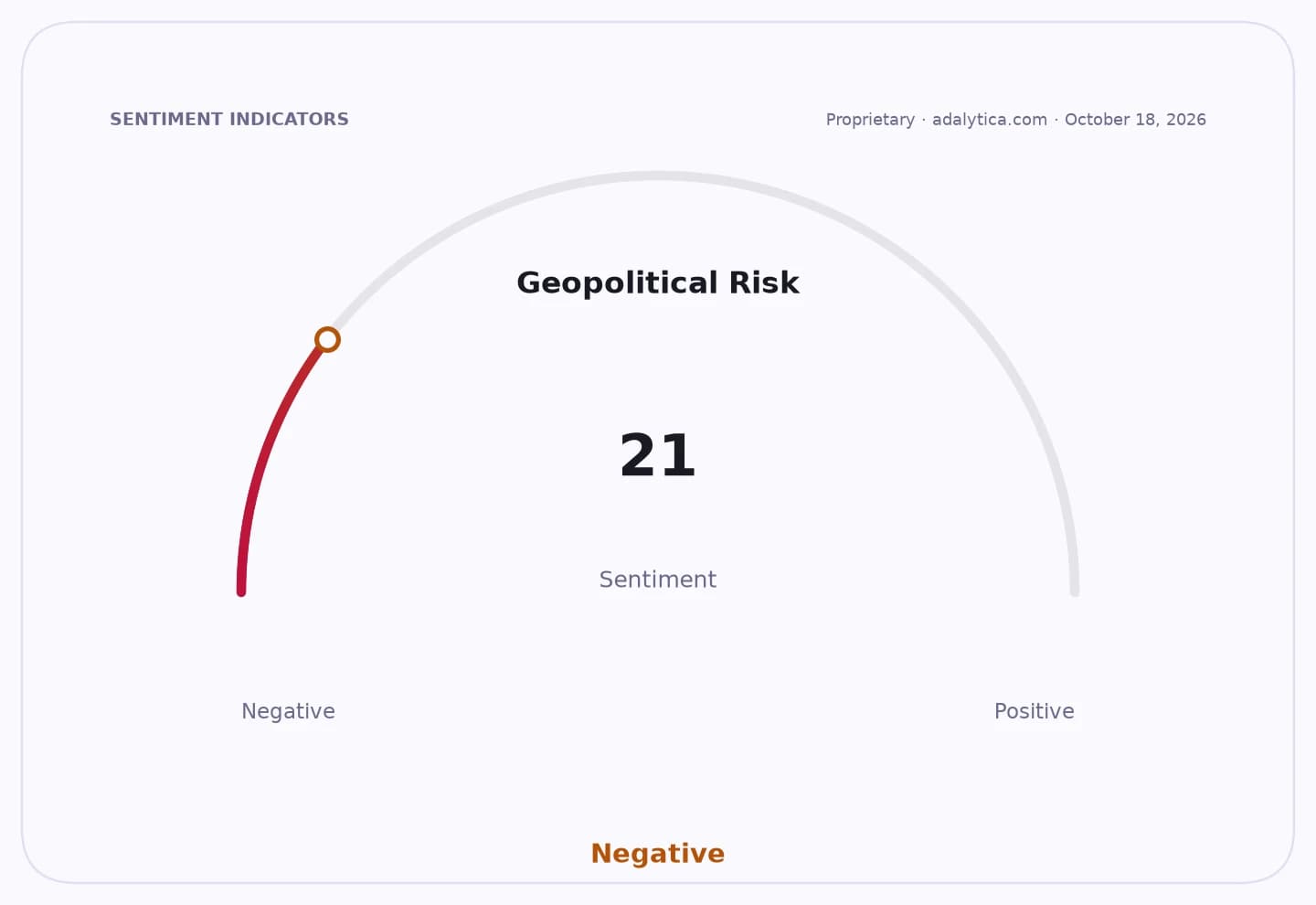
Sentiment IndicatorsⓘProprietary · adalytica.com · October 21, 2026
This is a snapshot — live sentiment, awareness and momentum for 130+ markets update continuously in the dashboard.Open AlphaPulse
That leaves European governments and the U.S. confronting a familiar but costlier problem: how to sustain Ukraine’s defense at a moment when direct American involvement is reportedly easing and partners are being pushed to cover more of the burden. A prolonged gap would not only increase the military and humanitarian cost of the war, but also keep pressure on NATO budgets and defense procurement plans.
For investors, the story points to continued demand for missile defense, command-and-control systems and satellite communications as Europe scrambles to harden Ukraine’s network. Lockheed Martin and RTX, which sit at the center of Patriot production and related defense systems, remain the clearest beneficiaries of any acceleration in orders, while pressure on Ukraine’s defenses underscores how geopolitical risk continues to support the broader defense trade.
The market backdrop is already consistent with that theme. Lockheed Martin shares were at $549.96 on Oct. 21, near their 50-day moving average of $539.32 and above the 200-day average of $560.01, while RTX was at $191.05, just below its 50-day average of $198.22 and above its 200-day average of $194.16. Tesla, meanwhile, has been trading much more like a risk asset than a defense play, with its own stock at $386.72 and its 50-day average at $362.19.
The broader narrative is that Ukraine’s battlefield resilience is becoming more dependent on a shrinking pool of high-end Western systems and on the political willingness of allies to keep paying for them. If Starlink access remains restricted and Patriot shortages persist, the next catalyst will be whether NATO members move faster on air-defense deliveries and communications support — or whether Russian strikes force that response after more damage has already been done.
| Entity | Gains | Losses |
|---|---|---|
| Lockheed Martin | ▲More Patriot demand | ▼Inventory strain |
| RTX | ▲Higher missile-defense orders | ▼Supply bottlenecks |
| Ukraine | ▲Allied air-defense support | ▼Communications and intercept capacity |
| Russia | ▲Battlefield pressure advantage | ▼Need for longer war effort |