ECL Finance’s failure to win a seat on the creditors’ committee underscores a sharper legal line in India between ordinary lenders and financiers that cross into corporate control, a distinction that can determine who gets paid in insolvency and who gets shut out.
ECL Finance Loses Creditor Committee Seat in India
The Supreme Court’s intervention matters because the committee of creditors is where restructuring power sits in a bankruptcy case. Losing that seat can strip a lender of influence over the resolution process, weaken its leverage over recoveries and, in this case, reinforce allegations that ECL was not a passive creditor but a related party that helped shape the borrower’s affairs.
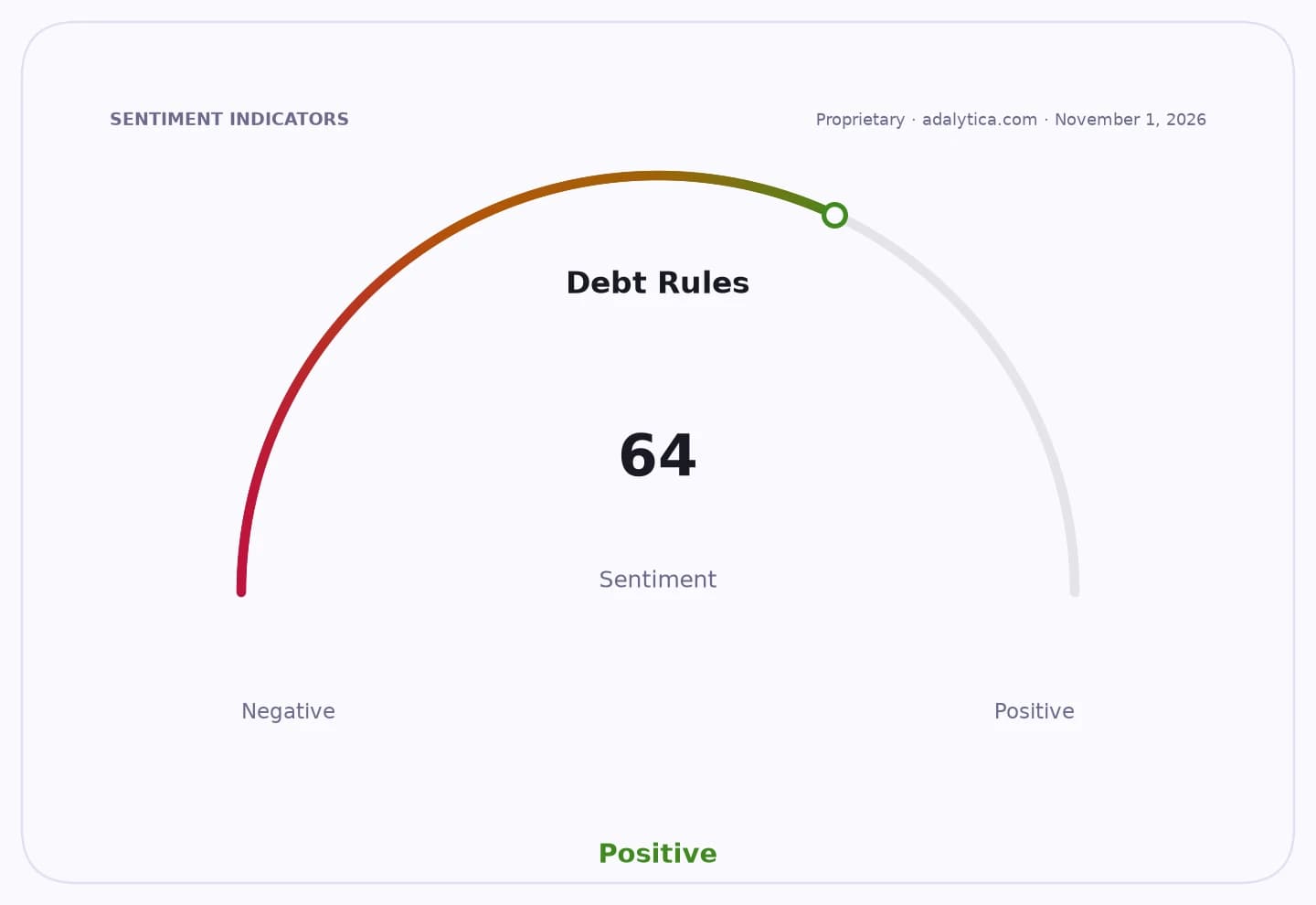
Sentiment Indicators
At the center of the dispute is the court’s finding that a lender that interferes in a borrower’s policy decisions cannot be treated as merely a lender. That is economically important because insolvency recoveries depend on creditor seniority and voting rights, and any finding of related-party status can exclude a financier from the very forum that decides the fate of the debt. For ECL Finance, that means the question is no longer just how much money it lent, but whether it had the kind of influence that invalidates its claim to committee participation.
The court also pointed to a forensic audit that said Palm Developers, which had guaranteed Saha Infratech’s obligations, acted as a conduit for moving money from Saha Infratech to two other companies. If upheld in the wider proceedings, that could strengthen the case that the borrowing structure was used to divert funds rather than finance a genuine project, which would further complicate recoveries for lenders and homebuyers alike.
The ruling lands at a sensitive moment for ECL Finance and its wider group. India’s central bank restricted business at ECL Finance and Edelweiss ARC in May 2024 after identifying loan-related irregularities, showing that the legal and regulatory pressure has been building from more than one direction. That makes the Supreme Court case more than a one-off insolvency fight: it raises questions about governance, connected lending and the credibility of workout claims at a time when Indian banks and shadow lenders are still working through bad assets.
For investors, the immediate issue is not just reputational damage but the potential for lower recoveries, slower resolution timelines and tighter scrutiny of asset reconstruction and structured credit businesses. A lender that is deemed to have influenced the borrower’s decisions can lose standing in insolvency proceedings, which can directly hit the economics of distressed-debt portfolios and reduce confidence in future recoveries.
The broader lesson is that Indian courts are drawing a harder boundary around creditor behavior in insolvency cases. That should improve discipline in the system if it deters related-party financing and fund diversion, but it also increases legal risk for lenders whose relationship with borrowers goes beyond arm’s-length debt. For ECL Finance, the near-term outlook hinges on whether the courts and regulators treat this as an isolated transaction dispute or as evidence of a deeper pattern of control, misconduct and impaired recoverability.
| Entity | Gains | Losses |
|---|---|---|
| Homebuyers / unsecured claimants | ▲Stronger challenge to fund diversion | ▼Slower resolution |
| Bona fide lenders | ▲Clearer insolvency rules | ▼Less recovery leverage |
| ECL Finance | ▲None | ▼Creditor committee access |
| Regulators / courts | ▲Stronger enforcement reach | ▼Higher case burden |