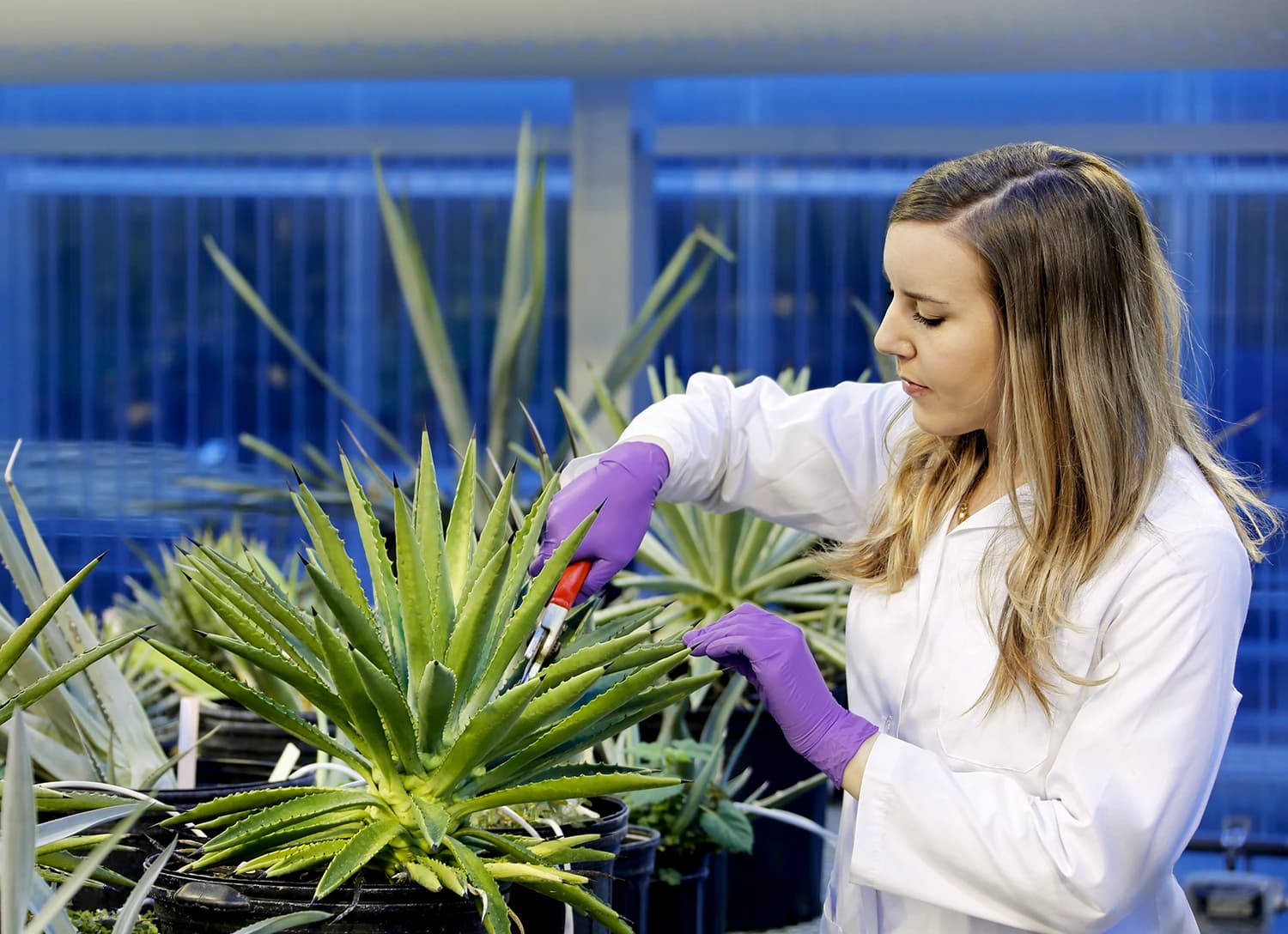
Artificial intelligence is moving from pilot projects into Ecuador’s farms, but the bigger economic story is that the country is still not ready to scale it. The technology is already being used to cut pesticide use, improve crop grading and help farmers meet export traceability rules, yet weak internet coverage, limited training and the absence of a durable public policy are keeping it from becoming a broad productivity tool.
Ecuador farms adopt AI amid scaling limits

That matters because Ecuador’s agriculture is export-dependent and highly exposed to quality, traceability and cost pressures in markets such as cacao, bananas and shrimp. If AI is used only in isolated projects, the productivity gains stay local. If it scales, it can reduce input costs, improve price discovery for farmers and help preserve access to buyers that are tightening sustainability and deforestation requirements.
At ESPOL, researchers are testing low-cost tools designed to solve practical bottlenecks. One project uses air-spore traps to help farmers decide when to spray, rather than fumigating by calendar and risking higher costs or rejected shipments. The device reportedly costs about $600 to make, versus roughly $8,000 for an imported version, and could reduce pesticide use by as much as 20% by simplifying information for producers.
Other projects aim at the economics of grading. One system classifies impurities in maize, addressing a manual process that leaves growers “at a disadvantage” because pricing is subjective. Another measures melanosis in shrimp, a factor that determines both price and destination market. In a country where export margins can be squeezed by inconsistent quality standards, those are not academic experiments; they are attempts to formalize value that is now decided by human judgment.
AI is also being pushed into field operations. Teams are using drone images in visible and infrared spectra to pinpoint weeds in banana plantations, while robotics work is trying to cut hardware costs by developing a multimodal AI system that can guide robots using language instructions without high-end graphics cards. The relevance is clear: lower-cost automation is the difference between a tool that works in a lab and one that can be adopted by smaller producers.
The scale problem remains the real constraint. Ecuador ranks 10th out of 19 countries in the Latin American Artificial Intelligence Index 2025 with 40.68 points out of 100, below the regional average and in the bloc’s “adopters” category. It scores relatively well on use of AI tools, with 74.12 points, but only 41.17 in research, development and adoption. That gap says the country is consuming technology faster than it is building the institutional and digital base needed to diffuse it.
Connectivity is part of that bottleneck. Ecuador has 16 fixed high-speed internet subscriptions per 100 people, below the Latin America and Caribbean average of 17.9, and far behind Uruguay’s 32.4. For investors and agribusiness operators, that is not a side issue: AI systems depend on data flows, cloud access and field-level connectivity. Without those, adoption stays concentrated in better-connected regions and larger operations.
The policy gap may be even more important. Xavier Cárdenas, of Agrosoft Latam, argued that technology adoption is ultimately a people problem, not just an infrastructure one, and said Ecuador lacks a stable public-policy framework built among industry groups, universities and private companies. That leaves younger rural workers as the most likely entry point for digital farming, but also means training and local support will determine whether AI becomes a productivity lever or another underused promise.
The urgency is rising because export rules are becoming stricter. The European Union’s deforestation regulation will require full traceability from January 2027, a major challenge for fragmented crops such as cacao and coffee. Christian Marlin’s AI app, which geolocates a farm from a cellphone in about 15 minutes, shows why the technology could become commercially valuable: tracing origin manually is slow and costly, especially when more than 70% of cacao is unregistered and 90% passes through intermediaries, according to the report.
There is a broader market implication here. Farmers and exporters that adopt AI early could gain lower input costs, better pricing and stronger compliance with destination-market rules. Those that do not may face higher rejection risk, weaker margins and more difficulty proving sustainability credentials. The winners are likely to be larger exporters, tech-enabled cooperatives and buyers who can document supply chains more cheaply. The losers are informal intermediaries and producers stuck outside the digital system.
| Entity | Gains | Losses |
|---|---|---|
| Exporters with traceability systems | ▲Lower compliance costs | ▼Risk of rejection falls |
| Small farmers using AI tools | ▲Better pricing and input efficiency | ▼Manual, subjective grading |
| Informal intermediaries | ▲None | ▼Traceability role shrinks |
| Tech providers and universities | ▲New adoption demand | ▼Pilot-only projects stall |