An early payout of Ecuador’s thirteenth salary is set to boost November spending, but financial advisers are warning households that the year-end windfall can quickly turn into 2027 debt if it is not rationed carefully.
Ecuador Thirteenth Salary May Boost Holiday Spending
Wages
The message matters because the bonus lands just as holiday promotions and festive outlays are peaking, creating a predictable squeeze on family budgets. The core risk is not lack of cash today, but the temptation to finance consumption with cards and deferred payments that become costly once January bills arrive.
Sentiment Indicators
That is why education groups are pushing the 50/30/20 rule: 50% of the extra income for debts and essential obligations, 30% for emergency savings and 20% for Christmas purchases and celebrations. Natalia Garzón, executive director of Fundación Bien-Estar, argues that receiving the payment before December should not be mistaken for a lasting improvement in purchasing power. The point, she says, is to prepare for the first months of next year, when routine expenses continue but the bonus does not.
For Ecuadorian households, the timing is the real story. The thirteenth salary is an annual extra payment, but January brings school fees, insurance, property taxes and other fixed costs. Using the bonus to reduce expensive liabilities, particularly credit-card balances, can lower future interest burdens and preserve household liquidity. Left unmanaged, by contrast, it can encourage front-loaded consumption and add to revolving debt just as families are least able to absorb it.
Daniel Basantes, another Fundación Bien-Estar specialist, said consumers should test their repayment capacity before using cards or taking financing offers. He warned against long deferrals and grace periods that make purchases look affordable upfront but increase the final cost. That caution is especially relevant during a season when merchants lean hard on discounts and payment plans to pull forward demand.
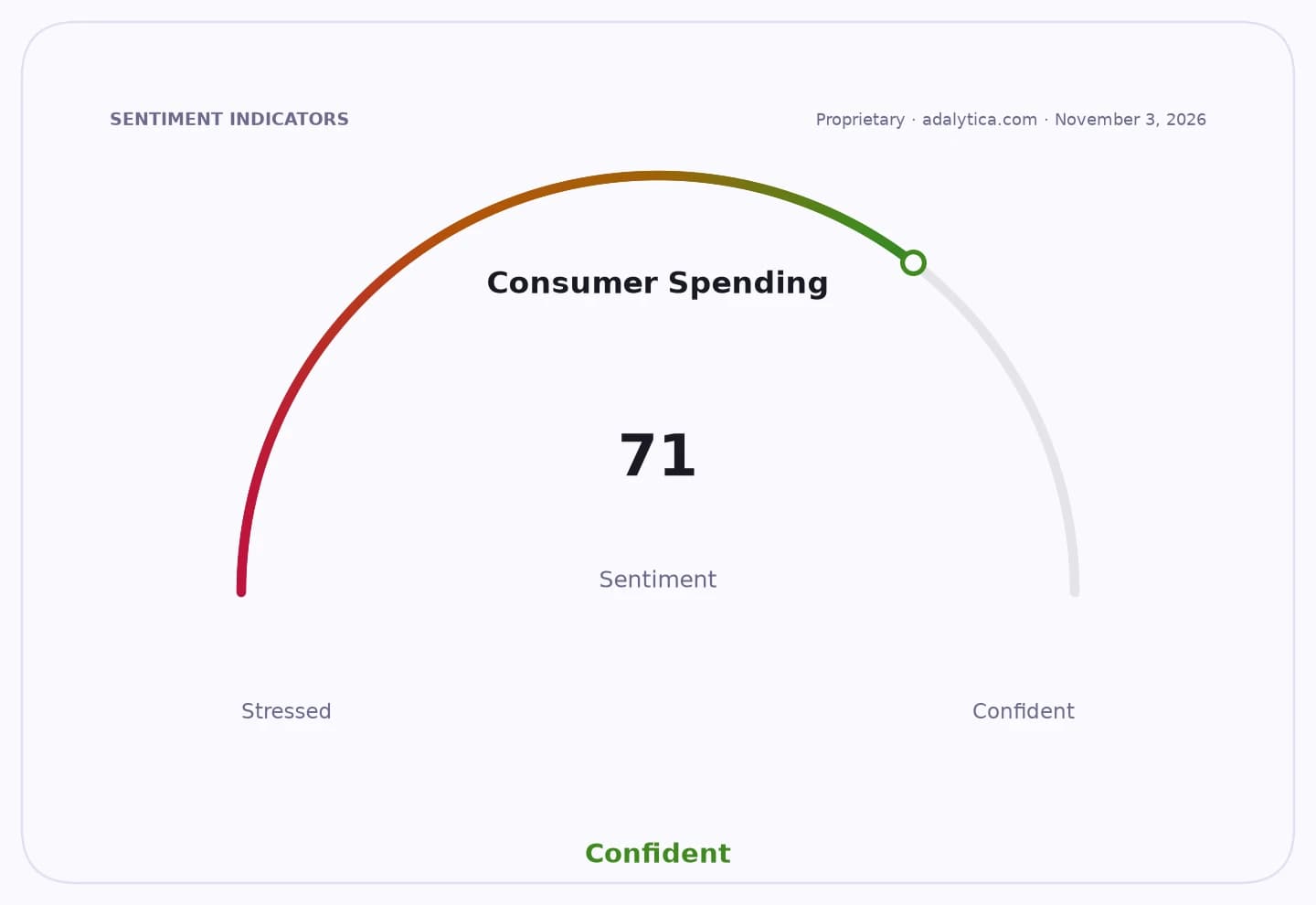
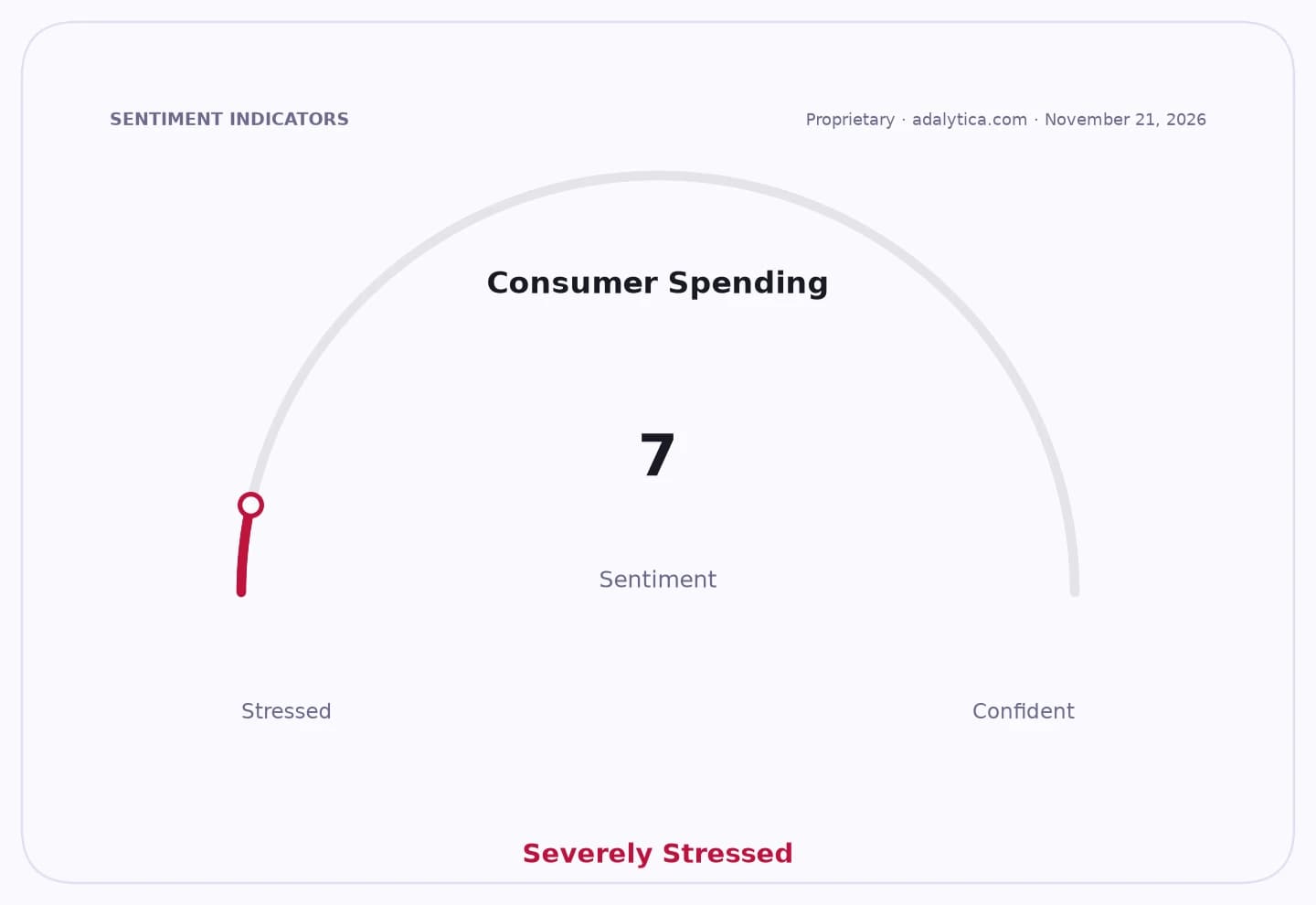
The broader backdrop is one of fragile consumer confidence. Adalytica’s Consumer Spending Sentiment tracker is in “Extreme Fear” territory at 4.0, with awareness also at “Extreme Fear,” suggesting households are already cautious about discretionary outlays. Wage inflation sentiment is likewise weak. That combination points to a consumer base that may welcome the bonus as a buffer rather than a signal to spend aggressively.
For retailers, the thirteenth salary still supports a short burst of holiday demand. For lenders, it can either reduce delinquencies if households use it to pay down balances, or extend them if consumers reload cards after clearing them. For investors, the key takeaway is that this is less a story about seasonal income than about balance-sheet discipline: whether Ecuadorian families treat the extra pay as debt relief and emergency savings, or as fuel for a costly spending spike.
In that sense, the rule being promoted by financial educators is not just household advice. It is a practical response to a consumption calendar that can magnify financial stress long after the holidays end.
| Entity | Gains | Losses |
|---|---|---|
| Households that save/pay debt | ▲Lower interest costs | ▼Less immediate spending |
| Retailers and holiday sellers | ▲Near-term sales lift | ▼Softer ticket sizes if caution rises |
| Credit card issuers | ▲Higher transaction volumes | ▼Higher delinquency risk if debt builds |
| Families without a budget plan | ▲Short-term consumption | ▼Higher 2027 debt burden |