The Eurasian Development Bank has tapped Hong Kong’s offshore yuan market for the first time, selling a 630 million-yuan three-year dim sum bond that gives the multilateral lender a fresh funding channel for China-linked infrastructure projects in Kazakhstan and beyond.
EDB sells 630 million yuan dim sum bond in Hong Kong

The deal matters because it shows how policy lenders and development banks are still willing to use Hong Kong as a bridge for yuan financing even as global rates remain elevated and dollar markets stay comparatively expensive. For the EDB, the transaction broadens its investor base, reduces reliance on bank credit lines and anchors funding for projects tied to trade flows between Central Asia and China.
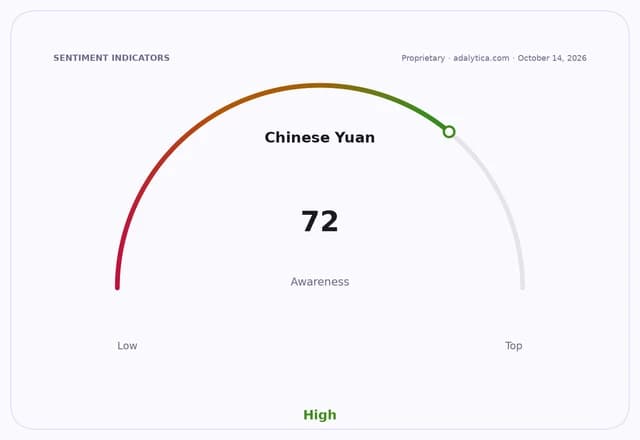
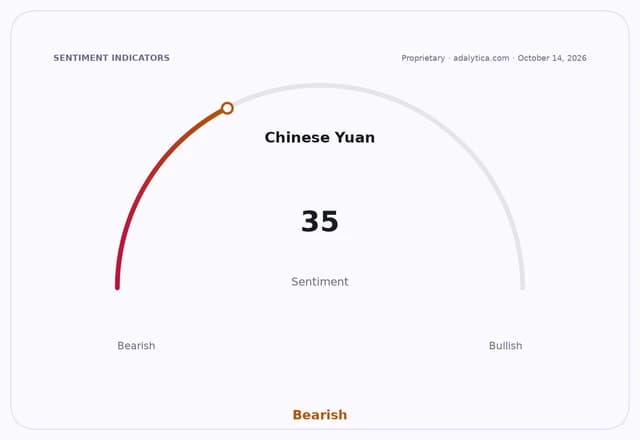
Sentiment IndicatorsⓘProprietary · adalytica.com · October 14, 2026
This is a snapshot — live sentiment, awareness and momentum for 130+ markets update continuously in the dashboard.Open AlphaPulse
The bond was more than 2.5 times subscribed, according to the bank, and priced at a 3.9% coupon. That level suggests there was enough demand to absorb a debut issue from a relatively niche borrower, helped by an investment-grade profile and the scarcity value of yuan-denominated paper from a multilateral institution. The notes were issued under a new $3.5 billion medium-term note programme and listed on the Hong Kong Stock Exchange.
China Galaxy International, CICC and CITIC Securities acted as global underwriters, with Fosun International Securities and Orient Securities Hong Kong as joint arrangers. The bank said demand came from Asia as well as investors in Europe, the Middle East and Africa, underscoring that offshore yuan issuance is no longer just a regional play for Chinese borrowers but a funding tool with broader institutional appeal.
The proceeds will finance a border crossing and railway line on the Kazakhstan-China border, along with other Kazakhstan projects involving Chinese participation. That is strategically important for Kazakhstan, which remains a transit hub for Eurasian trade corridors, and for Beijing, which continues to promote Belt and Road-linked connectivity. For the EDB, the issue also reinforces its role as a capital intermediary for cross-border infrastructure in member states.
There is also a market message in the deal. Offshore yuan issuance has been uneven at times, but this transaction shows the dim sum market still has room for borrowers that can offer policy relevance, geographic exposure and a clear use of proceeds. A successful debut can help the EDB return to the market at lower execution risk, while also giving investors another yuan asset in a market where supply remains limited.
For investors, the key question is whether this marks a one-off funding event or the start of a deeper push by multilateral and quasi-sovereign borrowers into yuan liabilities. If offshore yuan liquidity remains available and demand for China-linked infrastructure exposure holds up, more issuers could follow. If not, this may be remembered as a well-timed debut that took advantage of scarce supply and steady appetite for Belt and Road-related credit.
| Entity | Gains | Losses |
|---|---|---|
| EDB | ▲New yuan funding source | ▼Greater debt obligations |
| Investors | ▲Access to scarce dim sum paper | ▼Exposure to project and credit risk |
| Kazakhstan | ▲Infrastructure financing | ▼Higher reliance on external capital |
| Hong Kong dim sum market | ▲More issuance volume | ▼None noted |