Effective altruism is trying to define itself before its critics do, as the movement’s deep links to Silicon Valley’s AI elite put it squarely in the political crossfire around how artificial intelligence should be governed.
Effective Altruism Faces AI Policy Backlash

What makes that matter economically is not the movement’s size so much as its proximity to capital, talent and policy. Effective altruism has helped shape the priorities of people inside OpenAI, Anthropic and other AI shops, especially around AI safety, so attacks on the movement increasingly overlap with the wider battle over regulation, product risk and the pace of AI deployment.
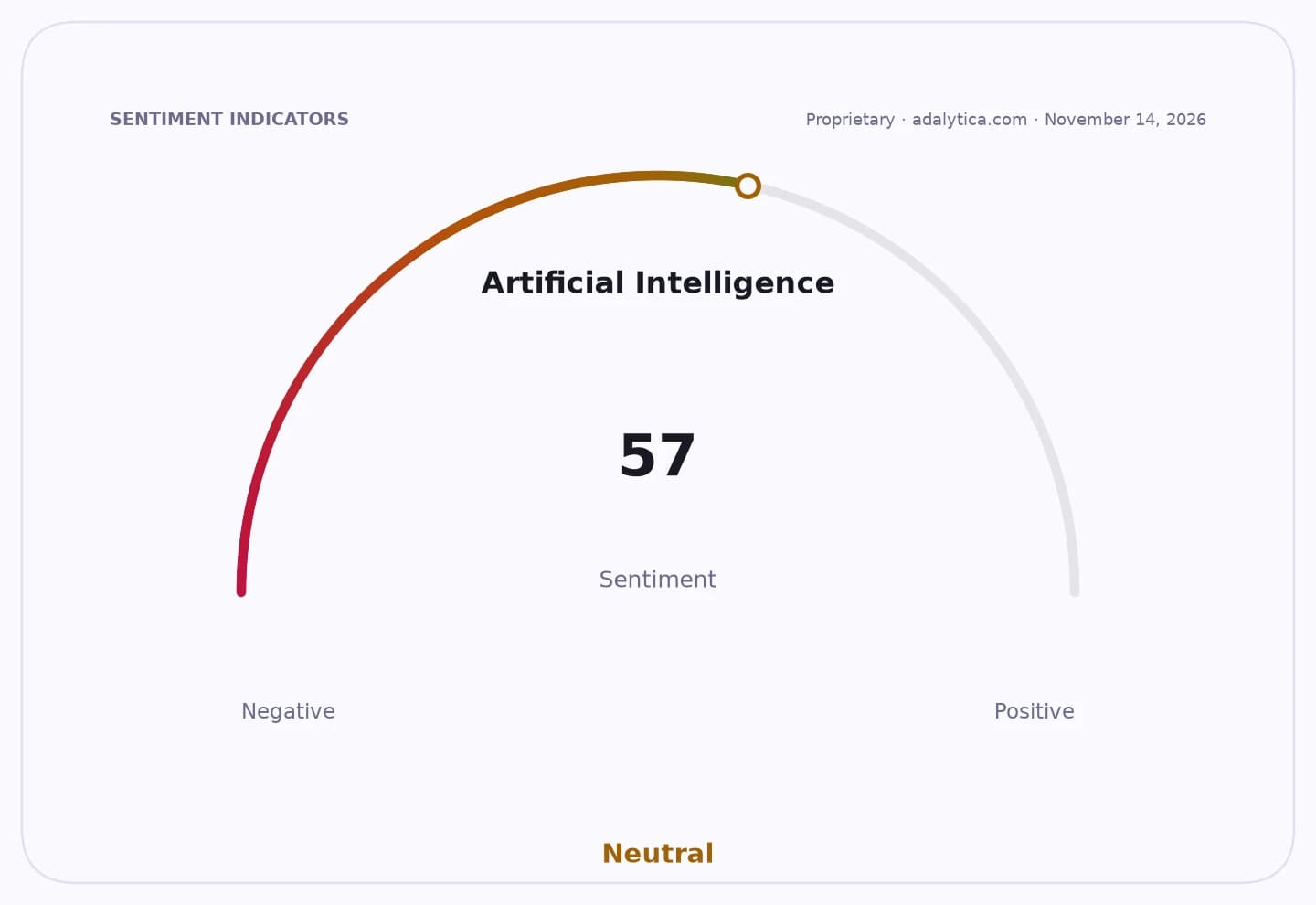
Sentiment Indicators

The backlash has intensified in recent weeks. Conservative media have portrayed effective altruism as a cult-like, apocalyptic lobby, while a White House memo accused it of preferring “shrimp over families.” David Sacks, a venture capitalist and Trump adviser, has described organizations tied to the movement as part of a “Doomer Industrial Complex” pressing for tighter AI rules. That framing is politically potent because it casts safety advocates not as responsible stewards of a fast-moving technology, but as a brake on growth.
For investors, the issue is whether scrutiny of AI-safety circles becomes a broader headwind for the companies most exposed to the debate. The winners from a softer regulatory regime would be the large model developers and chip suppliers that benefit from aggressive capital spending and rapid product rollout. The losers would be groups pushing harder guardrails, and potentially any company whose roadmap depends on proving that safety and scale can coexist.
Artificial Intelligence
Effective altruism’s defenders argue the criticism misses both its breadth and its economics. The movement says it is not synonymous with AI safety, even if that cause has become more prominent lately. It still directs significant money and attention to global health and development, and its backers say the core idea is simply to deploy time and capital where they do the most good.
That message is gaining urgency after the movement was badly bruised by the collapse of FTX and the fraud conviction of Sam Bankman-Fried, once its most visible champion. Now it is trying to rebuild credibility in a very different environment, with attendance at the recent EA Global conference in New York cited by organizers as evidence of recovery.
The timing matters. AI has become a strategic industry for the market, and the current debate is no longer just philosophical. Nvidia, Microsoft and the rest of the AI trade depend on continued investor confidence that spending on chips, cloud capacity and model training will translate into durable earnings growth. At the same time, the political case for stronger oversight has sharpened as the public debate around AI risk becomes more charged.
That makes the effective altruism story bigger than a movement trying to improve its image. It is really about who gets to shape the narrative around AI’s economic costs and benefits: the builders pushing for speed, or the safety advocates arguing that restraint is part of long-term value creation.
| Entity | Gains | Losses |
|---|---|---|
| Effective altruism movement | ▲Broader understanding | ▼Simplistic caricatures |
| AI safety advocates | ▲More legitimacy | ▼Regulatory critics |
| AI builders and chipmakers | ▲Faster deployment | ▼Tighter oversight |
| Investors in AI growth | ▲Higher upside | ▼Safety-driven delays |