Japan’s Nikkei 225 tumbled 5.6% on Friday, dropping below 58,000 for the first time in six months, as investors reassessed the durability of the global artificial-intelligence trade after Democratic gains in the U.S. Congress sharpened fears of tougher regulation and slower capital spending.
Nikkei 225 Falls 5.6% on AI Trade Worries
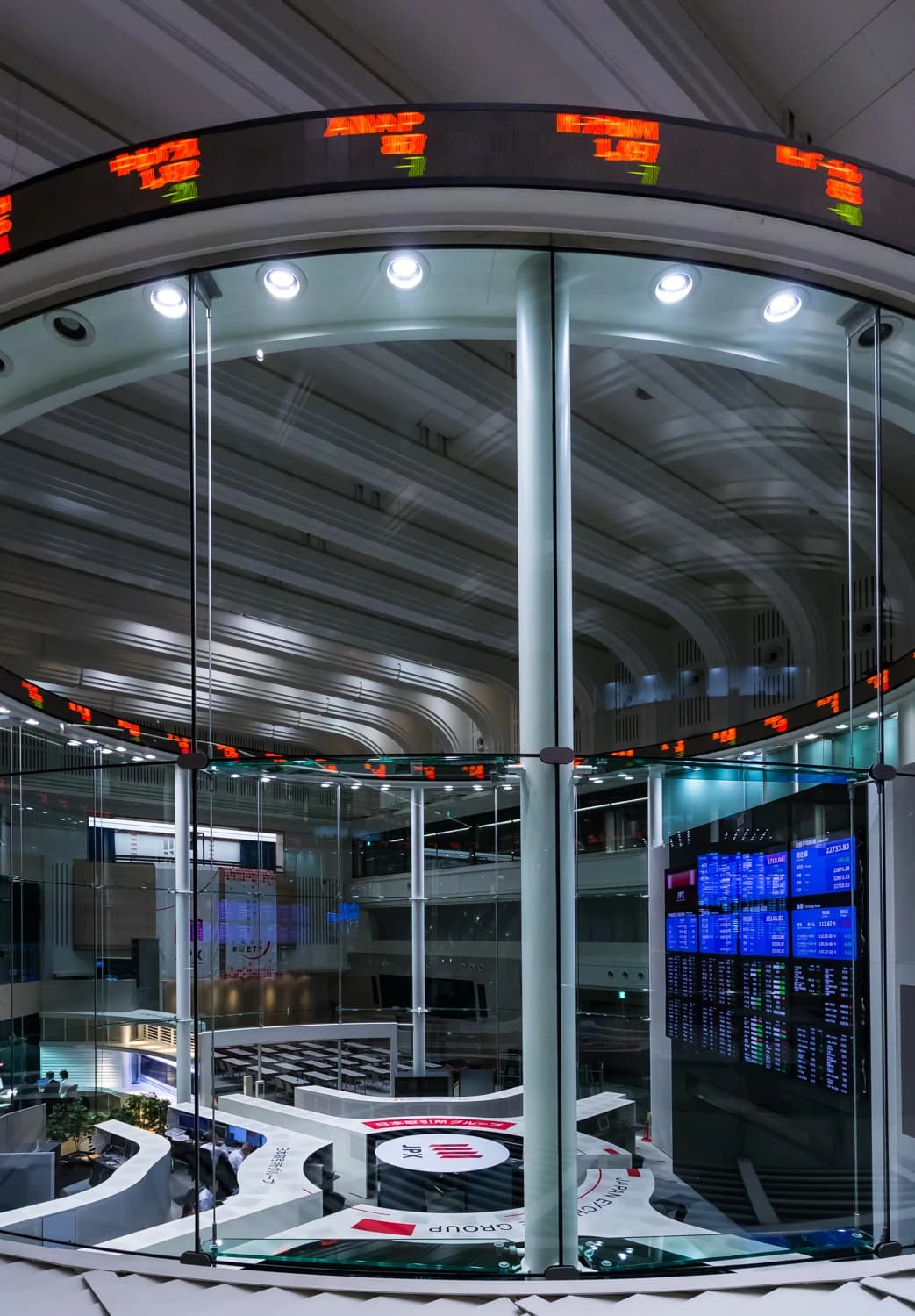
The benchmark fell as much as 5.59% to 57,662.63, a sharp reversal for a market that has spent much of the year riding enthusiasm for semiconductors, automation and AI-linked hardware. The selloff matters because Japan has become one of the clearest beneficiaries of the AI capex cycle: chip equipment makers, memory suppliers and precision industrial firms have all been priced on the assumption that hyperscaler investment will continue at a near-record pace.
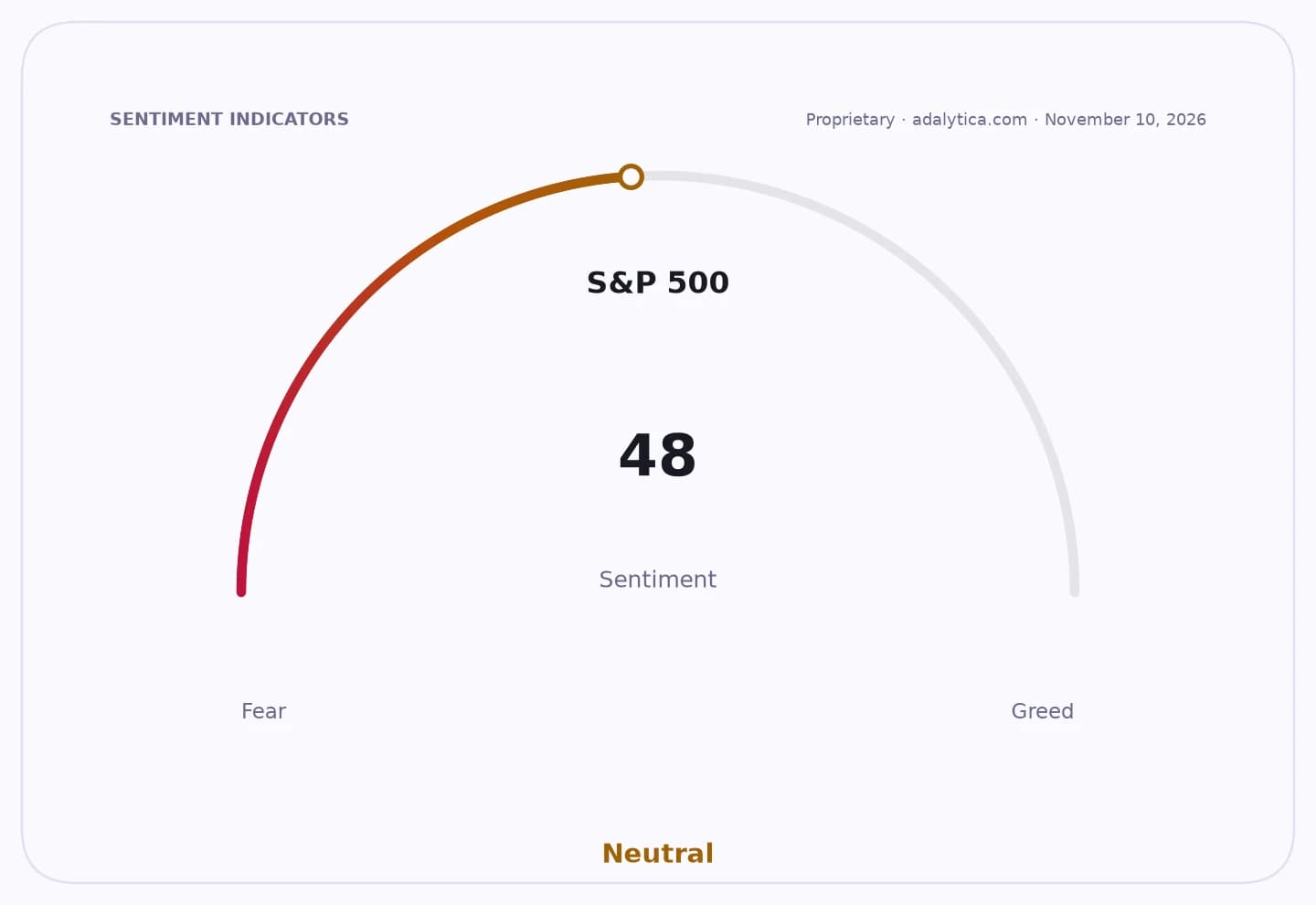
Sentiment Indicators
Friday’s move suggests that assumption is now under pressure. Local analysts said the trigger was concern that Democrats’ congressional gains could lead to tighter oversight of AI and, by extension, less aggressive spending by U.S. technology groups. That would hit not only American megacaps but also Asian suppliers embedded in the global AI supply chain, from chipmakers to components and factory-automation companies.
The reaction was severe enough to pull the Nikkei well below its recent trading range. The index had been holding above 60,000 and remained far above its 200-day moving average before the drop, but the latest slide has pushed momentum indicators sharply lower, with the relative strength index sinking to oversold levels. For investors, that combination raises the risk that what had been a valuation-led rally in Japan’s AI proxies is turning into a broader de-rating.
The pressure was visible across global technology stocks. Nvidia, a bellwether for AI spending, fell to $169.42 in the latest session from $181.60 the day before, extending a steep decline that has already erased a large part of its summer gains. That matters because Nvidia’s results and outlook have become the market’s best real-time gauge of whether AI infrastructure demand is translating into profits. If spending slows before those returns are clear, investors may start questioning whether the capital intensity of the AI buildout is outrunning monetization.
The macro backdrop adds to the caution. Gita Gopinath, the IMF’s first deputy managing director, has warned that nearly $1 trillion in expected AI spending by 2026 could face a significant market correction if companies fail to generate enough profit, underscoring the growing debate over whether the boom is being financed ahead of earnings. That argument is now colliding with a more hostile policy environment and a market already sensitive to stretched valuations after a long run in AI-linked names.
For Japan, the immediate implication is that the market’s leadership could narrow quickly if the AI theme loses traction. Exporters tied to U.S. tech demand may stay volatile, while domestically oriented sectors could see relative support if funds rotate out of expensive growth names. For global investors, the selloff is a reminder that the AI trade is no longer driven just by technology adoption; it is also being tested by regulation, political risk and the hard requirement that spending eventually convert into cash flow.
What happens next will depend on whether the post-election policy shift in Washington becomes more than a headline risk. If corporate AI budgets hold up and earnings keep improving, the recent drop may prove a violent but temporary correction. If not, Friday’s move in Tokyo may mark the point at which investors began to price the end of the most crowded trade in global equities.
| Entity | Gains | Losses |
|---|---|---|
| Value stocks / non-AI sectors | ▲Relative rotation inflows | ▼Less attention in a tech-led market |
| AI hardware suppliers | ▲Sustained capex growth | ▼Slower spending and valuation compression |
| U.S. regulators / Democrats | ▲More leverage on oversight agenda | ▼Risk of market backlash |
| Long AI / short volatility investors | ▲None in the selloff | ▼Mark-to-market losses and higher volatility |