Egypt gold prices fell again on Friday, with the widely traded 21-karat gram dropping 15 pounds to 5,825 pounds, as a softer global bullion market offset continued demand for gold as a store of value.
Egypt Gold Slips as Global Bullion Softens
The move matters in Egypt because gold is both a consumer good and a savings instrument, especially when households are watching the pound and inflation expectations. A lower 21-karat price eases near-term costs for jewellery buyers, but it also trims the value of recent purchases by savers who shifted into bullion to hedge currency risk.
Sentiment Indicators
Global gold futures were little changed at $4,128.90 an ounce on July 10, after closing at $4,130.60 a day earlier, exchange data showed. The metal remains below its 50-day and 200-day moving averages, conventional technical indicators that point to a market still repairing after a sharp pullback from earlier highs. RSI readings have recovered to 42.8 from oversold levels but remain short of strong momentum territory.
For Egyptian buyers, the exchange rate remains central. The dollar was quoted around 49.56 pounds, leaving local gold prices exposed to both global bullion moves and currency swings. The 21-karat gram, Egypt’s benchmark retail grade, implies a gold pound price of about 46,600 pounds before workmanship, tax and dealer spreads.
Gold Fear & Greed Index vs GC=Fadalytica.com
Explore this data interactively — full history, time series and cross-market comparisons.

The macro backdrop is mixed for bullion. U.S. 10-year Treasury yields were near 4.54% on July 9 and were forecast at 4.578% for July 10, keeping pressure on non-yielding gold. Federal funds rates were steady around 3.63%, limiting the immediate boost that would come from expectations of aggressive monetary easing.
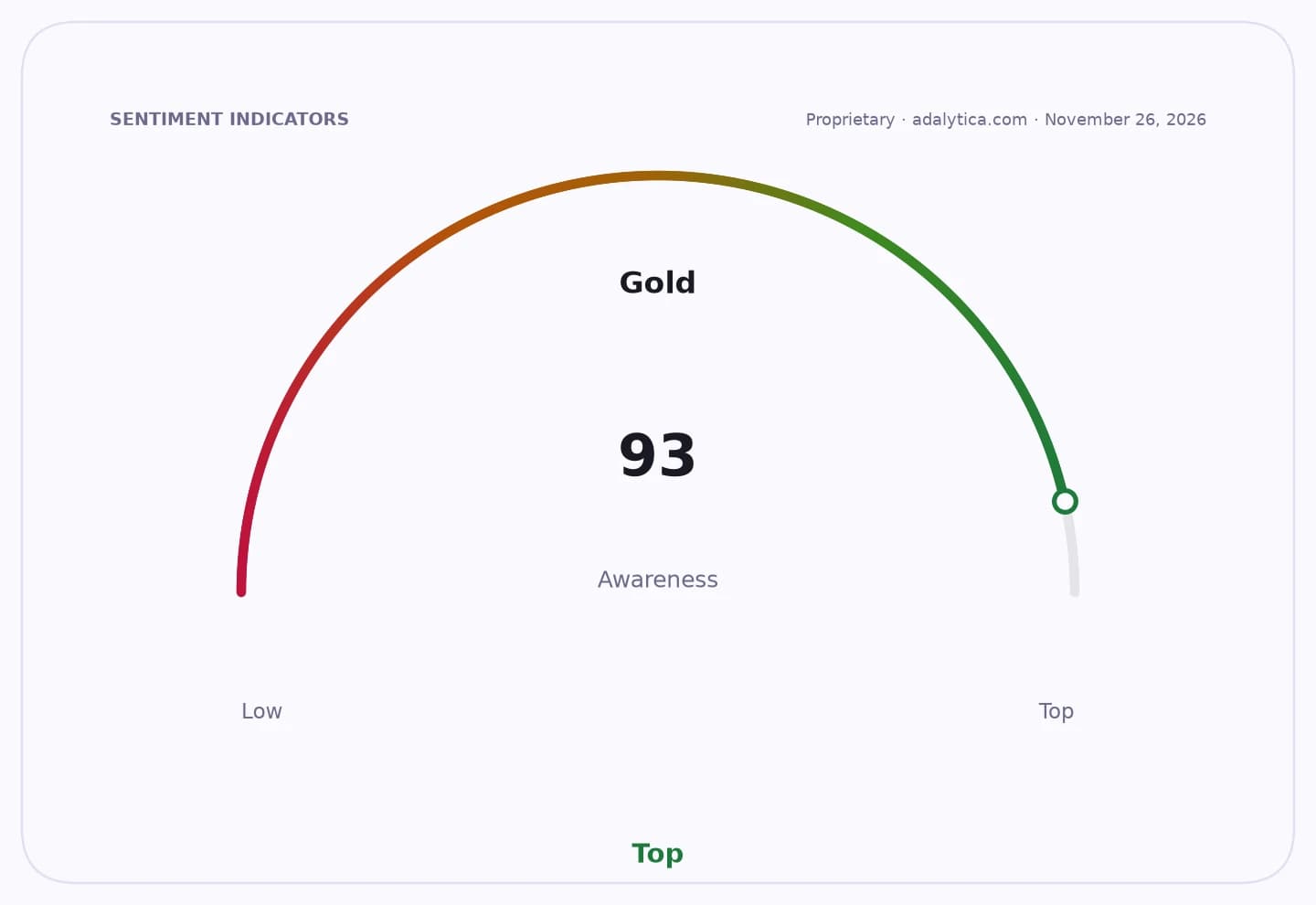
Still, the broader investment case for gold has not disappeared. Adalytica.com’s Gold Fear & Greed Index showed sentiment at 93, in “Extreme Greed,” while its global stability gauge remained in “Extreme Fear,” underscoring demand for safe assets even as spot prices consolidate. Dollar sentiment on Adalytica’s indicators weakened to 31, a potential support for bullion if the trend persists.
The domestic market is also watching supply-side developments. Egypt is expected to begin commercial production at the Abu Marwat gold project next year, a step that could support the country’s mining ambitions, though it is unlikely to materially change retail pricing in the near term. A fatal accident at a Sudanese gold mine, where 15 miners died despite a prior closure decision, highlighted the risks facing regional informal and small-scale mining supply chains.
The next move for Egypt’s gold market will depend on whether international prices can regain momentum above key moving averages and whether the pound remains stable near current levels. For now, the drop in 21-karat gold gives buyers some relief, while investors remain focused on currency risk, U.S. yields and safe-haven demand.
| Entity | Gains | Losses |
|---|---|---|
| Jewellery buyers | ▲Lower entry price | ▼Recent buyers |
| Gold investors | ▲Safe-haven support | ▼Yield competition |
| Egyptian pound users | ▲Cheaper local grams | ▼Currency hedgers |
| Gold sellers | ▲Strong hedge demand | ▼Weaker margins |