Egypt’s plan to lift the minimum wage gradually through 2029-2030 is a wage policy move with direct implications for household spending, inflation management and the government’s broader social contract.
Egypt Minimum Wage Plan Through 2029-2030

The announcement, endorsed by the president, is aimed at improving living standards for at least 4.5 million employees nationwide at a time when cost-of-living pressures remain a central economic risk. For workers at the bottom of the pay scale, the change should provide a slow but visible boost to real incomes if price growth continues to ease; for policymakers, the challenge is to raise pay without reigniting inflation or putting pressure on employers already facing higher operating costs.
Sentiment Indicators
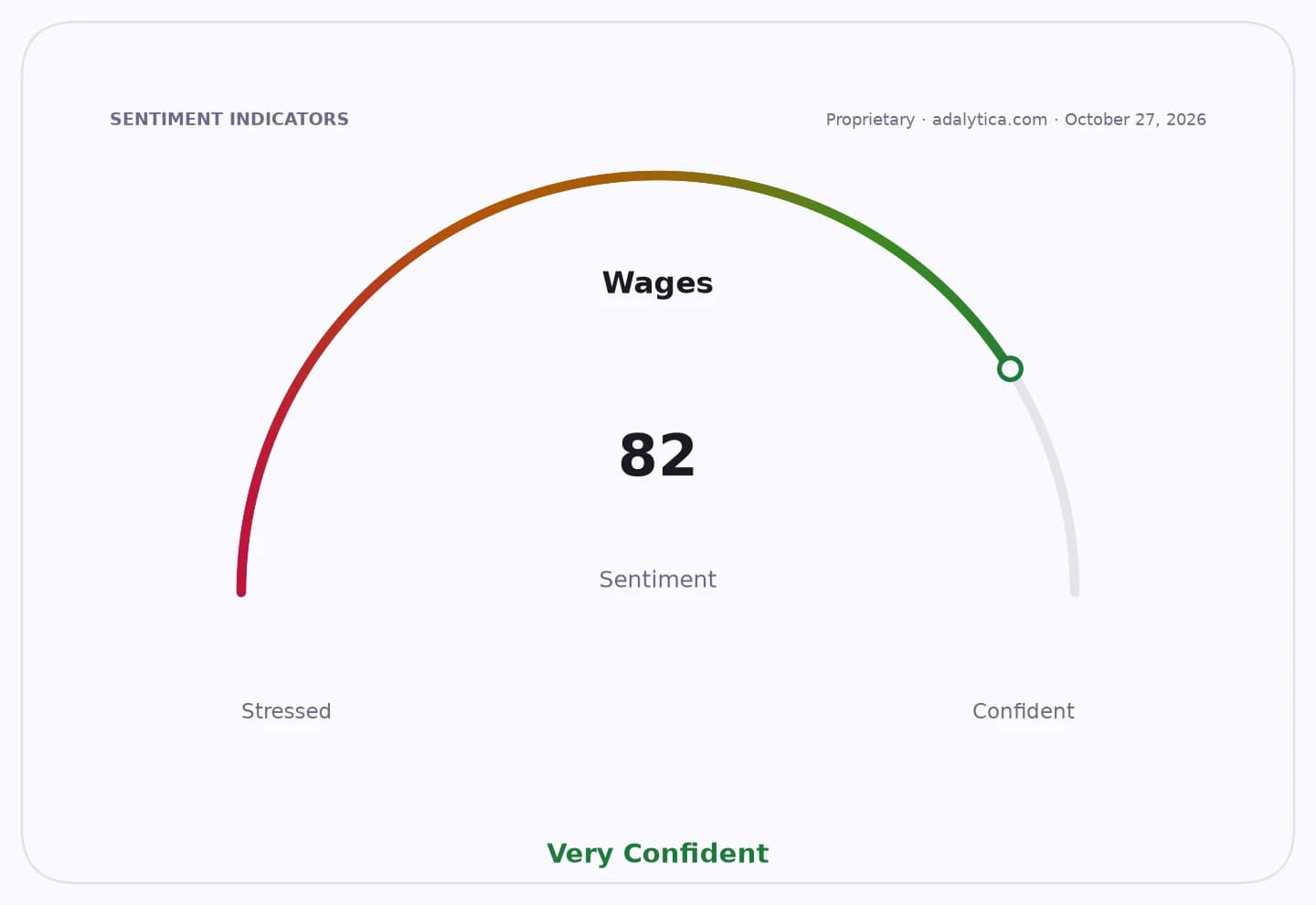
Wages
Minimum wage increases matter most when they are phased and pre-committed. That gives businesses time to adjust payrolls, pricing and hiring plans, and it gives the central bank and fiscal authorities a clearer view of how much wage inflation may feed through to consumption and prices. The policy also signals that the government is trying to support demand from lower-income households, which tend to spend a larger share of extra income quickly, supporting retailers, food sellers and other consumer-facing businesses.
The move also carries a political economy dimension. Wage floors are often used to blunt social tension when growth is uneven and living costs are sticky. In that sense, the decision is less about a single pay adjustment than about the state’s willingness to absorb some of the burden of adjustment while keeping labor-market stability intact. The risk is that if private employers cannot keep up, they may respond by slowing hiring, trimming hours or passing higher labor costs on to consumers.
For investors, the key question is whether the phased timetable proves manageable for corporate margins and macro stability. If inflation continues to moderate, the wage increase could support domestic consumption without forcing a sharper policy response. If price pressures reaccelerate, however, the real benefit to workers could shrink quickly, and businesses with heavy labor exposure could face margin pressure.
The coming years will show whether Egypt can use wage policy to cushion living standards without unsettling competitiveness or inflation expectations.
| Entity | Gains | Losses |
|---|---|---|
| Low-wage workers | ▲Higher take-home pay | ▼Wage gains eroded by inflation |
| Consumer-facing retailers | ▲Better household spending | ▼Higher labor costs |
| Government | ▲Social stability | ▼Fiscal/political pressure if inflation rises |
| Employers | ▲Predictable phase-in | ▼Margin compression |