Egypt’s government is pressing ahead with its long-delayed privatization program and tightening economic defenses as rising regional tensions threaten growth, trade and public finances.
Egypt Pushes Privatization and Spending Cuts
Prime Minister Mostafa Madbouly on Monday met senior officials to review the state’s pipeline of asset sales and ongoing deals, while separately chairing an emergency committee session focused on the economic fallout from escalating geopolitical developments in the region. For investors, the message is straightforward: Cairo wants to bring in private capital faster, build buffers in essential goods and rein in spending before external shocks hit the economy harder.
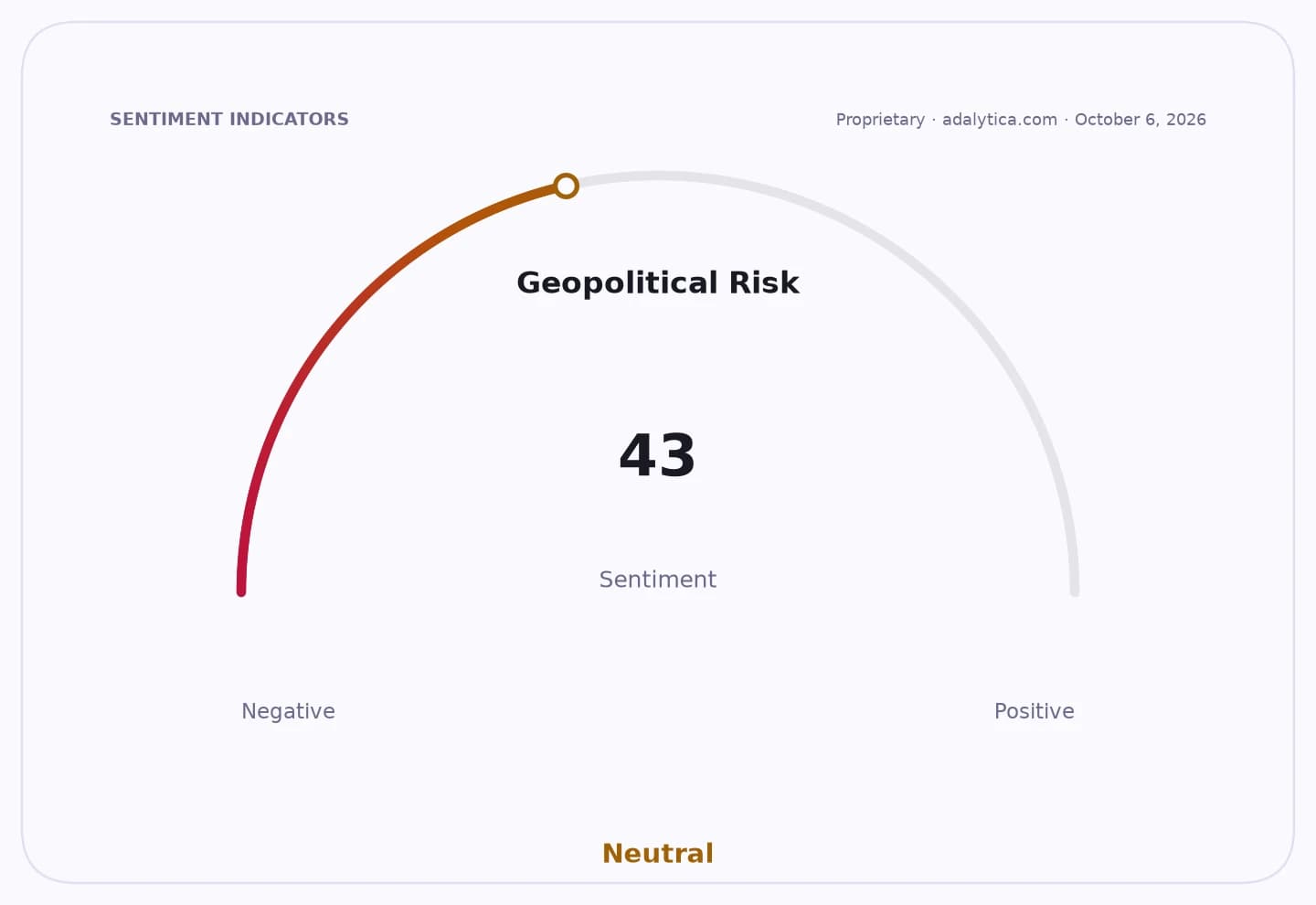
Sentiment Indicators
That matters because Egypt is trying to do several difficult things at once. It wants to increase the private sector’s share of economic activity, accelerate government offerings, make better use of state assets and keep strategic commodities well stocked. At the same time, it is preparing contingency plans to absorb spillovers from regional instability that could pressure supply chains, imports, energy costs and consumer prices.
Officials said the government is working on a more comprehensive plan to curb public spending and improve the efficiency of resource use, especially as it seeks to preserve funding for basic goods and fuel. Finance and planning officials said the proposal is meant to support economic activity while making sure financing remains available for essential commodities and petroleum products.
The supply side is central to the story. Egypt’s trade and supply ministry said strategic inventories of various goods cover an average of six months, with some items lasting longer, and that new contracts are being arranged to lift stockpiles further. The ministry also said its price-cutting initiative now covers 30 staples with discounts of 15% to 25% versus external market levels, distributed through a wider nationwide network.
For investors, that combination of privatization and austerity is important for two reasons. First, faster state asset sales can help unlock value, attract foreign capital and reduce the state’s direct role in sectors where private operators can often deploy capital more efficiently. Second, stronger food and fuel buffers can help soften inflation shocks, which is crucial in a country where household spending is highly sensitive to imported essentials and energy costs.
The market backdrop also helps explain the urgency. Broader emerging-market assets have been volatile, while the dollar has been under pressure in trade signals and global risk appetite has swung sharply as investors reassess geopolitical exposure. In that kind of environment, countries with large import needs and heavy subsidy burdens are especially vulnerable if logistics, energy markets or financing conditions worsen.
For long-term investors, the key question is whether Cairo can turn this into a credible, repeatable policy shift rather than another stop-start reform push. The government has been promising to expand private-sector participation for years, but execution has often lagged intentions. If the current wave of deals moves from discussion to completion, it could improve confidence in Egypt’s reform path, support foreign direct investment and create room for more sustainable growth.
The risk, of course, is that regional instability keeps forcing the state into defensive mode, slowing reform momentum and increasing pressure on budgets, imports and the currency. But even then, the logic behind the current response is sound: build buffers, conserve cash and open more of the economy to private capital. That is exactly the kind of discipline investors should want to see in an economy facing an uncertain neighborhood. Worth watching, and for patient investors, worth keeping on the long-term radar.
| Entity | Gains | Losses |
|---|---|---|
| Egyptian government | ▲More financing options | ▼Less policy room if shocks worsen |
| Private investors | ▲New asset-sale opportunities | ▼Execution risk and delays |
| Consumers | ▲Better staple availability | ▼Price relief may not last |
| State budget | ▲Lower spending pressure | ▼Reform costs and volatility |