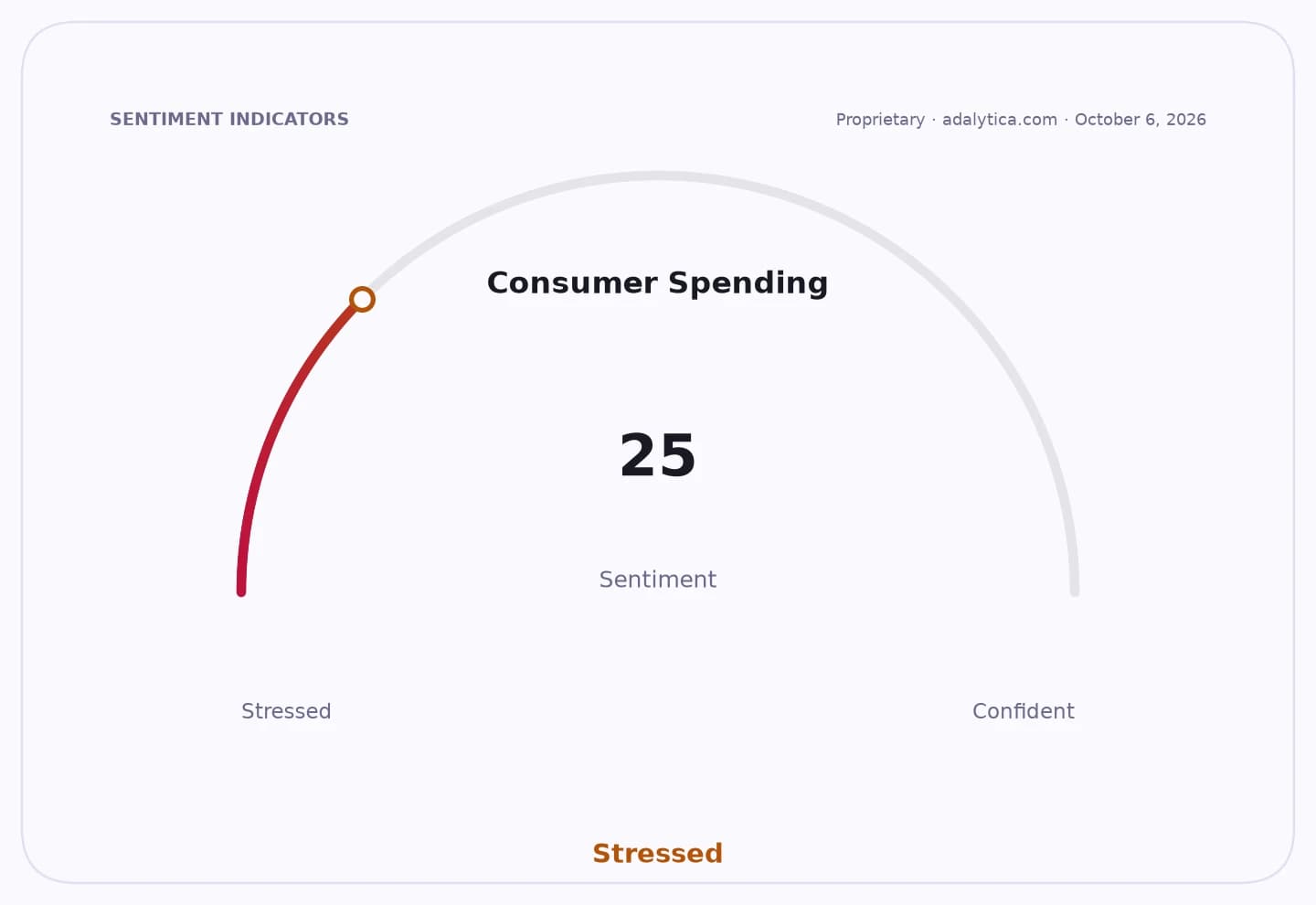
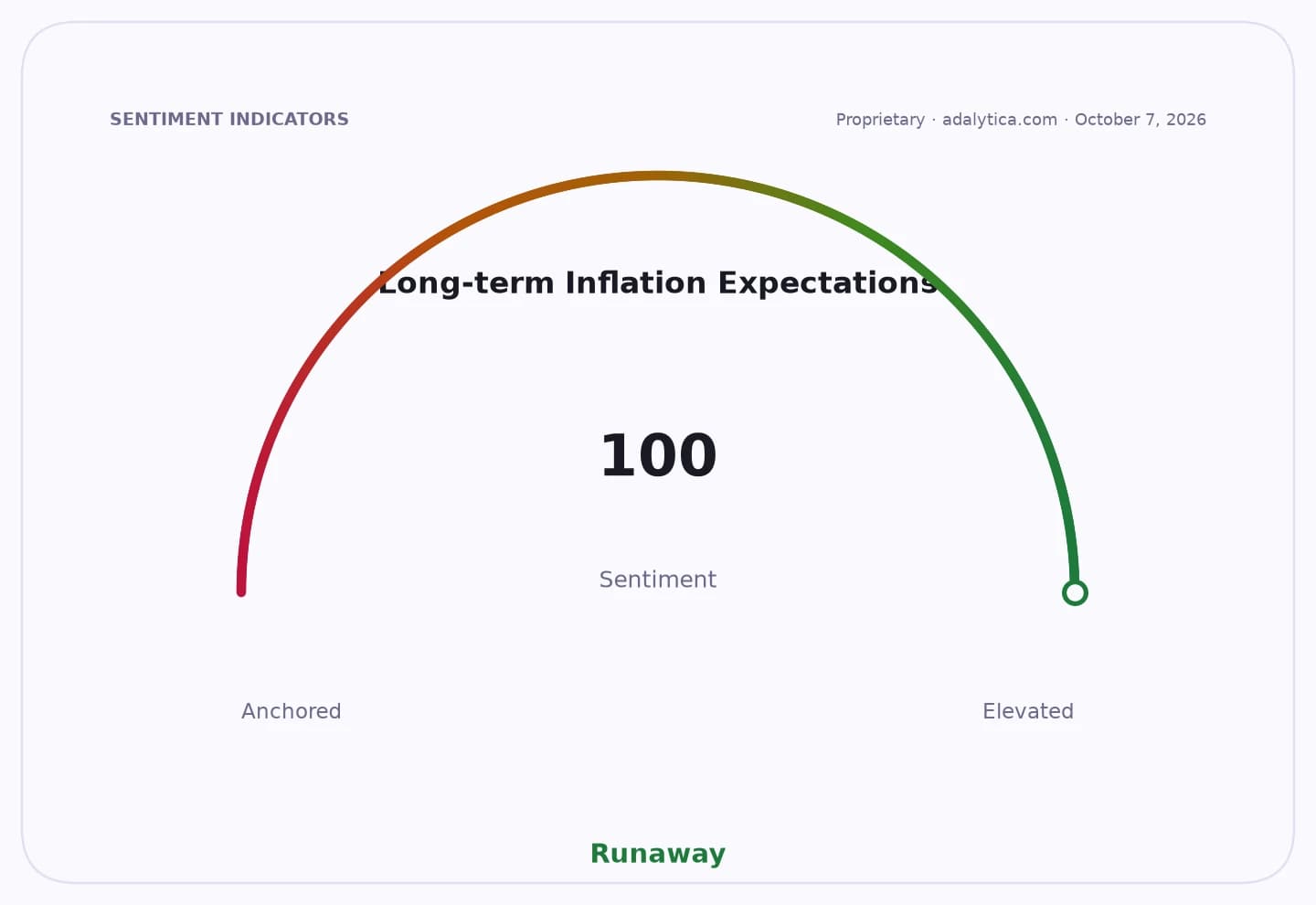
Egypt’s recent interest-rate increase is designed less to cool an overheating economy than to keep a new inflation shock from taking hold as Middle East tensions push up energy prices.
Egypt rate hike aims to curb imported inflation
CPI
Former finance minister Youssef Boutros Ghali said the move was a “preventive measure” to contain the pass-through from higher oil prices and wider regional instability, arguing that the central bank is trying to stop imported inflation from spreading through food, transport and other consumer goods. He said crude could hover near $100 a barrel and could climb as high as $130 if the Strait of Hormuz remains disrupted into March, a scenario that would keep pressure on Egypt’s import bill and on domestic prices.
Sentiment Indicators
That logic matters because Egypt remains highly exposed to external price shocks. The country depends heavily on imported fuel, grains and industrial inputs, so a sustained rise in global energy costs can quickly feed into inflation expectations and the exchange rate. The central bank’s decision to tighten now reflects a preference for slowing credit growth and domestic demand before a commodity shock becomes embedded in wages and pricing behavior.
For investors, the significance is twofold. First, a pre-emptive rate hike can help anchor confidence in the inflation outlook and reduce the risk of a more disorderly policy response later. Second, it raises the near-term cost of capital for businesses and households, which can weigh on growth, bank lending and sovereign debt service. In a market that has only recently begun to price in gradual disinflation, the policy mix suggests authorities are prioritizing price stability and external resilience over faster activity.
Ghali also argued that acting early could allow rates to be cut faster later if geopolitical risks ease, underscoring how much Egypt’s monetary path now depends on forces beyond its control. That is the core narrative for markets: this is not a conventional domestic tightening cycle, but a defensive move against imported inflation from oil and regional conflict.
His comparison with the United States was meant to make that point. The Federal Reserve can absorb a modest 25-basis-point adjustment with a still-strong economy and inflation above 4%, he said, while Egypt faces a more fragile macro backdrop and less room to let external shocks work through the economy unchecked. The implication is that Egypt’s policy makers have fewer options and a lower tolerance for letting inflation run.
The near-term test is whether oil stabilizes and the regional situation cools enough for the central bank to slow or reverse tightening. If not, Egypt may have to keep policy restrictive longer, even as growth slows and financing costs rise.
| Entity | Gains | Losses |
|---|---|---|
| Egyptian policymakers | ▲Inflation credibility | ▼Near-term growth momentum |
| Savers and pound holders | ▲Higher real returns | ▼Borrowers and consumers |
| Banks | ▲Wider lending margins | ▼Credit demand |
| Importers and energy users | ▲None | ▼Higher input costs |