EOG Resources got a fresh vote of confidence as Johnson Rice lifted its price target to $170 from $160, a call that underscores how sustained crude prices near $90 a barrel are improving the earnings and cash-flow outlook for large U.S. shale producers.
EOG Resources Target Raised to $170 by Johnson Rice
The upgrade matters because EOG is one of the sector’s cleaner ways to play firm oil without the balance-sheet risk that can come with more leveraged peers. With WTI around $89.56 and Brent hovering near $92.26, the backdrop remains supportive even as the market still faces an oversupply narrative. For EOG, every $1 move in crude and condensate plus NGLs translates to roughly $175 million of sensitivity, according to its latest filing, making oil’s resilience directly relevant to valuation.
Sentiment Indicators
EOG shares have already re-rated sharply this year, rising to as high as $165.54 in late October before slipping to around $148.60 on Friday. The stock now sits only modestly above its 200-day moving average of about $138.67, while its 50-day average is near $150.08. That leaves the name in a technically softer patch after a strong run, but also keeps it close enough to recent levels that further support from commodity prices or another earnings revision could matter.
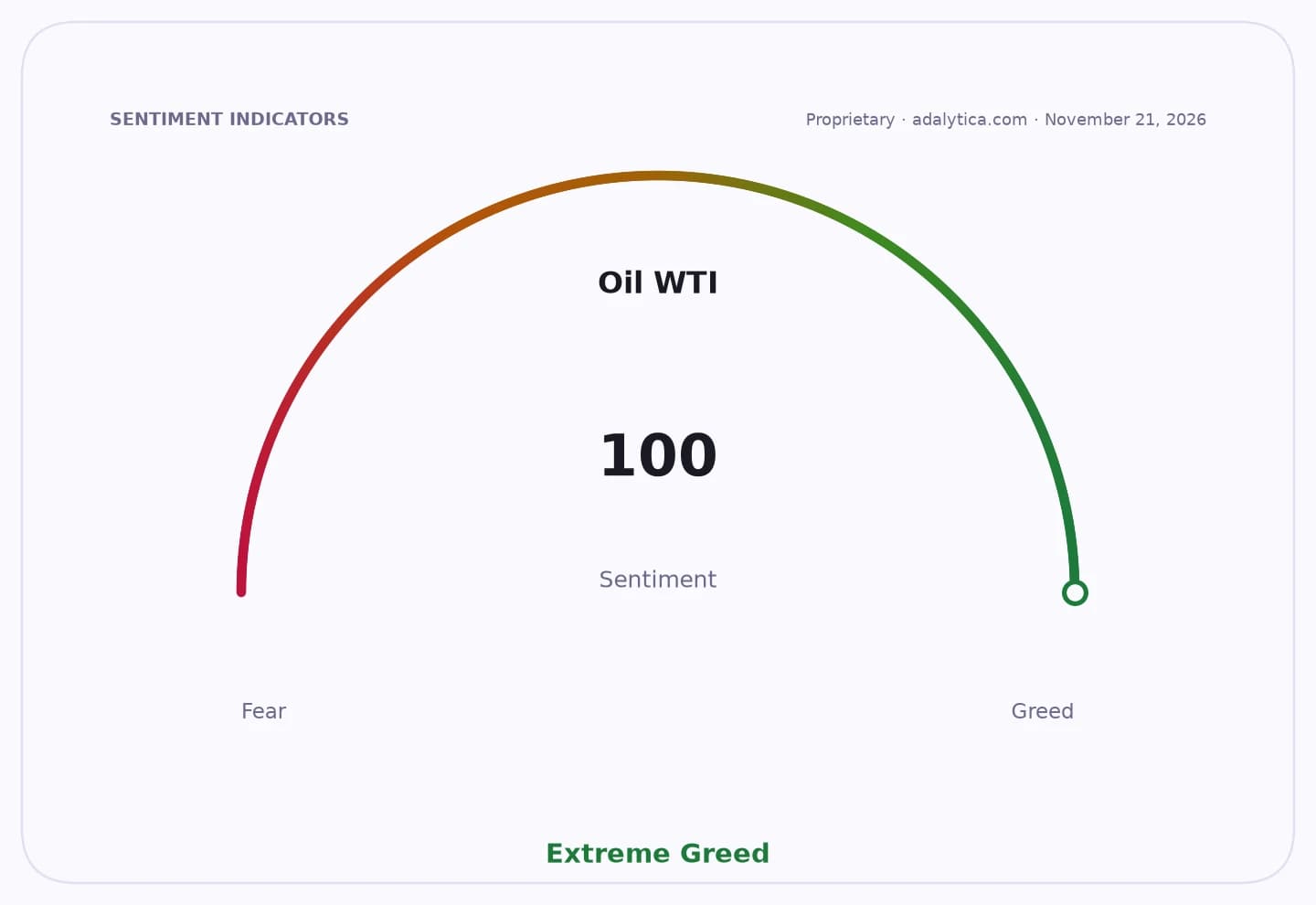
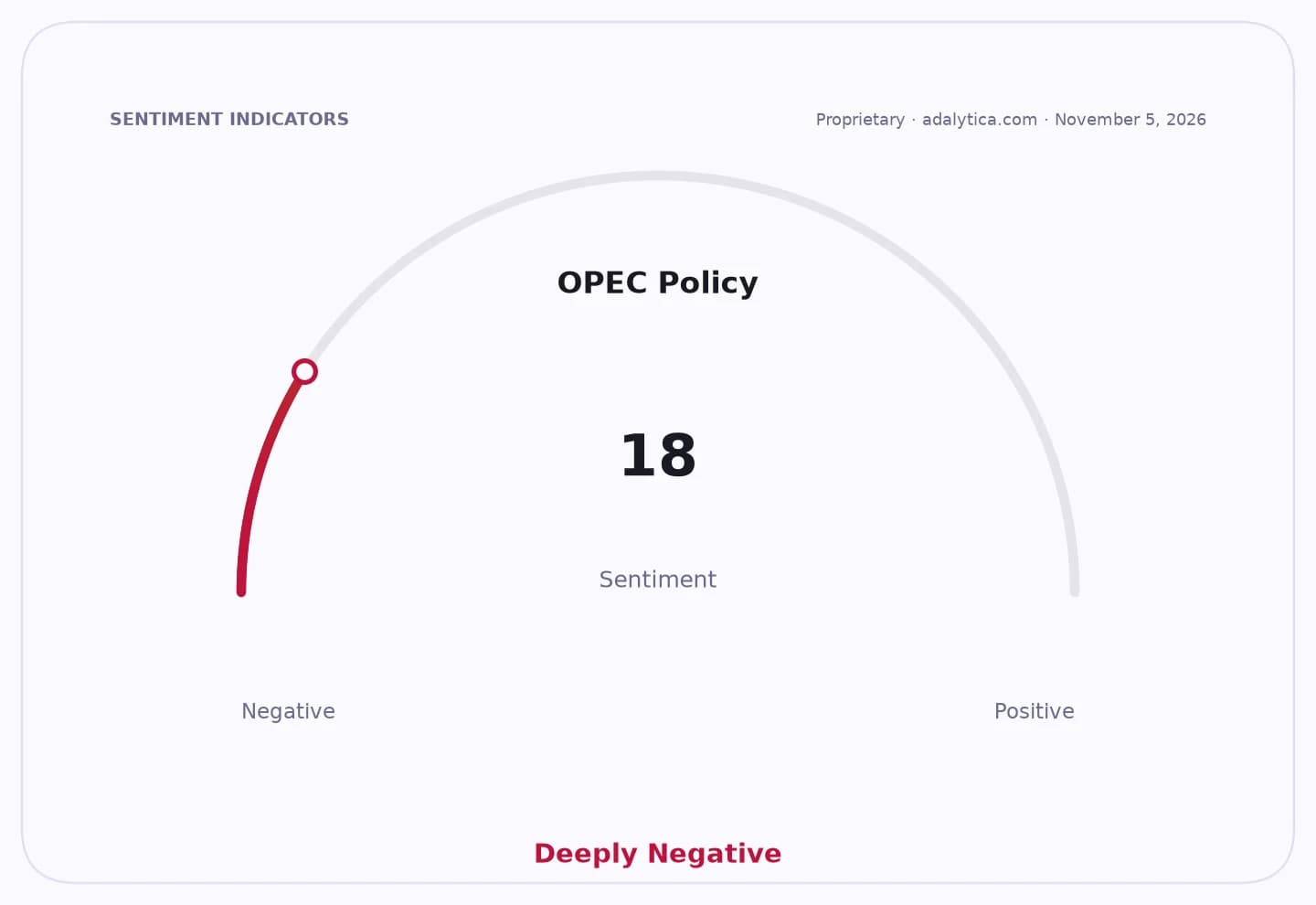
The broader energy complex is still being driven by two competing forces: geopolitical risk that has kept a floor under crude, and concern that supply remains ample. Oil-focused exchange-traded funds have reflected that tension. USO, which tracks near-term crude exposure, has surged over the past month even as its recent price action shows fatigue, while the S&P 500 has remained comparatively defensive, with Adalytica’s trade signals showing fear in the broader market and extreme greed in oil.
For investors, the key question is whether oil can stay high enough to justify the sector’s recent multiple expansion. EOG is better placed than many peers to convert higher prices into free cash flow and buybacks, especially with capital spending for 2026 estimated at $6.3 billion to $6.7 billion. The bull case is that disciplined shale growth and tight inventories keep earnings estimates moving higher. The bear case is that a softer macro backdrop, a reversal in geopolitical risk or a drop in crude back toward the low $80s would quickly narrow the upside implied by the new target.
| Entity | Gains | Losses |
|---|---|---|
| EOG Resources | ▲Higher valuation support | ▼Lower upside if oil slips |
| Johnson Rice | ▲Credibility on energy call | ▼Risk if crude weakens |
| Oil producers | ▲Stronger cash flow | ▼Cost pressure and volatility |
| Oil consumers | ▲None | ▼Higher fuel and input costs |