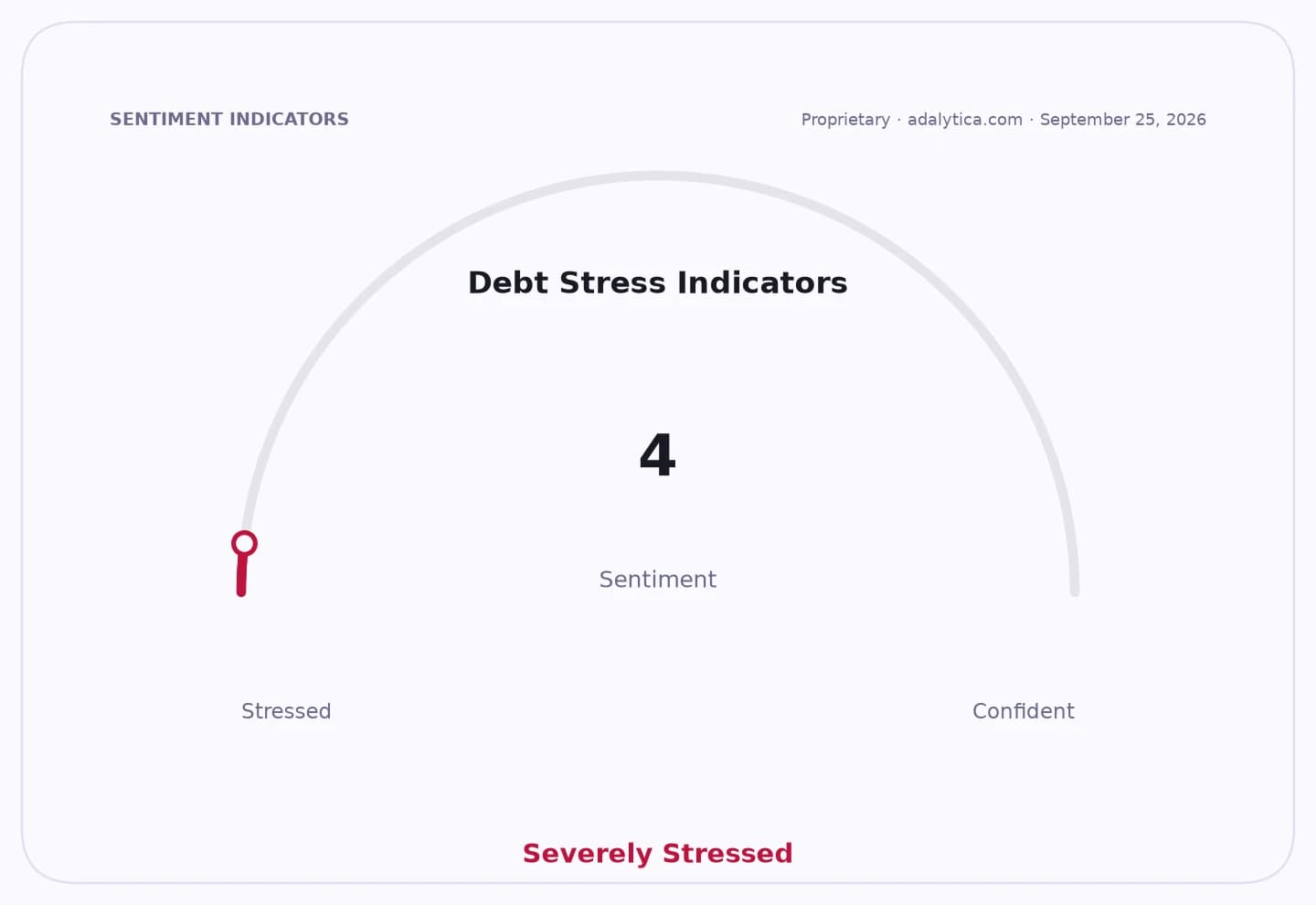
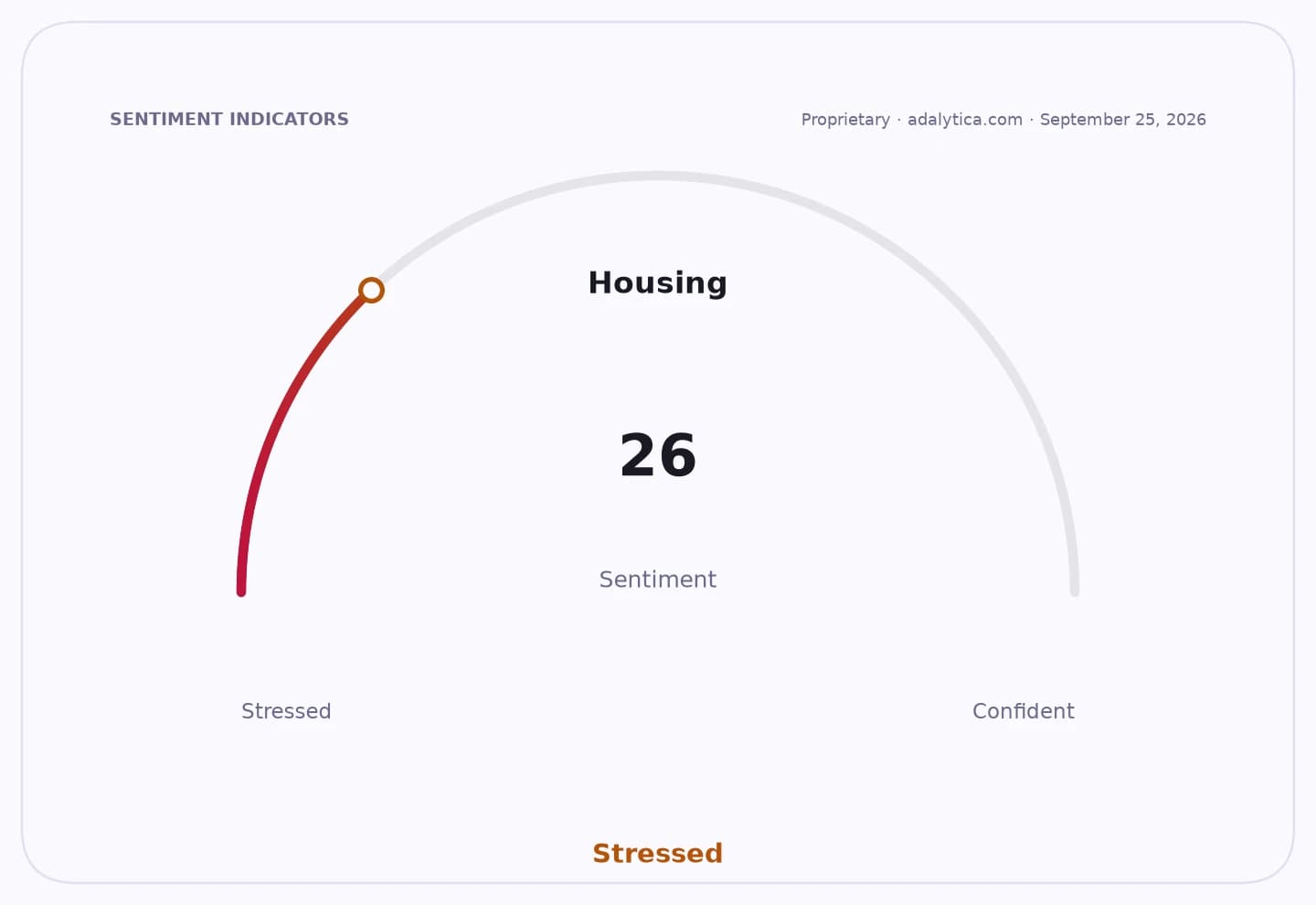
Mistakes on U.S. credit reports are still punishing consumers years after the pandemic, and that matters because inaccurate scores can shut households out of cheaper borrowing just as elevated living costs keep credit demand high.
Equifax, TransUnion and FICO Face Credit Report Risk

The economic damage is bigger than a bureaucratic headache. A credit score error can raise the cost of a car loan, a mortgage or a credit card balance, or block approval altogether. For families already strained by job losses, uneven recovery and higher debt service, a bad score becomes a drag on mobility and spending power. For lenders, it means more friction in underwriting and more disputes to resolve. For investors, it highlights a structural problem that supports demand for credit monitoring, identity resolution and dispute-handling services even when the consumer economy looks resilient.
Sentiment IndicatorsⓘProprietary · adalytica.com · September 6, 2026
This is a snapshot — live sentiment, awareness and momentum for 130+ markets update continuously in the dashboard.Open AlphaPulse
That is why the issue remains relevant for the companies that sit at the center of the credit ecosystem. TransUnion, Equifax and Fair Isaac each profit from the machinery that measures, packages or scores consumer credit. But they also face the reputational and legal risk that comes when those scores or files are wrong. Equifax, in particular, has already disclosed CFPB scrutiny tied to data accuracy and dispute handling in its Workforce Solutions business, while litigation over a coding issue that affected some credit scores remains part of its legal overhang. That is not just noise. It is the kind of regulatory pressure that can shape costs, margins and customer trust for years.
The stock market has been telling a mixed story. TransUnion has recovered from a sharp early-year selloff and was trading near $79.88 in recent sessions, close to its 50-day moving average and above its 200-day average, suggesting the market sees a steadier earnings path. Equifax, by contrast, has been more volatile, slipping to about $177.05 after a recent bounce and still trading below its 200-day average. Fair Isaac has been the most dramatic example of how sensitive these names are to credit-cycle and regulatory worries: after falling from above $1,300 earlier this year, it dropped again to about $932.26 in the latest session, well below its 50-day and 200-day moving averages.
Debt Stress Indicators vs TRUadalytica.com
Explore this data interactively — full history, time series and cross-market comparisons.Open AlphaPulse
For long-term investors, the lesson is simple. The credit-reporting business is not going away, and neither is the need for reliable data as consumers keep borrowing, refinancing and consolidating debt. But the pandemic exposed how expensive bad data can be, and that keeps the pressure on the industry to improve accuracy, dispute resolution and consumer access. If you own these stocks, the real question is not whether credit scoring remains valuable — it clearly does — but which companies can protect their franchises while spending enough to avoid the next costly mistake. That makes the sector worth watching, especially for patient investors who think in years rather than quarters.
| Entity | Gains | Losses |
|---|---|---|
| Consumers | ▲Better credit accuracy | ▼Higher borrowing costs from errors |
| TransUnion | ▲Demand for monitoring services | ▼Reputational risk |
| Equifax | ▲Need for data cleanup | ▼CFPB and litigation pressure |
| FICO | ▲Continued scoring relevance | ▼Volatility from trust concerns |