Ethereum is being driven lower by a combination of technical damage and risk aversion after a Binance security breach rattled crypto markets, leaving ETH below every short-term moving average even as momentum gauges move into oversold territory.
Ethereum Falls Below Key Moving Averages
Ethereum
That matters because the selloff is no longer just a headline reaction. ETH was last at $2,344.52, down to the lower end of its recent range and well beneath the 7-day, 20-day, 50-day, 12-day EMA and 26-day EMA, a moving-average stack that points to a market still in bearish trend mode. The 50-day average at $2,545.01 now sits about $200 above spot, while the 200-day average at $2,158.57 remains the only clear structural support beneath the market.
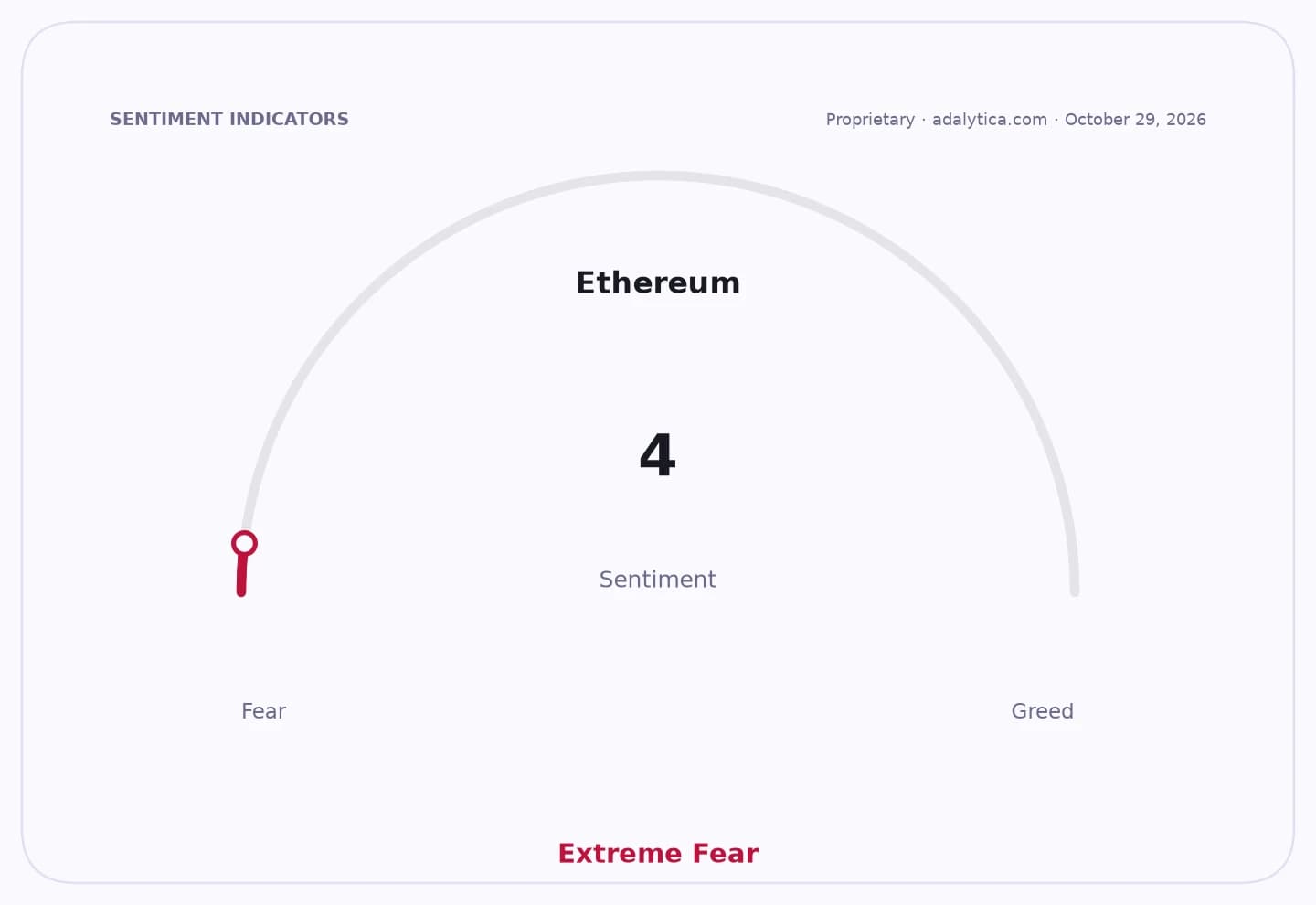
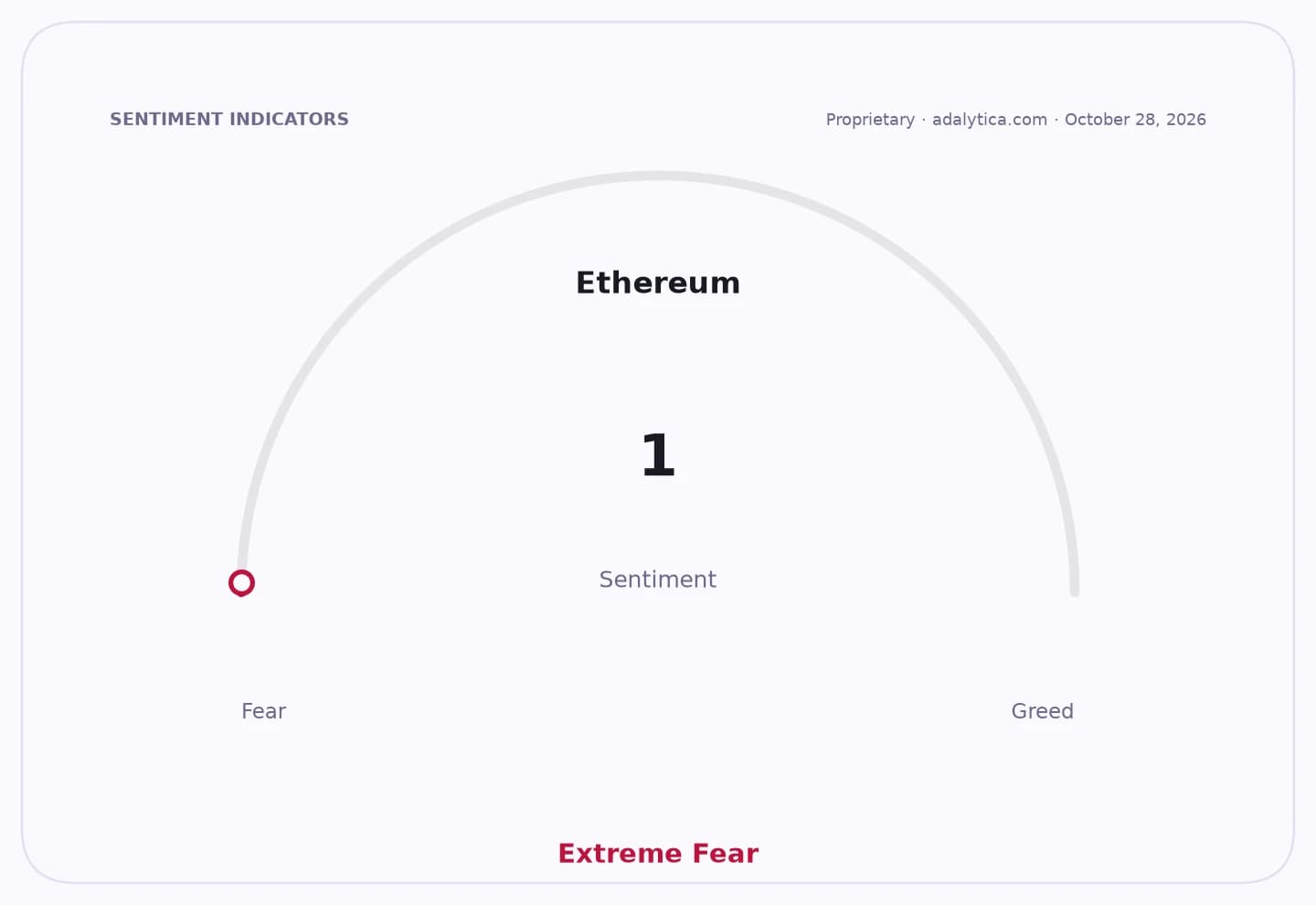
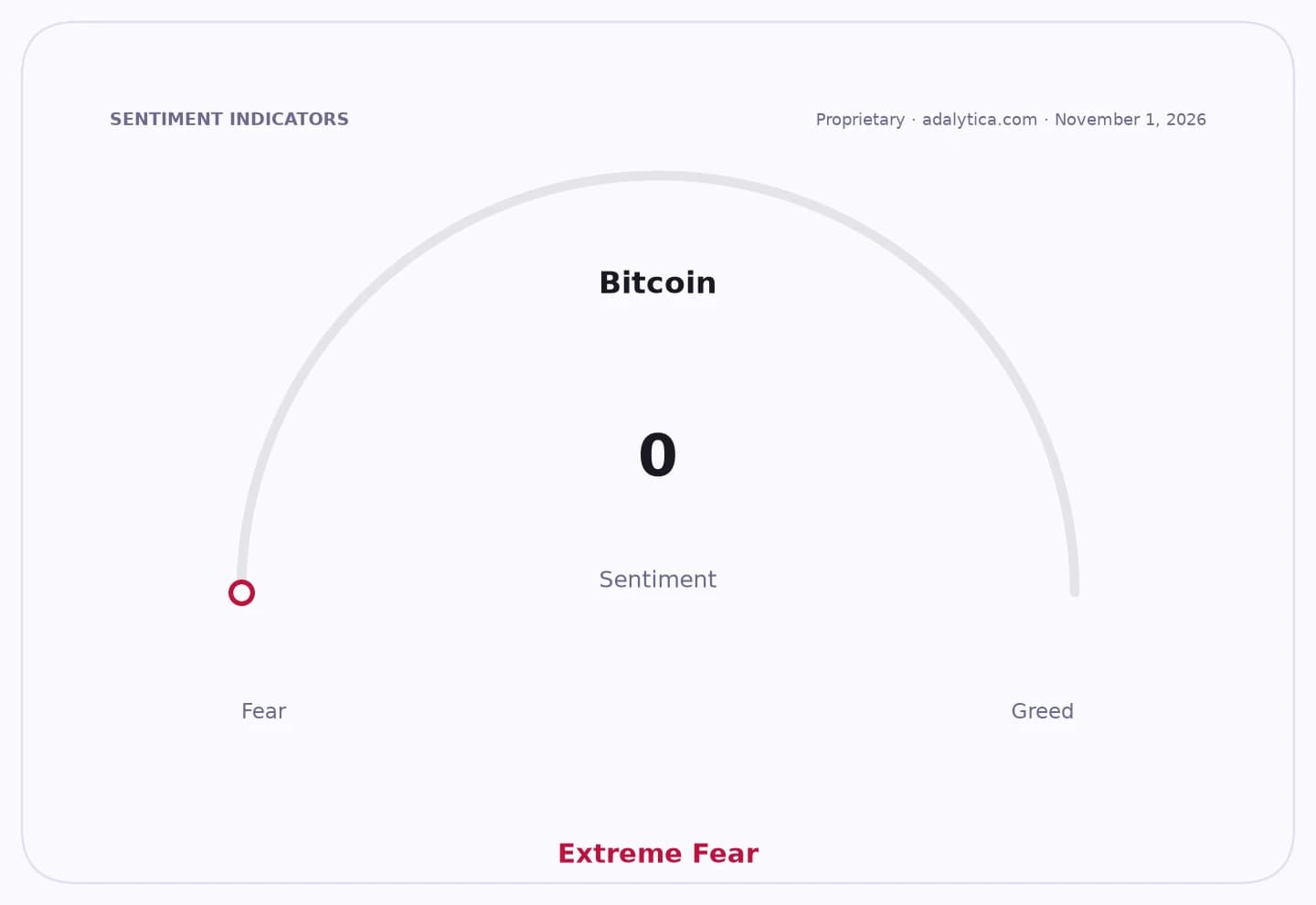
Sentiment Indicators
The immediate catalyst is the Binance breach, which helped trigger a broader crypto repricing and added to already fragile sentiment after ETF outflows and uneven institutional participation. In that context, Ethereum’s slide is not happening in isolation. Bitcoin also fell sharply, reinforcing the view that the market is responding to a systemwide shock rather than an ETH-specific fundamental change.
Still, the technical picture is beginning to show strain on the downside. Ethereum’s 14-day RSI at 35.15 is near the conventional oversold threshold, while the stochastic oscillator is already in oversold territory, with %K at 20.87 and %D at 16.70. The MACD remains deeply negative, but the histogram has flattened to zero, suggesting downside momentum may be losing force even if a reversal has not yet been confirmed.
That leaves traders focused on whether ETH can defend the pivot zone around $2,337.09 and immediate support at $2,289.89. A break below the Bollinger lower band at $2,298.22 would likely deepen the selloff toward strong support at $2,235.27, while a recovery above $2,391.71 and then the 12-day EMA at $2,417.60 would be the first sign that buyers are regaining control.
Derivatives positioning adds a more cautious reading. Open interest on Binance Futures rose 3.19% to about 2.287 million contracts, or $5.53 billion, as the price fell, a setup that can reflect either fresh short exposure or longs absorbing the drop. Funding was neutral at 0.0037%, implying no strong leverage premium on either side, but one-hour taker flow leaned toward selling, with aggressive sell orders outpacing buys.
That mix is important for investors because it suggests the market is not yet washed out enough to guarantee a durable bounce. Binance global-account data show a majority of accounts still net long, which can be a contrarian warning sign if the downside continues, even though those figures are not a full market read. The more bullish argument is that ETH is now sitting close to oversold technical levels and near the lower end of analyst forecast ranges for October, which could attract dip buyers if the broader crypto complex stabilizes.
For now, though, the dominant narrative is one of a market trying to absorb a security-driven shock while Ethereum trades below the trend levels that normally anchor short-term momentum. Until spot can reclaim the lower moving averages, rallies are more likely to be treated as corrective than the start of a new uptrend.
| Entity | Gains | Losses |
|---|---|---|
| Short sellers | ▲Bearish momentum | ▼Reversal risk |
| Dip buyers | ▲Lower entry levels | ▼Further breakdowns |
| Binance | ▲Containment if response is credible | ▼Trust damage from breach |
| Ethereum bulls | ▲Oversold setup | ▼Trend deterioration |