Ethereum developers have delayed the next Glamsterdam test after security researchers showed the proposed gas changes could alter how existing smart contracts behave when transactions fail, a setback that matters because it pushes back a network upgrade aimed at improving throughput without breaking the software already built on top of it.
Ethereum delays Glamsterdam test over gas concerns
Ethereum
The pause on the Hoodi testnet is not just a technical footnote. Ethereum’s value proposition rests on being a reliable settlement layer for everything from DeFi protocols to tokenized assets, and any suggestion that an upgrade could make contracts behave differently in edge cases raises the cost of change across the entire ecosystem. For investors, that means the path to higher network capacity may be slower and bumpier than bulls want to believe, even as demand for blockspace keeps rising.
Sentiment Indicators
The concern centers on EIP-8037 and EIP-8038, which are designed to reshape gas accounting and help contain Ethereum’s growing state size as transaction volumes increase. But ChainSecurity said the changes could leave some contracts with more or less gas than developers expect, creating two bad outcomes: valid operations could fail, or error-handling code could run to completion and permanently record what was supposed to roll back. In other words, a network upgrade intended to make Ethereum more scalable could also expose a class of legacy contracts to behavior they were never written to handle.
That is why the delay matters economically. Ethereum is not just software; it is financial infrastructure. If upgrades start carrying even a modest risk of breaking existing contracts, developers and institutions will move more cautiously, and that slows the pace at which the chain can extract more value from each block. The upside case for ETH depends on the network becoming more efficient without undermining trust in old deployments. When that trust is questioned, valuation multiples tend to compress.
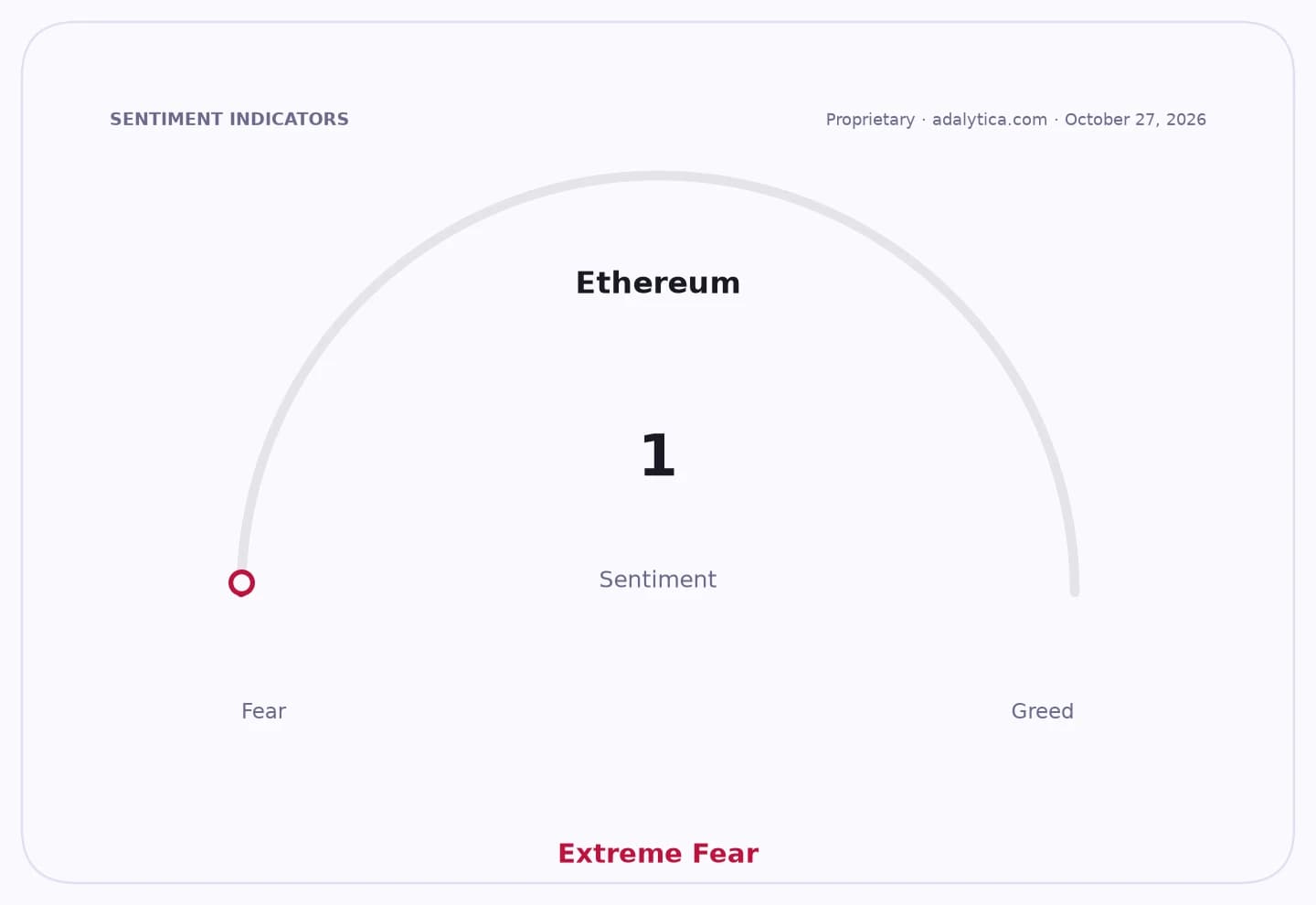
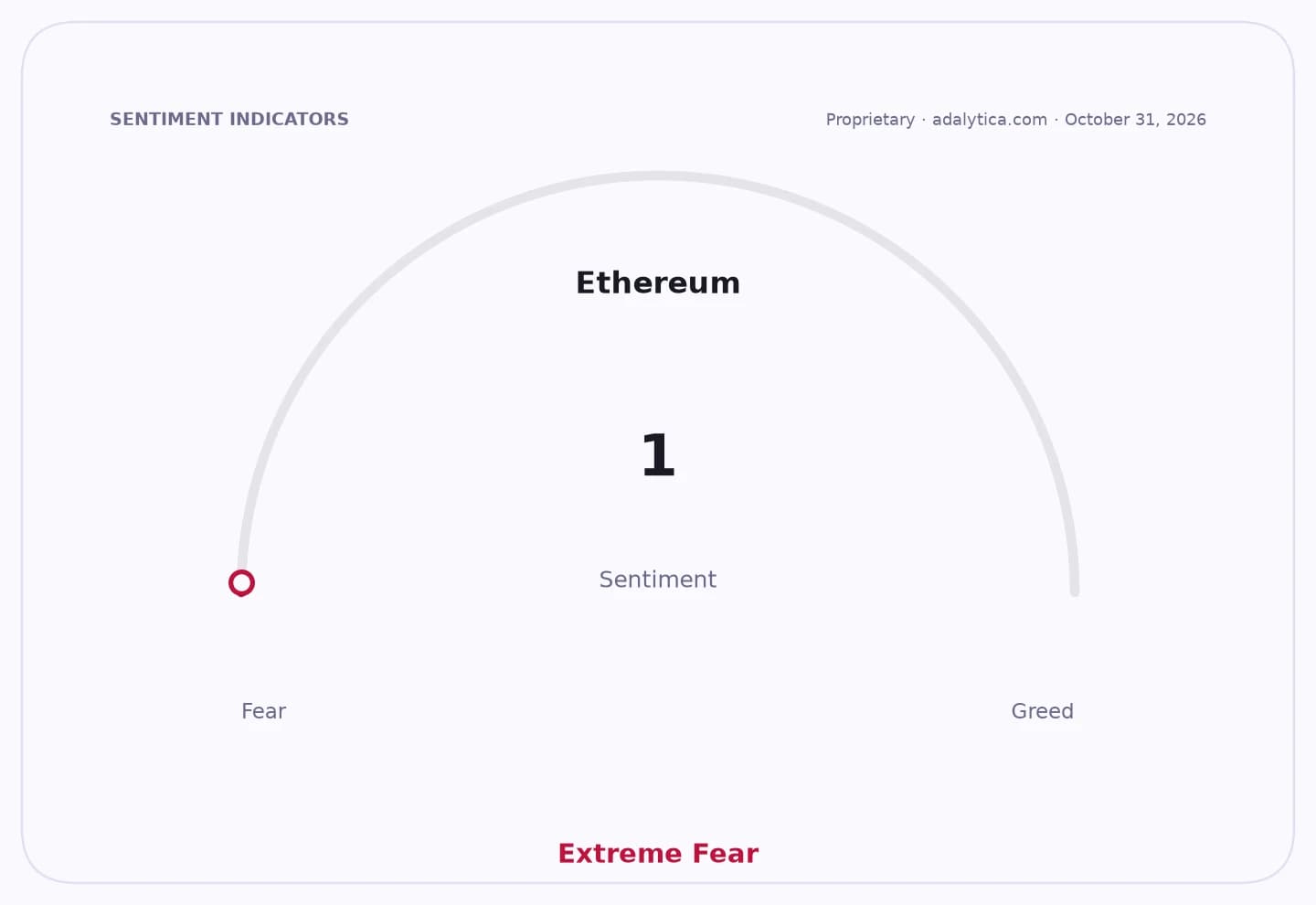
Ethereum — 30-day sentimentadalytica.com
Explore this data interactively — full history, time series and cross-market comparisons.
The market backdrop makes the timing more important. Ether has been trading near $22.28 after recent volatility, still below its 50-day moving average of $23.90 and with RSI readings in the high 30s, a sign the token remains fragile rather than decisively bid. Adalytica’s Ethereum Fear & Greed Index sits at 3, or extreme fear. That does not change the fundamental story, but it does show how quickly a technical delay can reinforce a market already leaning defensive.
There is still a bigger trade here, and investors should not miss it. Delays like this often favor the same beneficiaries: infrastructure providers, security auditors, and protocols that can adapt faster than legacy systems. The market underestimates how valuable Ethereum’s safety layer is becoming as the network tries to scale without sacrificing contract compatibility. If the upgrade is ultimately fixed and pushed through, that can reset confidence in the chain’s roadmap. If it is delayed again, the opportunity shifts toward the picks-and-shovels around Ethereum rather than the token itself.
For now, the message is clear: Ethereum’s scaling story is intact, but execution risk has moved to the front of the queue. Until developers can show Glamsterdam improves throughput without disturbing live contracts, ETH traders are likely to treat each upgrade milestone as both a catalyst and a liability. The best positioning is to stay selective, favor the tools that secure and support blockchain infrastructure, and wait for the network to prove that progress and compatibility can still coexist.
| Entity | Gains | Losses |
|---|---|---|
| Security auditors | ▲More demand for review work | ▼None from safer code |
| Ethereum developers | ▲Time to fix flaws | ▼Schedule slips |
| ETH holders | ▲Lower breakage risk long term | ▼Near-term roadmap uncertainty |
| Legacy contracts | ▲Avoids unintended behavior | ▼Delayed network improvements |