Ethereum’s next major upgrade is running into a security checkpoint, with developers suspending parts of Glamsterdam testing after 13 potential contract risks were identified just as the roadmap was set to move onto the Hoodi testnet on Oct. 26. The pause matters because it pushes back the timeline for a network that investors are counting on to prove it can expand capacity without compromising stability, at a time when ETH is already trading well below its 50-day moving average and sentiment has collapsed into extreme fear.
Ethereum Glamsterdam testing paused after contract risks
Ethereum
The immediate economic issue is not the gas-limit target or the promise of more parallel execution. It is whether Ethereum can still deliver the reliability premium that justifies its valuation. A proposed move to 200 million gas would, in theory, let the chain handle more demand and support more complex financial applications, while improving execution efficiency could help Layer 2 settlement and fee generation. But if testing reveals unresolved contract risks, the market is likely to discount the upgrade cycle until the code proves safe enough for broader deployment.
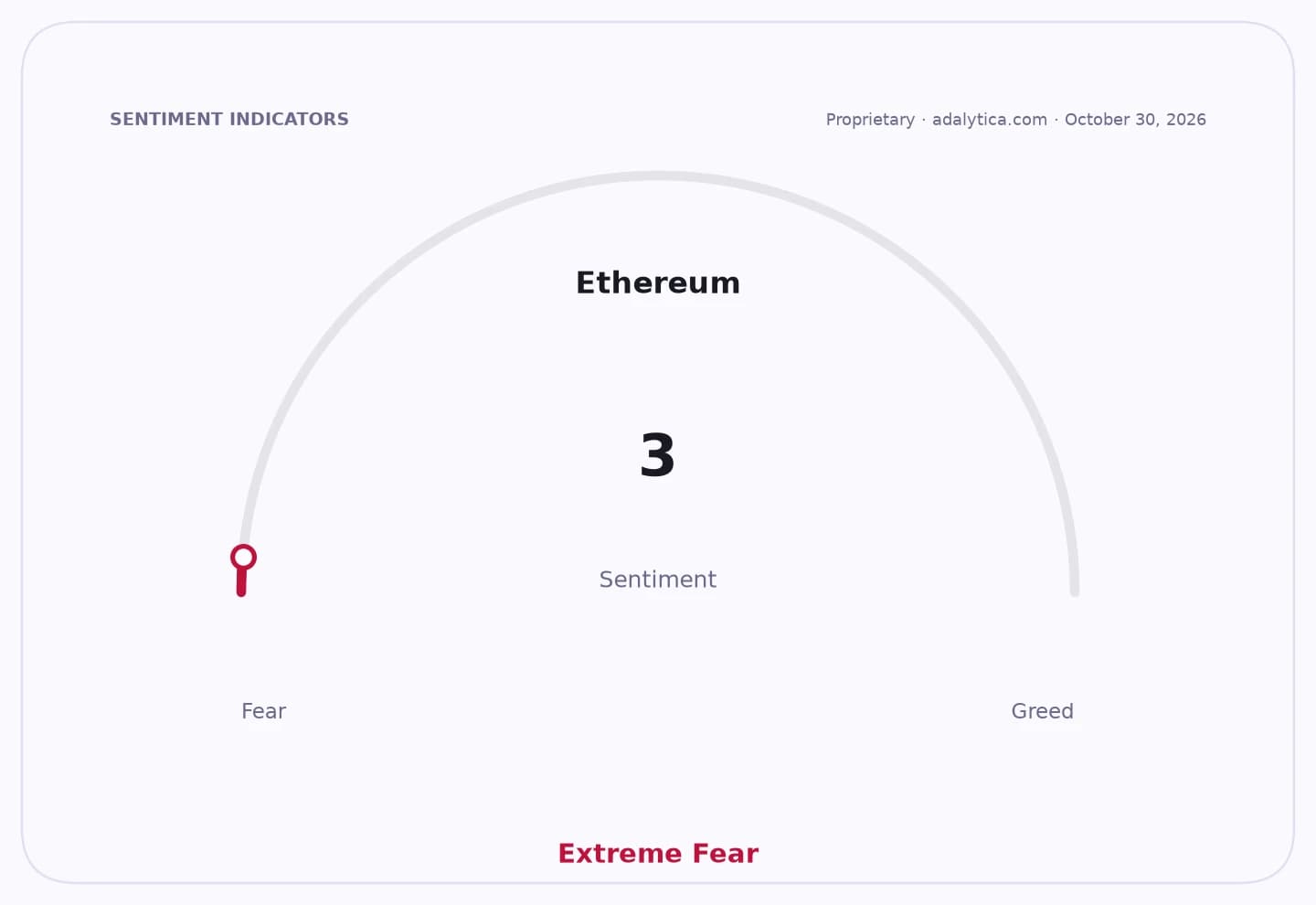
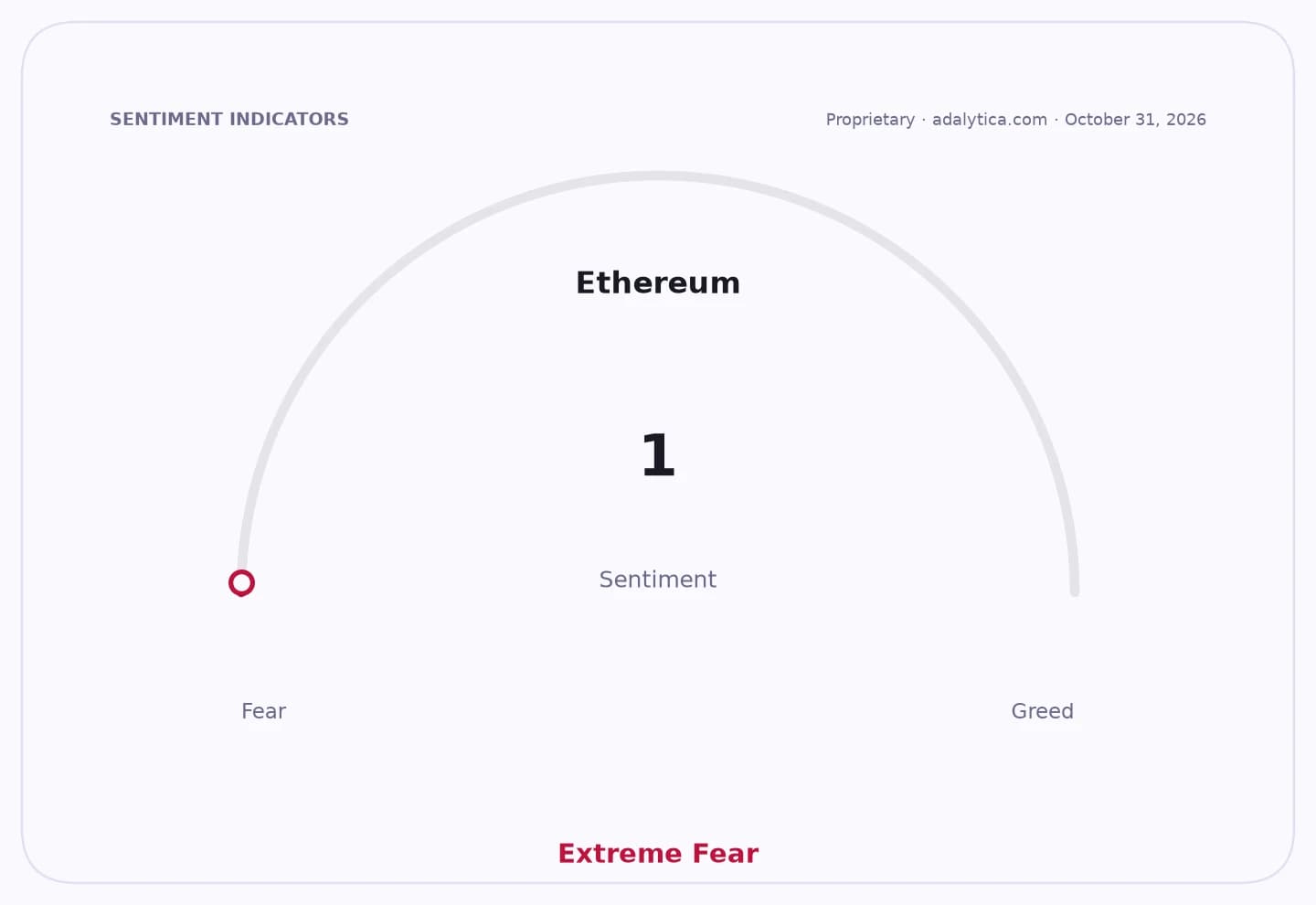
Sentiment Indicators
That is why the Hoodi testnet was important. Testnets are where developers try to catch failures before they become mainnet problems, and a suspension at that stage tends to reset expectations rather than reinforce them. The news also lands against a weak technical backdrop: ETH closed around $2,320 on Oct. 26, below its 50-day average near $2,539 and with RSI readings in the mid-30s, signaling an asset that has not regained momentum even after earlier bursts of strength. Ethereum’s fear-and-greed gauge from Adalytica sat at 1, or extreme fear, underscoring how little margin there is for further disappointment.
For investors, the bigger question is whether Ethereum’s infrastructure story is still compelling enough to offset execution risk. The bull case is straightforward: if Glamsterdam ultimately improves throughput and execution, Ethereum can deepen its role as the base layer for DeFi, tokenization and settlement, supporting demand for ETH as activity rises. The bear case is equally clear: if upgrades keep slipping or exposing fresh vulnerabilities, capital may continue rotating toward simpler narratives, faster chains or application-level bets with more visible monetization.
Ethereum — 30-day sentimentadalytica.com
Explore this data interactively — full history, time series and cross-market comparisons.
That is where Remittix enters the story as a contrasting trade. The PayFi project is pitching a much smaller valuation base and a more direct commercial model, with RTX priced at $0.28 ahead of a planned $0.46 final stage, implying a 64.3% step-up from the current entry level. Rather than selling blockspace, it is selling the last mile of crypto-to-bank delivery — the conversion, liquidity, compliance and payout function that users actually pay for when they want to move money across borders. In a market that has become wary of infrastructure promises, that sort of outcome-based revenue story can attract speculative capital more quickly than another protocol upgrade.
Still, Ethereum remains the larger market and the benchmark asset. If Glamsterdam survives testing and Hoodi confirms the upgrade path, ETH can recover some of the credibility premium that has been lost to volatility and security concerns. If not, investors may increasingly treat this cycle as one where application-layer projects and cash-flow-linked crypto services capture the better risk/reward, while ETH is forced to prove once again that network scale alone can translate into price performance.
| Entity | Gains | Losses |
|---|---|---|
| Ethereum developers | ▲More time to fix risks | ▼Schedule credibility |
| ETH bulls | ▲Cleaner upgrade, if resolved | ▼Near-term momentum |
| Remittix | ▲Differentiation vs infrastructure trades | ▼Less attention if ETH stabilizes |
| Traders in risk-off names | ▲Lower entry points | ▼Upgrade-driven upside |