Europe and China have eased the immediate risk of a trade war with an interim deal that could cut Chinese hybrid-car shipments to Europe by as much as half, while offering a path to faster approval of critical mineral exports that are central to industrial production on both sides.
EU China trade deal eases tariff and mineral risks
The agreement matters because it addresses the most fragile parts of the relationship before they spill over into wider supply-chain disruption. For Europe, the stakes are not abstract: the bloc’s goods-trade deficit with China reached about 360 billion euros last year, roughly 1 billion euros a day, and every EU member state ran a deficit. That imbalance has sharpened pressure on Brussels to defend autos, steel, batteries and chemicals from subsidized Chinese competition.
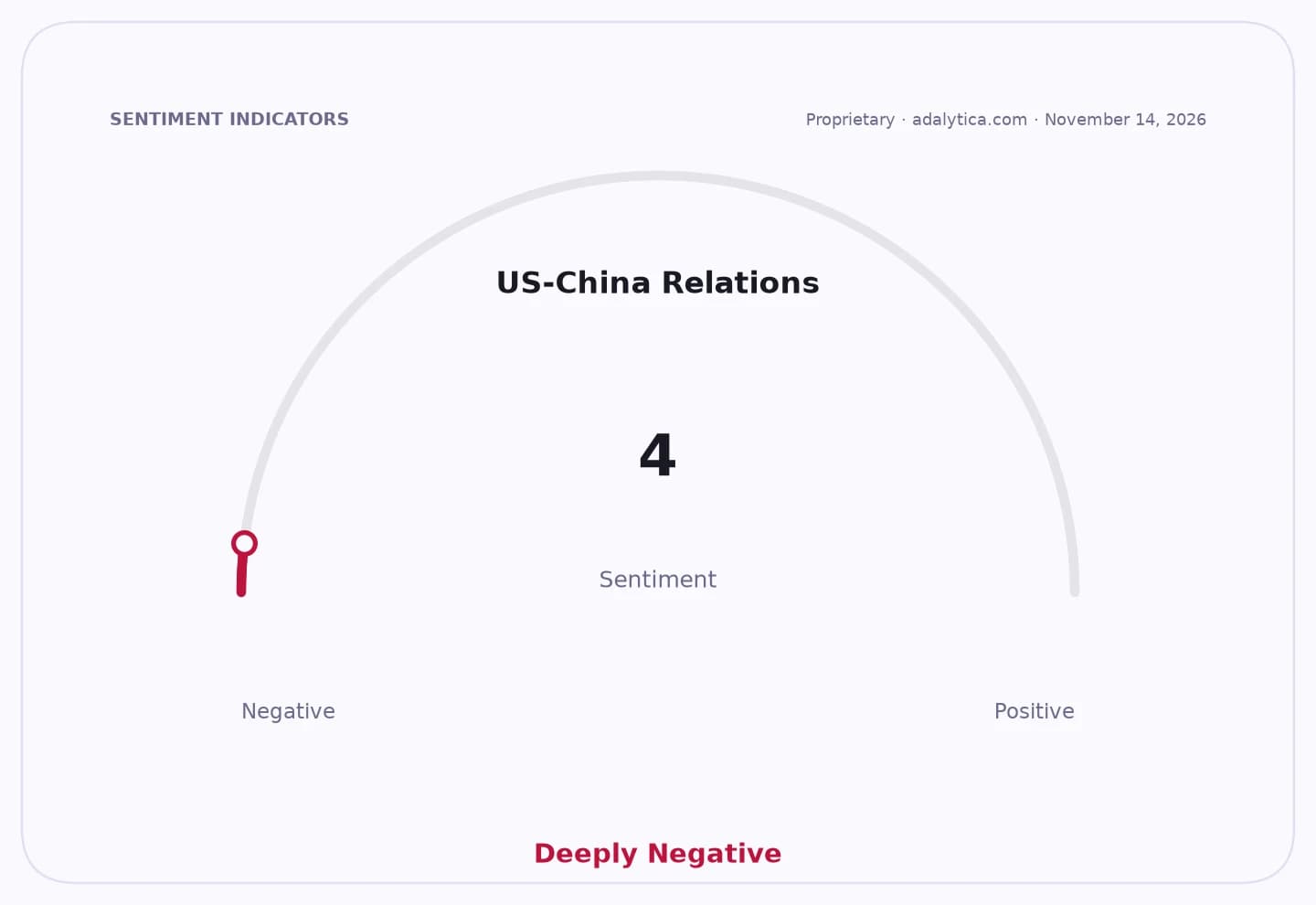
Sentiment Indicators
Geopolitical Risk
For investors, the deal reduces the near-term odds of retaliatory tariffs or export curbs that could hit automakers, industrials and commodity-linked supply chains. China’s willingness to ease approval of rare-earth and permanent-magnet export licenses is especially important for electric vehicles, electronics and defense manufacturing, where delays can quickly choke output. Europe’s promise to pursue a softer landing on some Chinese goods, including auto parts, olive oil and footwear, also lowers the risk of a sudden escalation that would have reverberated through trade-sensitive stocks.
The compromise is still fragile. It needs approval from EU leaders and leaves the core disputes untouched: Brussels still accuses China of state subsidies and excess capacity, while Beijing says Europe is hiding behind protectionism and unfair tariffs. The deal only postpones the bigger argument over how much Chinese industrial overcapacity Europe is willing to absorb.
That tension has already begun to shape market pricing. China has warned it would respond hard if Brussels tightens restrictions further, while France and Germany are pushing for tougher action against Chinese exports. Any renewed escalation would probably push more low-cost Chinese goods into third markets, intensifying price pressure on local producers from Europe to the Gulf, even as it creates selective opportunities for countries able to capture rerouted trade and investment.
The immediate message for investors is that the worst-case scenario has been deferred, not removed. Autos, industrial metals and critical-mineral supply chains are likely to trade with less geopolitical stress in the short run, but the relationship remains one policy move away from a renewed confrontation.
| Entity | Gains | Losses |
|---|---|---|
| European automakers | ▲Less import pressure | ▼Slower protectionist momentum |
| Chinese exporters | ▲Near-term market access | ▼Lower shipment volumes |
| EU industrial users | ▲Better mineral supply visibility | ▼Continued exposure to Chinese competition |
| Rival third markets | ▲Potential trade diversion | ▼More price pressure |