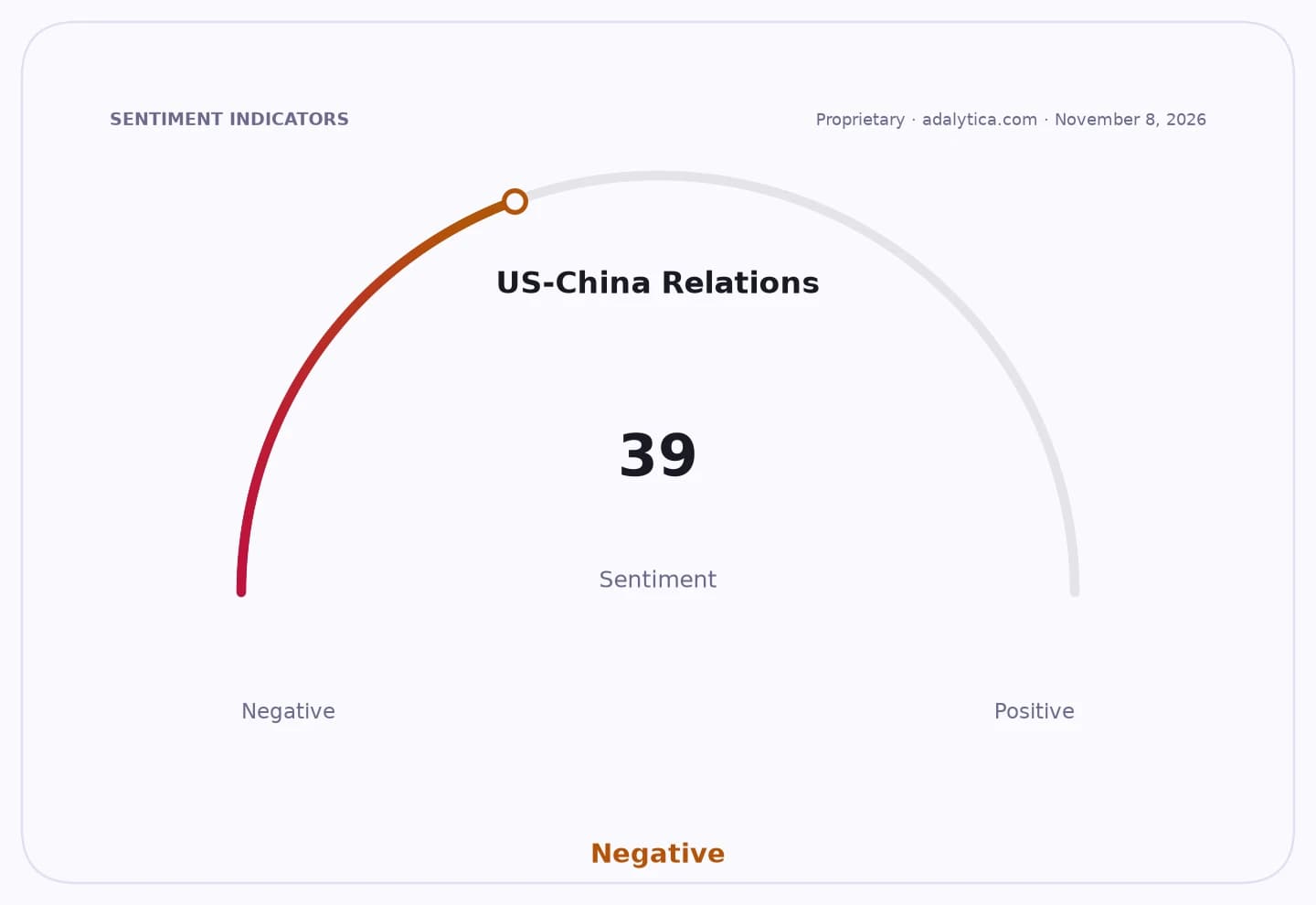
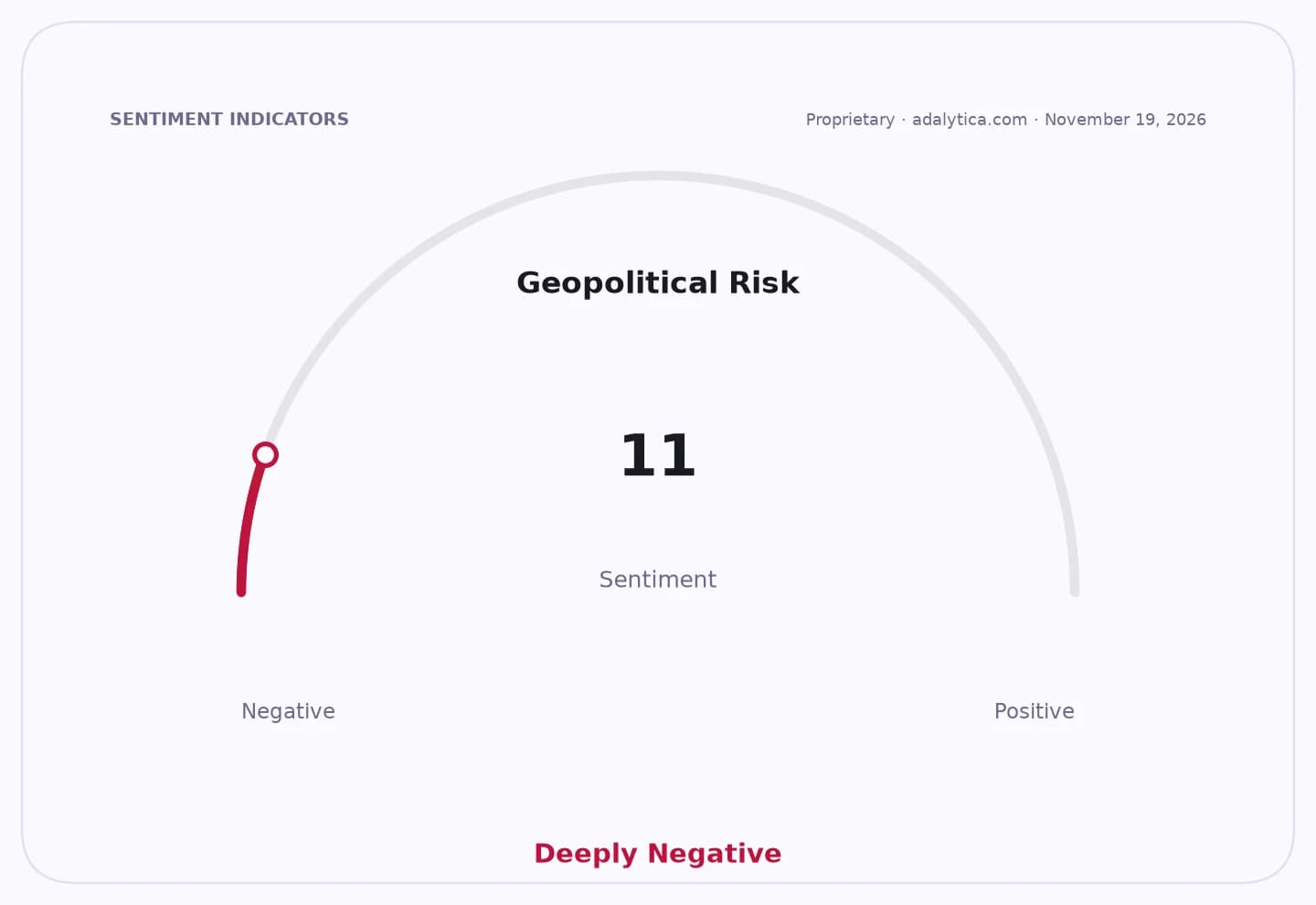
The European Union is preparing a far tougher trade weapon against China, and the market should treat it as a serious escalation in Europe’s effort to force concessions from Beijing without sliding into a full-blown tariff war.
EU ReadyEU Trade Tool Targets China Access
Geopolitical Risk
Brussels is drafting a new authority, codenamed ReadyEU, that would let the European Commission restrict access to the bloc’s single market of 450 million consumers in three cases: when a third country interferes in EU trade decisions, when it breaches WTO rules or other accords and refuses arbitration, or when the EU economy faces a direct and severe threat. That is economically meaningful because it gives the bloc leverage over the world’s largest trading relationships at a time when policymakers are trying to reduce dependence on China and trim a trade deficit that reached 360 billion euros, or $404 billion, last year.
Sentiment Indicators
For investors, the significance is not just the threat of tariffs or quotas. The bigger message is that Europe is moving from passive defense to conditional market access, which could change pricing power, sourcing decisions and capital allocation across industrial supply chains. If Brussels uses the tool, Chinese exporters face a more hostile route into Europe just as Europe is pressing to broaden the battle from autos into chemicals, machinery, cosmetics, pharmaceuticals, pork, brandy and intellectual property. That points to more volatility for companies with heavy China exposure and a relative tailwind for firms that help Europe localize supply chains, re-route sourcing or build domestic capacity.
The proposal is expected to be unveiled on Dec. 9, ahead of the Dec. 17-18 EU summit in Brussels, underscoring the political urgency. Officials want the mechanism to sit alongside existing free-trade agreements and avoid adding new administrative burdens to companies, but the intent is unmistakable: make the EU more willing to use market access as bargaining power. That matters because China has already signaled it would retaliate if Europe imposes fresh restrictions or discriminatory measures.
The strategic backdrop is broader than one trade spat. China’s export machine has kept grinding out surpluses, while Europe and the US are increasingly worried about the durability of that model and the vulnerability of critical supply chains. The EU is trying to thread a narrow needle — support its own industry, reduce dependency and keep negotiations alive — yet the very creation of this tool tells investors that trade friction is becoming a structural feature of the next cycle, not a temporary headline.
That is why the opportunity set is shifting now. Companies tied to European industrial policy, supply-chain diversification, defense of critical inputs and onshoring investment should remain better positioned than those relying on unimpeded access to the EU consumer base. If the proposal advances in December, the next market move will likely be in names and sectors exposed to China-Europe trade, not just in the yuan, the euro or broad Chinese equity proxies.
| Entity | Gains | Losses |
|---|---|---|
| EU industrial champions | ▲stronger bargaining power | ▼higher trade friction |
| Chinese exporters | ▲access remains uncertain | ▼market access risk |
| Supply-chain diversifiers | ▲new demand tailwind | ▼fewer low-cost imports |
| European consumers | ▲more resilient supply lines | ▼possible higher prices |