The European Union has agreed to release €6.6 billion from its European Peace Facility for Ukraine, a fresh sign that Brussels is prepared to keep financing Kyiv’s war effort even as Russia tries to deter European support through hybrid attacks.
EU releases €6.6 billion for Ukraine aid
The package matters economically because it sustains the flow of military spending into Ukraine and signals that the bloc is still willing to use joint financing to back its eastern flank. It also shows that Europe is trying to turn political commitments into practical military support at a time when battlefield needs, air defense and ammunition demand remain high.
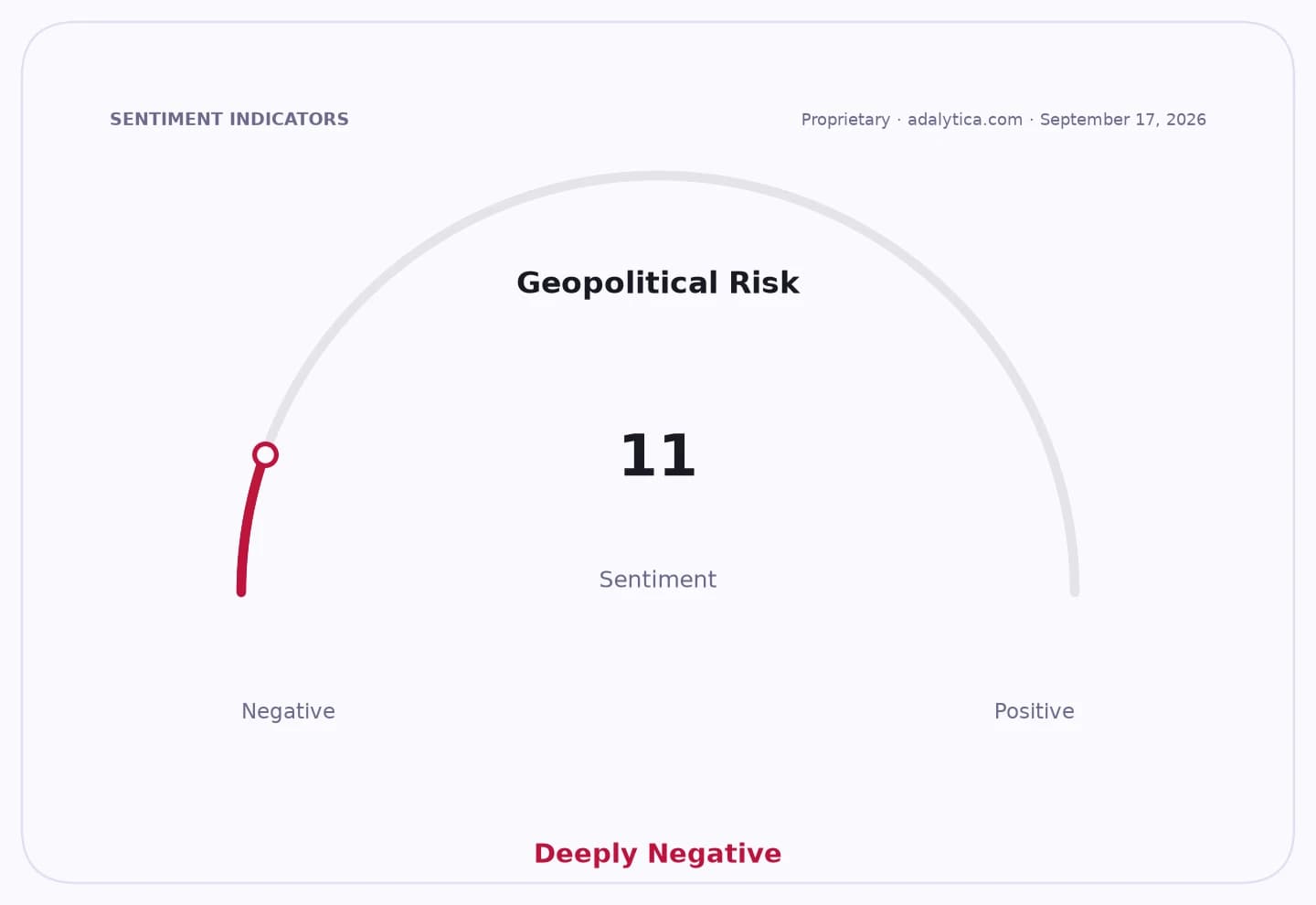
Sentiment IndicatorsⓘProprietary · adalytica.com · October 1, 2026
This is a snapshot — live sentiment, awareness and momentum for 130+ markets update continuously in the dashboard.Open AlphaPulse
EU foreign policy chief Kaja Kallas said the funds will be split among €900 million for the EU military assistance mission in Ukraine, €1 billion for new joint equipment purchases and €4.7 billion to reimburse member states, some of which have said they will channel their shares back to Kyiv. That structure is important for investors and policymakers because it lowers the immediate budget burden on individual governments while keeping defense procurement moving through European channels.
The decision also underscores how the war continues to shape defense priorities across Europe. For suppliers tied to munitions, vehicles, air defense and training support, the funding points to another round of orders and reimbursements rather than a one-off pledge.
For defense contractors, the implications are broadly positive. U.S. and European names with exposure to NATO rearmament, including Lockheed Martin, Northrop Grumman and RTX, have already benefited from the wider rearmament cycle as governments replenish stockpiles and replace equipment sent to Ukraine.
The broader market backdrop remains supportive of the sector. RTX ended Sept. 30 at $185.65, below its 50-day moving average of $206.97 after a sharp pullback, while Northrop Grumman closed at $483.48 versus a 50-day average of $538.69. Lockheed Martin finished at $509.25, also under its 50-day average of $555.53, after volatile trading this year as investors reassessed how quickly war-related demand translates into earnings.
The geopolitical signal is equally clear: Brussels is not retreating. Kallas said Moscow’s hybrid attacks are intended to scare Europe into cutting support, but “Europe does the opposite,” framing the package as both a military commitment and a political response to Russian pressure.
With the EU now locking in more funding and the U.S. expected to announce further military aid, investors will be watching for follow-on procurement decisions, 2027 aid planning and any new delay in reimbursement mechanics that could slow contract awards or shift spending across major defense suppliers.
| Entity | Gains | Losses |
|---|---|---|
| Ukraine | ▲More military funding | ▼Greater dependence on external aid |
| EU defense contractors | ▲Higher order visibility | ▼Risk of budget scrutiny and delays |
| Russia | ▲— | ▼More sustained Western support for Ukraine |
| EU member states | ▲Reimbursement for aid sent | ▼Ongoing fiscal burden |