The European Union’s failure to agree on a new sanctions package against Russia matters less as a diplomatic delay than as a signal that the bloc’s economic pain threshold is becoming a market variable again.
EU Sanctions Delay Supports Energy Trade

That is the real investment story here: if Brussels cannot unify on a 21st package until autumn, the West’s sanctions campaign risks becoming incremental rather than escalatory, and energy markets will continue to price a longer runway for Russian barrels to keep flowing through indirect channels. For investors, that raises the odds that oil and oil-services equities remain bid even when geopolitical headlines look static, because the market is buying not just crude, but the persistence of uncertainty.
The stakes are bigger than one Brussels meeting. Sanctions are one of the few levers Europe has left that can still alter Russia’s export economics, redirect shipping, and tighten insurance, finance and logistics around energy trade. When unanimity breaks down, enforcement gets patchier and the sanction premium becomes less about immediate supply loss and more about the structural inefficiency created by a fragmented response. That tends to support upstream pricing power, tanker demand, trading margins and the firms that sell equipment and services into a capital-intensive oil cycle.
That is why the move in energy-linked assets matters. The Energy Select Sector SPDR Fund, XLE, has climbed to 57.68 from 42.85 in mid-December, while the VanEck Oil Services ETF, OIH, has surged to 378.99 from 238.31 in October and remains well above its 200-day moving average. OIH’s relative strength is especially notable after a sharp spring pullback, a sign that the market is treating oil services as a leverage play on geopolitical supply risk and sustained capex, not merely a short-term rebound trade. On conventional technical indicators, the group’s momentum has reset from overbought to constructive, which is often where the best entries appear before the next policy or supply catalyst.
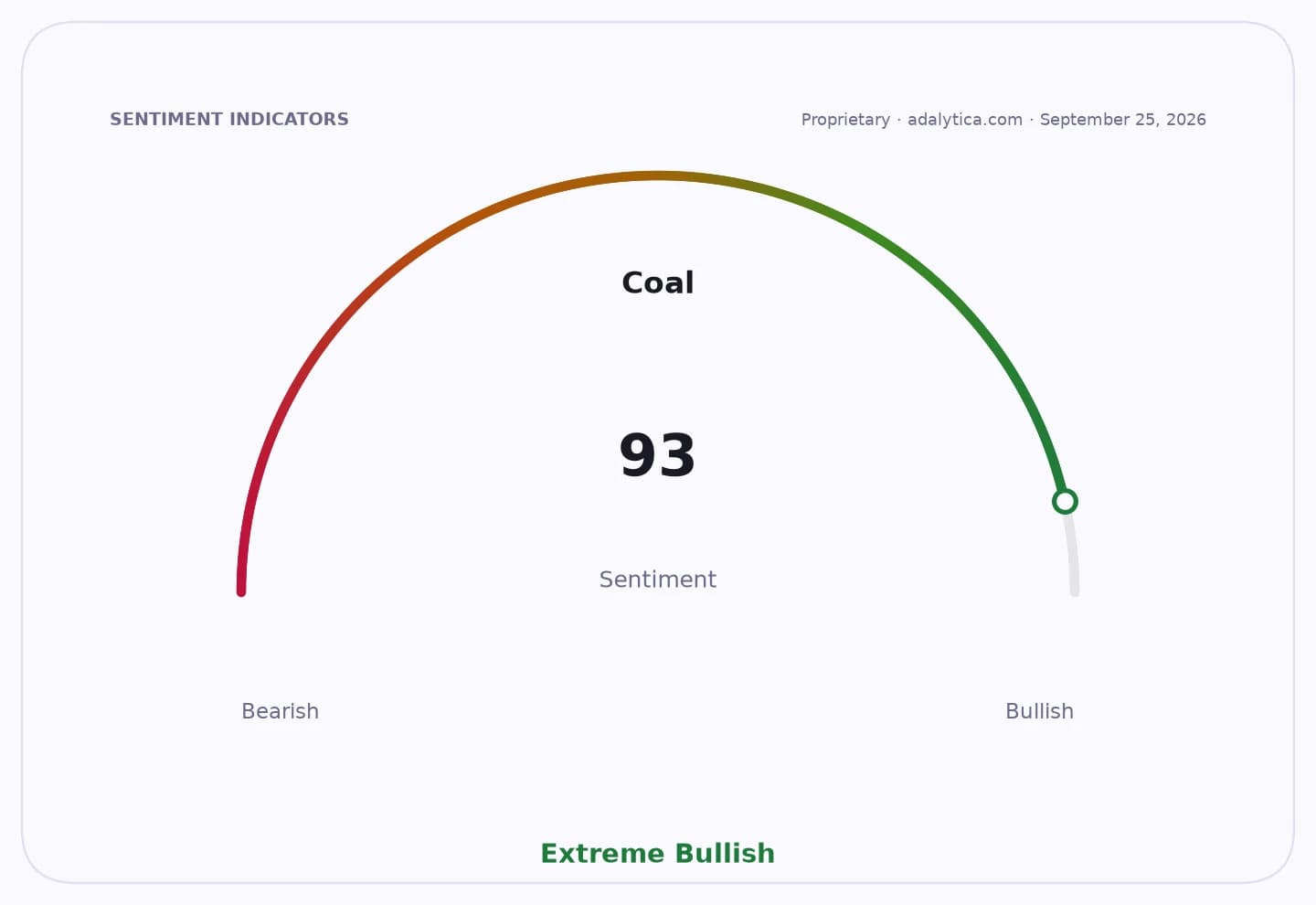
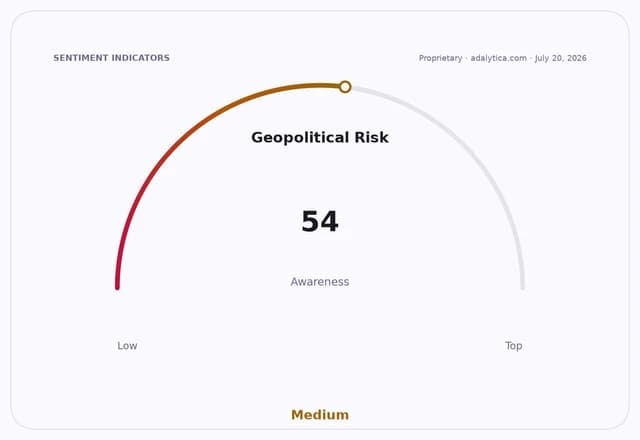
Geopolitical Risk — 30-day sentimentadalytica.com
Explore this data interactively — full history, time series and cross-market comparisons.Open AlphaPulse
The euro is telling a different version of the same story. The ProShares UltraShort Euro ETF, EUO, has held around 30.63, reflecting renewed pressure on the currency as Europe absorbs the growth and inflation trade-offs of a prolonged conflict. A weaker euro is not just a macro side note: it tightens financial conditions, complicates energy import costs and underscores how sanctions fatigue can bleed into broader asset allocation. Adalytica’s Global Stability Sentiment now sits at 7.0, an “Extreme Fear” reading, showing how quickly markets are moving back toward risk-off positioning as geopolitical coordination frays.
For investors, the asymmetric opportunity is in the second-order winners, not the headlines. If the EU drags its feet, Russia does not need sanctions relief to benefit; it only needs Western unity to weaken at the margin. That favors oil producers with low-cost inventory, oilfield service names with pricing power, and energy ETFs that capture the reflexive lift from higher risk premia. It also argues for watching European currency hedges and defense-adjacent names, because failed sanctions regimes often lead to more, not less, spending on deterrence and energy security.
The market underestimates how often sanctions politics become a growth story for the industries built to navigate them. Until the EU can muster consensus, the trade is not “Russia gets a pass.” The trade is that energy volatility stays elevated, Europe’s policy premium stays unresolved, and investors still get paid to own the picks-and-shovels of a world that has not de-escalated.
| Entity | Gains | Losses |
|---|---|---|
| Oil services firms | ▲Higher capex demand | ▼Policy clarity |
| Energy producers | ▲Geopolitical risk premium | ▼Sanctions escalation |
| EU unity | ▲None | ▼Consensus credibility |
| Russia | ▲Export flexibility | ▼Direct Western pressure |