The latest climb in Euríbor is forcing Spanish borrowers with variable-rate mortgages to reconsider their financing just as monthly payments begin to reset higher across the market.
Euríbor rises as Spanish mortgages reset higher
For households, the issue is not the headline rate alone but the lagged transmission into loan instalments. Euríbor, the benchmark for most Spanish mortgages, ended September at an average 3.243%, its highest since July 2024. That means the full effect is still working through the system, because variable loans only reprice when their review date arrives, typically every six or 12 months. The result is a staggered squeeze on household cash flow rather than an immediate shock.
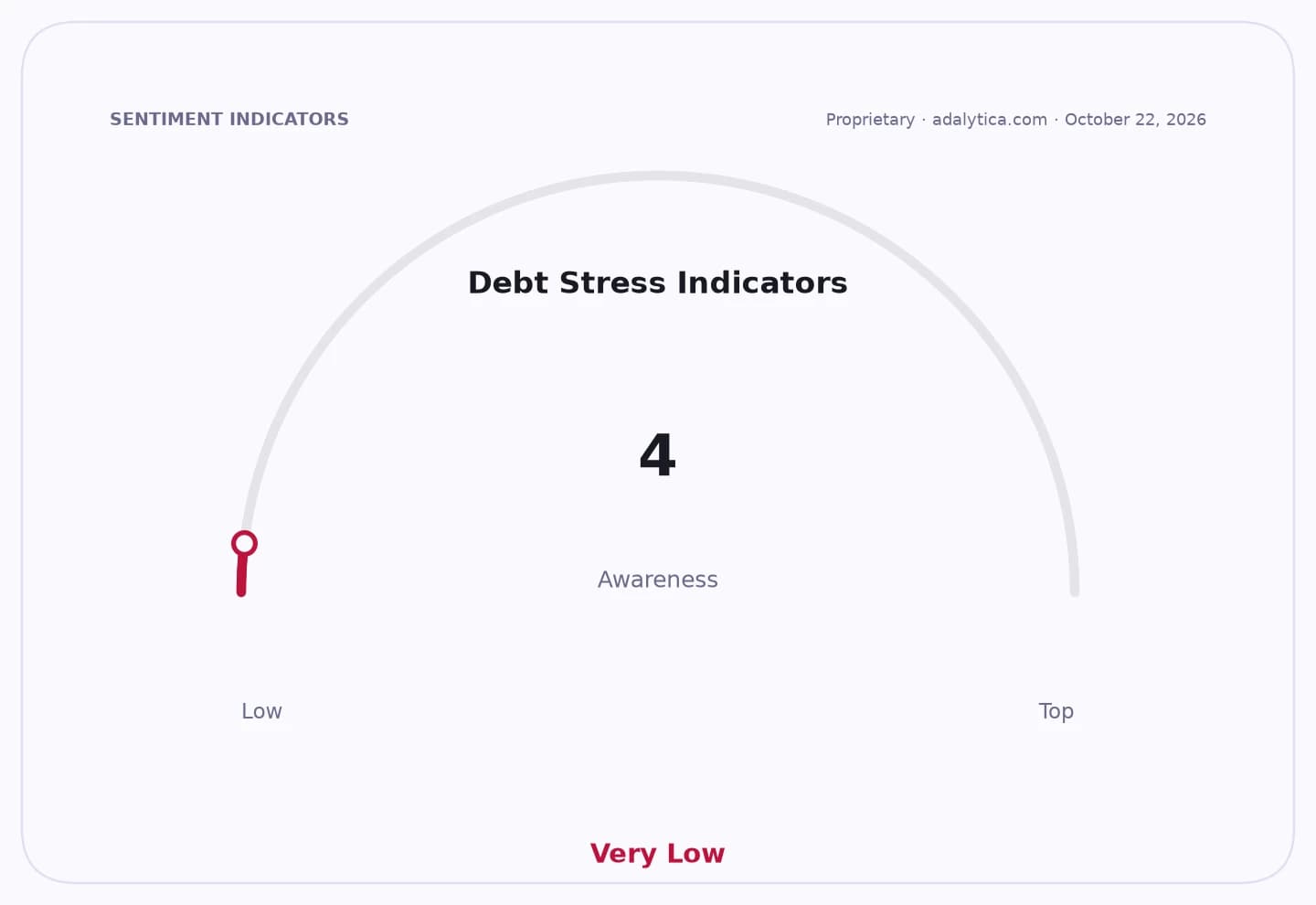
Sentiment Indicators
Montse Cespedosa, founder of mortgage broker MC Grou and a former banker, said borrowers should move early to renegotiate. “I always recommend that anyone with a variable mortgage go to their bank to negotiate the interest rate,” she said, adding that those with more than 100,000 euros outstanding and more than 10 years left should consider switching to fixed rates now.
Her advice reflects a broader shift in the lending market: banks are still competing for mortgage customers, but the bargaining power is tilting toward lenders as financing costs stay elevated. Cespedosa said borrowers should first approach their current bank rather than immediately refinancing elsewhere, because institutions are keen to retain existing loans. That matters because switching lenders can involve fees, paperwork and, in some cases, worse terms than a negotiated repricing with the incumbent bank.
The economic stakes are significant. Cespedosa estimated that a variable mortgage of 150,000 euros over 25 to 30 years could see an annual payment change of about 900 euros. For a household already facing higher living costs, that is enough to alter spending plans, savings and debt service capacity. In Catalonia and across Spain, housing costs are among the largest recurring expenses for families, making mortgage predictability a central issue for consumer confidence.
The case for fixing rates is strongest for borrowers with larger balances and long remaining maturities, where the risk of further Euríbor volatility is most expensive. A fixed-rate loan, Cespedosa argues, buys stability and makes budgeting easier at a time when families are being asked to absorb higher financing costs without immediate relief. She also said new borrowers should compare fixed and mixed-rate offers rather than defaulting to variable structures, and would favor a fixed mortgage below 2.5%.
That view aligns with the broader rates backdrop. Market data supplied alongside the report show U.S. Treasury yields remaining elevated, with the 10-year around 4.893% and the 2-year near 4.527%, underscoring how global borrowing costs remain restrictive even as investors price eventual easing. In housing finance, the burden of high rates is already evident: mortgage payments have kept rising in several markets despite some cooling in home prices.
For investors, the implication is that refinancing demand and mortgage composition may keep shifting toward fixed-rate products if Euríbor remains firm. That would matter for Spanish banks’ margins, origination mix and balance-sheet sensitivity to rate moves. It also suggests borrowers are increasingly focused on certainty rather than chasing the lowest teaser rate, a sign that the affordability stress in housing is becoming embedded rather than temporary.
The near-term catalyst is the next mortgage review cycle. If Euríbor stays near current levels, more households will feel the increase in instalments later this year and into early 2027, strengthening the case for renegotiation and, for many, a switch away from floating debt.
| Entity | Gains | Losses |
|---|---|---|
| Spanish banks | ▲Retain loans, reprice margins | ▼Lose some variable-loan volume |
| Fixed-rate borrowers | ▲Payment stability | ▼Miss out if rates fall |
| Variable-rate borrowers | ▲Potential refinancing leverage | ▼Higher instalments at reset |
| Spanish households | ▲Better budgeting if they switch | ▼Less disposable income if they wait |