The euro is stuck near 1.12 against the dollar, with traders still favoring the greenback as U.S. yields hold elevated and the European Central Bank looks set to stay more supportive than restrictive for longer.
Euro Near 1.12 as U.S. Yields Stay High

That combination is keeping EUR/USD pinned close to its recent lows and leaves the single currency vulnerable to any fresh widening in the policy and rate gap between the U.S. and the euro zone. The pair closed at 1.12 on Oct. 15, down from 1.17 in late May and well below the 1.20 peak seen earlier in the year, underscoring how quickly the euro’s rebound has faded.
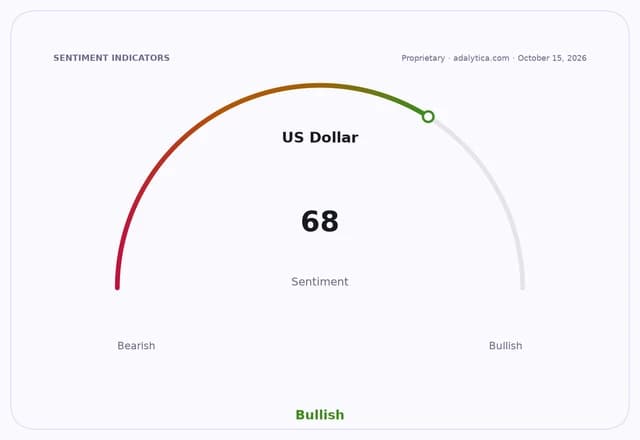
Sentiment IndicatorsⓘProprietary · adalytica.com · October 15, 2026
This is a snapshot — live sentiment, awareness and momentum for 130+ markets update continuously in the dashboard.Open AlphaPulse

The move tracks a firmer dollar backdrop. The ICE U.S. Dollar ETF, UUP, has climbed to 29.12 from 27.14 in mid-December, while the euro proxy FXE has fallen to 102.98 from 107.53 in January. That divergence points to capital continuing to favor dollar assets as Treasury yields stay high.
The 10-year U.S. Treasury yield is hovering around 5.20%, while the federal funds rate is at 3.75%, leaving U.S. rates high enough to support the dollar even as markets price some moderation ahead. By contrast, the euro zone is still seen as grappling with softer growth, which limits the case for a sustained euro recovery.
Technical signals also lean bearish. EUR/USD is trading below both its 50-day moving average at 1.15 and its 200-day moving average at 1.16, while RSI readings near 28 suggest the pair is oversold but not yet reversing. MACD remains negative, reinforcing the downtrend.
Adalytica’s euro trade signals show sentiment at 23, labeled fear, after a sharp drop from 87 in late July, while the ECB policy gauge sits at 93, or extreme greed, reflecting expectations that the central bank will remain accommodative relative to the Fed. That policy gap is one of the main reasons the euro has stayed battered even when broader risk appetite improves.
For investors, the weak euro matters well beyond FX desks. It supports imported inflation in Europe, squeezes dollar-based buyers of euro assets, and can help exporters while pressuring companies reliant on overseas inputs or U.S.-dollar funding. A sustained break below 1.12 would likely keep the market focused on whether the ECB can tighten enough to stabilize the currency, or whether the dollar’s yield advantage extends the euro’s slide into year-end.
| Entity | Gains | Losses |
|---|---|---|
| U.S. dollar | ▲Higher yield support | ▼Exporters facing tighter financial conditions |
| European exporters | ▲More competitive abroad | ▼Importers paying more in dollars |
| ECB policymakers | ▲Room to stay cautious | ▼Credibility if euro weakens further |
| Eurozone importers | ▲— | ▼Higher input and energy costs |