The euro extended its decline in Colombia on Friday, trading near 3,725 pesos, as a broader pullback against the dollar and weaker technical momentum kept pressure on the currency.
Euro Falls Near 3,725 Pesos in Colombia

The move matters because the euro is not just a travel currency for Colombian households. It is a pricing reference for imports, remittances, external contracts and portfolio hedging, and a sustained drop changes the local cost of European goods and services. For Colombian businesses with euro-denominated liabilities, the softer currency can lower near-term payment costs, while exporters and households receiving euro income may see the value of those inflows reduced in peso terms.
Sentiment IndicatorsⓘProprietary · adalytica.com · October 2, 2026
This is a snapshot — live sentiment, awareness and momentum for 130+ markets update continuously in the dashboard.Open AlphaPulse
Reference prices put the euro around 3,725 pesos on Oct. 2, down from roughly 3,734 pesos a day earlier, a fall of about 9 pesos that leaves the currency above the 3,700-peso mark but still on a multi-day downward trend. In dollar terms, the euro was flat at about 1.13, but the broader pattern has been weaker over recent sessions, with the currency losing ground against the greenback and against the peso.
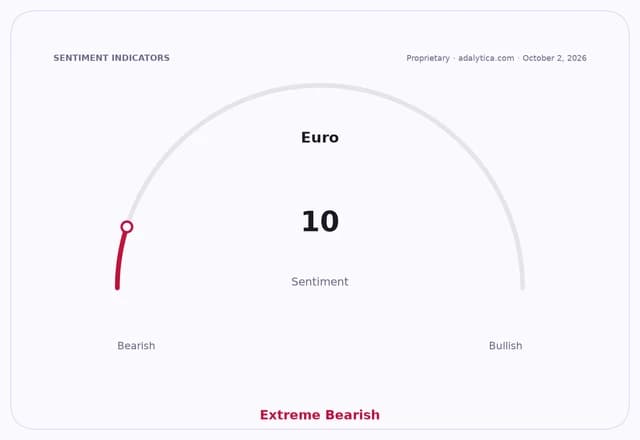
Market positioning points to a fragile backdrop. Adalytica’s Euro Trade Signals snapshot showed sentiment at 10, described as “Extreme Fear,” with a 26% drop over seven days and a 75% slide over 30 days, while the U.S. dollar gauge also sat in “Extreme Fear,” underscoring that the move is less about a single-country shock than a shifting cross-asset mood around major currencies. FX volatility signals remained subdued, suggesting traders are leaning into the euro’s weakness without pricing an immediate disorderly move.
Technical indicators on the FXE euro-tracking fund also reinforce the bearish tone. The fund closed at 103.82, below its 50-day moving average of 106.19 and its 200-day average of 106.79, while RSI readings near 13 point to oversold conditions rather than a clear turn. The MACD remained negative, which usually suggests downside momentum is still intact even if the market is stretched.
For investors, the immediate question is whether the euro’s decline is a pause in a broader uptrend or the start of a more durable reset. Bulls will argue that deeply oversold readings and the currency’s resilience around 1.13 against the dollar could invite short covering. Bears will point to the continued break below key moving averages and the absence of a catalyst strong enough to reverse sentiment.
The next moves will likely depend on whether dollar weakness broadens further and whether European economic data or central-bank expectations shift enough to change rate differentials. For now, the euro’s fall is feeding through to Latin American pricing in a way that benefits buyers of European imports and punishes holders of euro assets, even as the market waits for a clearer catalyst.
| Entity | Gains | Losses |
|---|---|---|
| Colombian importers | ▲Lower euro costs | ▼Euro-priced liabilities |
| Colombian travelers | ▲Cheaper Europe spending | ▼Euro savings value |
| European exporters | ▲Less peso support? | ▼Price competitiveness in Colombia |
| Euro holders | ▲— | ▼Weaker peso conversion value |