The euro slipped as much as 0.5% to $1.118 on Monday and was last near that level as investors sought the dollar amid mounting social unrest in Europe and fresh geopolitical risks tied to the war in Ukraine.
Euro Falls on Europe Unrest and Ukraine Risks
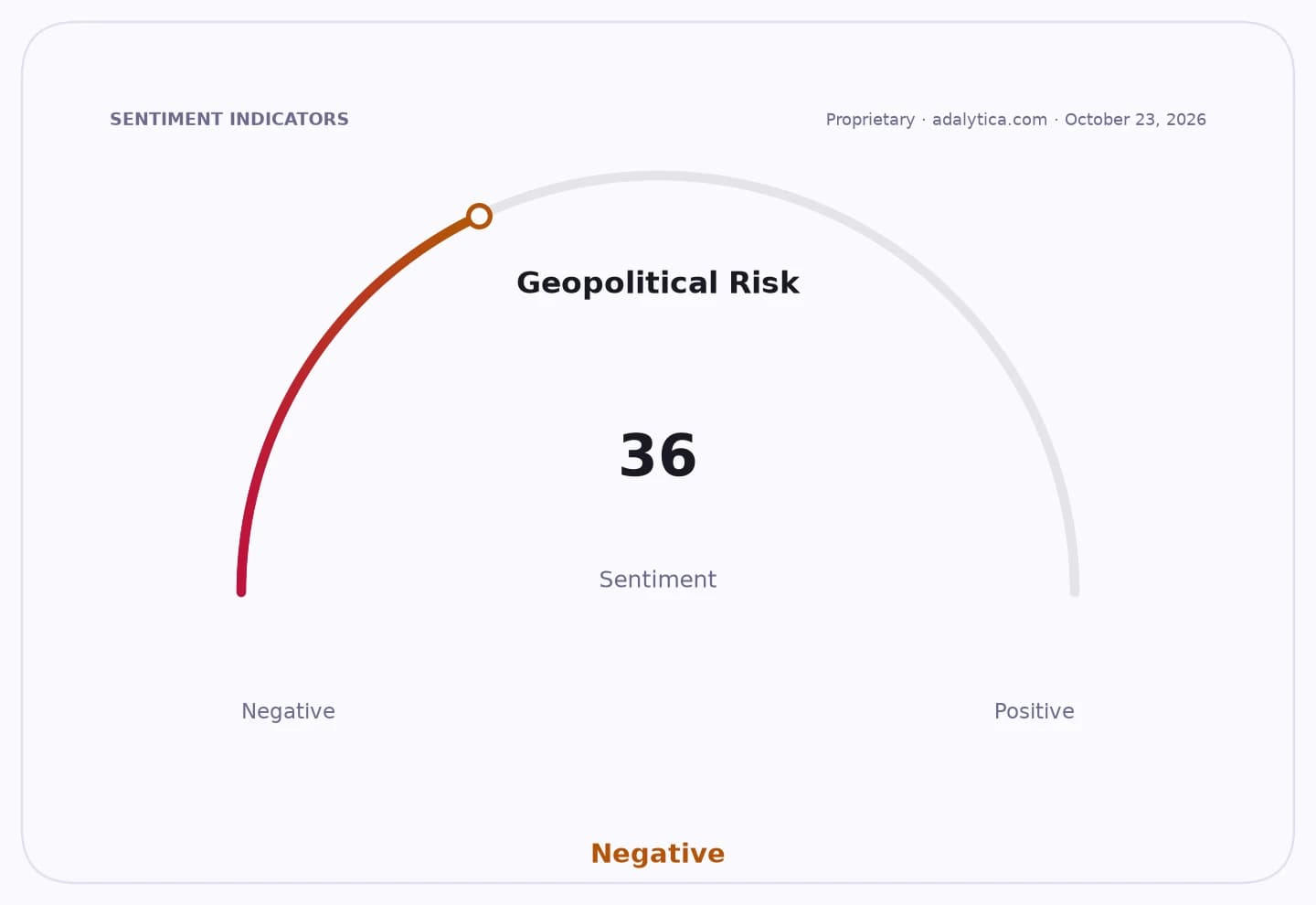
The move underscores how fast political and security stress can translate into currency pressure when growth is already fragile. Traders are treating Europe’s protest wave, energy-security threats and fiscal worries in France as a toxic mix for the single currency, even before any new economic data or central bank action.
Sentiment IndicatorsⓘProprietary · adalytica.com · October 23, 2026
This is a snapshot — live sentiment, awareness and momentum for 130+ markets update continuously in the dashboard.Open AlphaPulse
Large demonstrations over the weekend in France and other European countries turned violent, with unrest also reported in Belgium, Italy and Portugal. That added to concern that social instability could weigh on activity, hurt confidence and complicate policy making across the region.
At the same time, the Russia-Ukraine conflict remains a direct market risk for Europe through energy infrastructure. Reports that Ukrainian strikes sparked fires at a petroleum export terminal and storage depot in Saint Petersburg on Sunday reinforced fears about supply disruptions and higher energy costs.
That matters because sustained energy-price pressure would hit European households and companies, feeding inflation while slowing growth. For investors, that combination is usually negative for the euro, especially when the currency is already under strain from questions over France’s public finances and the European Central Bank’s cautious stance on further rate increases.
Technical signals also reflect the softer tone. FXE, the euro-tracking ETF, was down at $103.53 on the latest reading, below both its 50-day and 200-day moving averages, while the euro-dollar pair held around 1.12, near the lower end of its recent range.
Adalytica’s US Dollar Trade Signals snapshot showed the dollar with neutral sentiment but extreme fear in awareness metrics, suggesting investors are still leaning on the greenback as a haven even as the trade looks crowded. The euro’s next test will be whether Europe’s political tensions ease or whether energy and fiscal concerns deepen enough to keep pressure on the currency into the next ECB meeting.
| Entity | Gains | Losses |
|---|---|---|
| U.S. dollar | ▲Safe-haven demand | ▼None from euro weakness |
| Euro | ▲Brief technical support only | ▼Against the dollar |
| European exporters | ▲More competitive pricing abroad | ▼Higher import and energy costs |
| European households and firms | ▲None | ▼Higher inflation and weaker growth |