The euro stayed above $1.12 in New York trading on Thursday, signaling that the dollar’s brief rally after hotter-than-expected U.S. inflation may be running out of steam even as investors still see the Federal Reserve keeping rates higher for longer.
Euro Holds Above $1.12 After Hot U.S. Inflation

The common currency last changed hands at $1.1212 after the European Central Bank set its reference rate at $1.1208, up from $1.1195 on Wednesday. That recovery matters because it shows how quickly the market has faded the dollar’s latest bid: the euro had slid to $1.1113 earlier in the week, its weakest level since May 2025, after a surprise jump in U.S. consumer prices stoked speculation about more Fed tightening.
Sentiment IndicatorsⓘProprietary · adalytica.com · October 17, 2026
This is a snapshot — live sentiment, awareness and momentum for 130+ markets update continuously in the dashboard.Open AlphaPulse
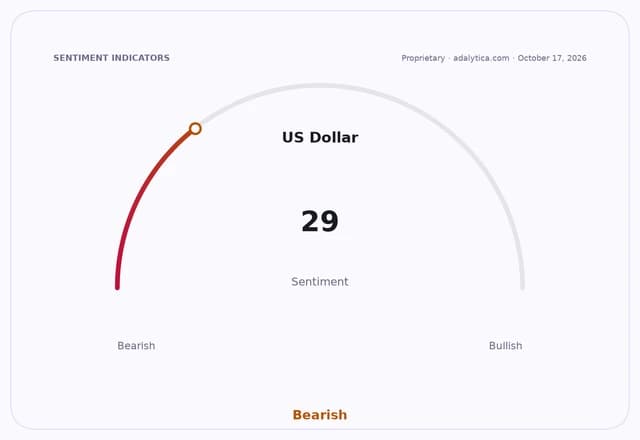
Economically, the move suggests foreign-exchange traders are balancing two competing forces. Stronger U.S. inflation and an unexpected rise in September producer prices would normally support the dollar by pushing Treasury yields higher and reinforcing expectations for restrictive Fed policy. But the euro’s ability to regain ground indicates that the initial repricing has been limited, not a full regime shift. In other words, the market is still treating the inflation data as a reason to delay rate cuts rather than as the start of a new tightening cycle.
That distinction matters for investors because the dollar’s path affects everything from European exporters’ earnings translation to the pricing of commodities and U.S. assets held by overseas buyers. A dollar that cannot sustain gains despite firmer inflation data implies positioning may already be stretched, leaving room for the euro to stabilize if upcoming U.S. data fail to confirm a broader inflation re-acceleration. It also keeps pressure on the view that the Fed can deliver easier policy soon, which would normally weigh on the greenback.
The latest price action also fits with broader market signals. Conventional technical indicators on the FXE euro ETF show the fund trading near 103.75, below its 50-day moving average of 105.73 and still under its 200-day average of 106.57, while the RSI has recovered from deeply oversold levels to 38.6. That points to an improving but still fragile trend for the euro. By contrast, the U.S. dollar ETF UUP remains elevated at 28.92 and above both its 50-day and 200-day moving averages, reflecting a dollar that is still structurally firm even if near-term momentum has cooled.
Adalytica’s trade signals also show sentiment on both the euro and dollar sitting in “fear,” underscoring how unsettled the market remains after the inflation surprise. For now, the key question is whether the euro’s hold above $1.12 marks the start of a broader stabilization or just a pause in a dollar rebound that could resume if the Fed remains the more hawkish major central bank.
| Entity | Gains | Losses |
|---|---|---|
| Euro | ▲Stabilization above $1.12 | ▼Near-term downside pressure eases |
| U.S. dollar | ▲Higher yields from inflation data | ▼Cannot hold immediate rally |
| European exporters | ▲Softer translation losses if euro firms | ▼Less benefit from a weak currency |
| U.S. importers | ▲Slightly weaker dollar support | ▼Higher import costs if dollar fades |