Europe’s economy is still resisting the shock from higher energy costs, but its resilience is being tested by a rising mix of fiscal, monetary and geopolitical pressures that could determine how long the euro zone can keep growing.
Euro zone growth holds as debt and energy risks rise

The immediate economic significance is that the region has so far avoided the kind of deep contraction many feared after the surge in energy prices, yet the foundations of that stability are getting thinner. France and Italy remain the most obvious weak points because heavy public debt leaves them far more exposed than northern peers if borrowing costs stay elevated. At the same time, tighter policy is no longer a theoretical risk: the benchmark 10-year US Treasury yield is around 4.8%, and while that is a US rate, it underscores a global higher-for-longer environment that keeps pressure on sovereign financing costs everywhere, including Europe.
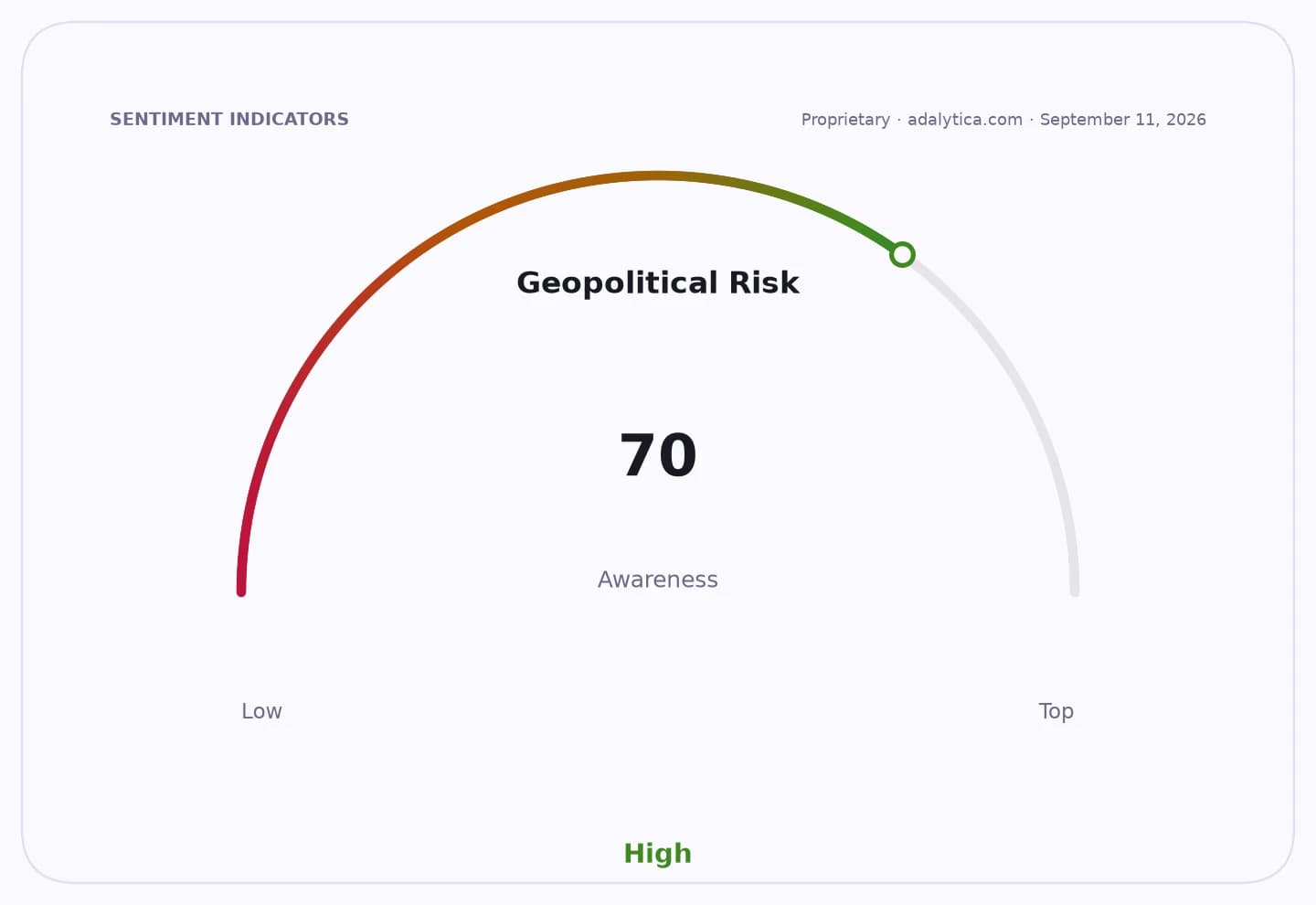
Sentiment IndicatorsⓘProprietary · adalytica.com · September 7, 2026
This is a snapshot — live sentiment, awareness and momentum for 130+ markets update continuously in the dashboard.Open AlphaPulse

That matters because the euro area is not just dealing with slower growth; it is carrying a larger debt burden into a period when financing is more expensive and political room for maneuver is narrower. Higher rates lift debt-service costs, crowd out public investment and make it harder for governments to cushion households and companies from weak demand or energy shocks. For Italy in particular, the combination of slow trend growth and high debt is a persistent vulnerability. France is less indebted than Italy, but its fiscal position is also stretched enough to make any prolonged rise in yields politically and economically sensitive.
Energy remains the other key channel. Oil has climbed back to about $91.50 a barrel, a level that can feed directly into transportation, industrial and household costs across Europe. The region has learned to absorb supply shocks better than in 2022, but another sustained leg higher in crude would squeeze real incomes, complicate the European Central Bank’s inflation fight and erode the consumer spending that has helped prevent a sharper downturn. That is why the recent rebound in energy prices matters even without an outright crisis: it reduces the margin of safety.
Geopolitical Risk — 30-day sentimentadalytica.com
Explore this data interactively — full history, time series and cross-market comparisons.Open AlphaPulse
Geopolitics adds a third layer of fragility. Trade disruptions, war risk and tensions around energy supply routes can amplify both inflation and volatility, while also weakening business confidence. Investors typically tolerate one of those pressures at a time; Europe is facing several at once. That is reflected in market behavior. The euro-zone ETF EZU recently traded around 70.46, above both its 50-day and 200-day moving averages, which suggests the broad equity market has not broken down. But its relative strength has cooled, and the conventional RSI reading near 34 points to a market that is closer to oversold than to a strong momentum breakout. In other words, investors have not abandoned Europe, but they are no longer pricing in an easy recovery.
The broader implication is that the euro zone’s resilience is real, but conditional. A still-okay growth backdrop can coexist with a fragile fiscal outlook for highly indebted states, especially if interest rates remain restrictive and energy prices stay volatile. A better case for Europe would require lower energy costs, a clearer path to easing monetary pressure and fewer geopolitical shocks. The bear case is that these threats reinforce one another: expensive energy slows growth, weak growth worsens debt dynamics, and higher yields make fiscal stress more visible.
For investors, that means Europe remains a selective market rather than a broad cyclical bet. Exporters and quality balance-sheet companies can still benefit from a stable economy, while sovereign risk, energy-intensive sectors and rate-sensitive domestic plays remain more vulnerable. The next test is whether higher borrowing costs and crude prices remain contained long enough for the euro zone to preserve growth, or whether the pressure points in France, Italy and the broader currency bloc start to feed back into markets more forcefully.
| Entity | Gains | Losses |
|---|---|---|
| Exporters with global sales | ▲Weaker euro support | ▼Higher energy input costs |
| Germany and northern fiscally stronger states | ▲Relative safety premium | ▼Slower euro-zone demand |
| France and Italy | ▲Short-term resilience | ▼Higher refinancing stress |
| Energy producers | ▲Higher crude prices | ▼Consumers and industrial users |