Wheat prices in Europe fell as traders bet that exports from the Black Sea could resume, a shift that would relieve one of the market’s biggest supply bottlenecks and potentially cool food inflation across import-dependent economies.
Euronext Wheat Falls on Black Sea Export Hopes

December milling wheat on Paris-based Euronext slipped 0.6% to 239.00 euros a metric ton after touching its lowest level in nearly a month in the prior session. The move reflects a familiar pattern in global grains markets: even tentative signs of progress on the Black Sea can trigger an immediate price response because the region remains central to world wheat trade.
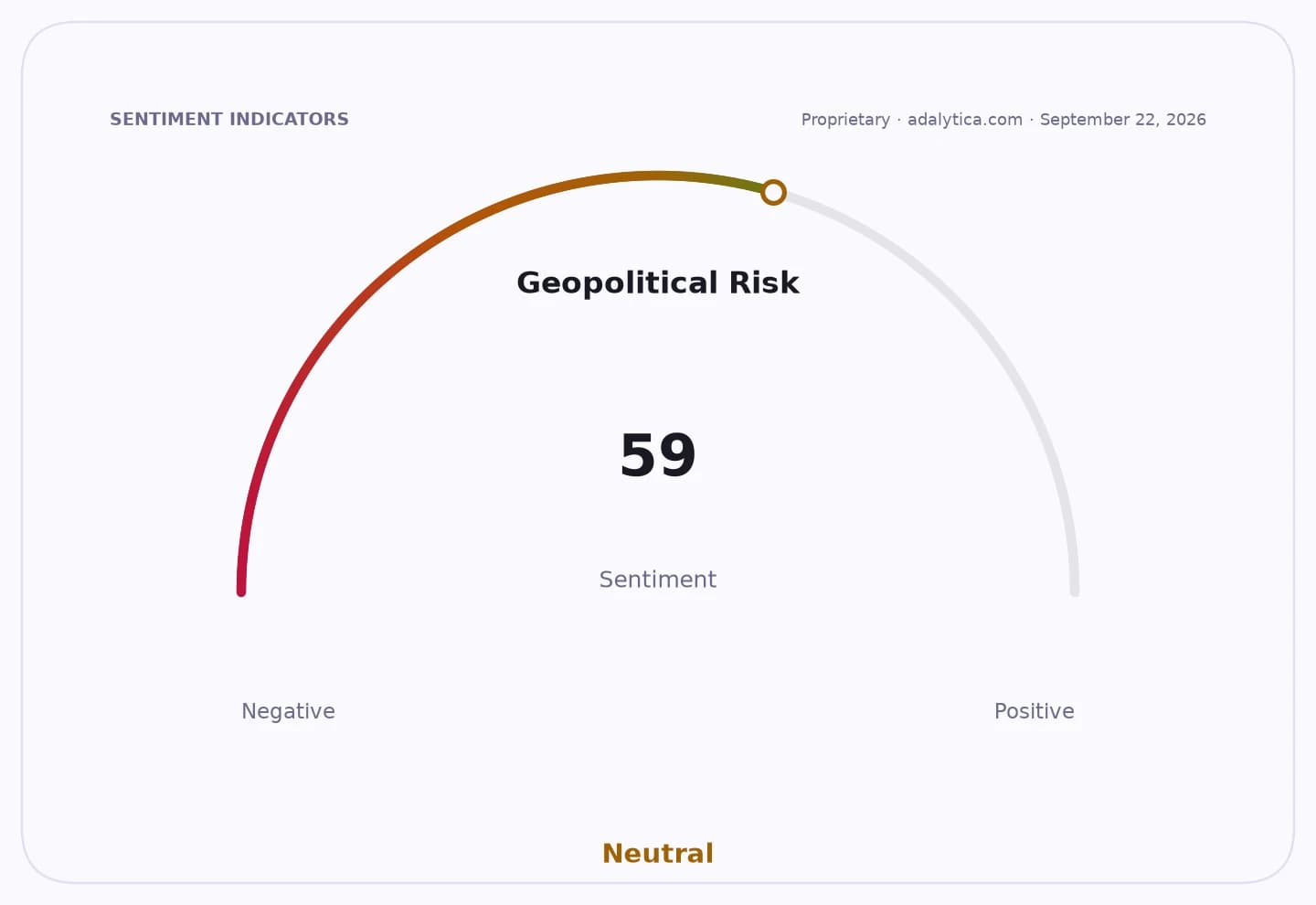
Sentiment IndicatorsⓘProprietary · adalytica.com · October 1, 2026
This is a snapshot — live sentiment, awareness and momentum for 130+ markets update continuously in the dashboard.Open AlphaPulse
Turkey said it had intensified efforts to reopen a grain corridor through the Black Sea and received a positive response after talks with Ukrainian President Volodymyr Zelenskiy. That raised hopes of a partial revival of the 2022 Black Sea Grain Initiative, which Turkey and the United Nations helped broker to allow safe shipments of Ukrainian grain during the war. Russia later withdrew, arguing that obstacles remained for its own food and fertilizer exports.
The market is treating the possibility of renewed exports as an incremental easing of a supply risk rather than a settled breakthrough. But for wheat, where marginal supply disruptions quickly change prices, the difference matters. A functioning export route would improve the flow of Ukrainian grain to global buyers, pressure nearby European futures, and reduce the premium built into prices by months of shipping and insurance uncertainty.
That matters economically because wheat is a core input into bread, pasta and animal feed, and because Black Sea supplies have helped shape global benchmarks since the war disrupted trade routes. Any credible sign of more grain moving out of the region tends to lower costs for importers in the Middle East, Africa and parts of Asia, while weighing on producers and merchants positioned for tighter supply. It can also feed through to softer domestic food-price pressure in Europe if the rally in grain prices unwinds further.
The decline in Paris came even as broader grain markets have been sensitive to other weather and crop-quality risks, including concerns in Argentina and El Niño-related threats to winter crops. That contrast underscores how geopolitics, not just weather, continues to drive wheat pricing. When Black Sea exports look constrained, traders add a war premium; when they look more viable, that premium comes out quickly.
The stakes are heightened by the persistent attacks on shipping in the Black Sea. Russia and Ukraine have stepped up strikes on each other’s grain vessels in recent months, keeping volatility high and complicating any effort to restore a reliable corridor. Russia’s Krasnodar region, a major agricultural area, has also declared an emergency after Ukrainian drone attacks disrupted grain exports, highlighting how the conflict continues to affect supply logistics on both sides.
For investors, the key question is whether today’s drop marks the start of a more durable easing in grain prices or just a short-lived reaction to diplomacy. A confirmed export arrangement would likely extend pressure on European wheat futures and related agricultural products, while failure to secure one would quickly restore the risk premium. Until then, wheat remains hostage to headlines from Ankara, Kyiv and Moscow as much as to harvest conditions.
| Entity | Gains | Losses |
|---|---|---|
| Importers and millers | ▲Lower wheat costs | ▼Less leverage if prices rebound |
| Exporting countries outside Black Sea | ▲Market share stability | ▼Less pricing power |
| Black Sea consumers/buyers | ▲Easier supply access | ▼— |
| Wheat bulls/longs | ▲— | ▼Eroded war premium |