Europe is headed into a more hostile investment climate as higher gas prices and elevated rates squeeze growth, with AKTOR Group chief Alexandros Exarchou arguing that the continent’s reliance on imported LNG, especially from the U.S., is becoming structurally more expensive and less predictable.
Europe energy costs rise as LNG prices climb
That matters because energy costs still feed directly into inflation, industrial competitiveness and capital allocation across the euro zone. Exarchou’s warning comes as Brent-like crude benchmarks have rebounded sharply and U.S. 10-year Treasury yields hover around 4.8%, a combination that keeps financing costs high while leaving European businesses exposed to a second round of energy-price pressure. For an economy trying to pull in private capital, that is a tough backdrop: investors tend to require either lower funding costs or clearer earnings visibility, and Europe is offering neither in full.
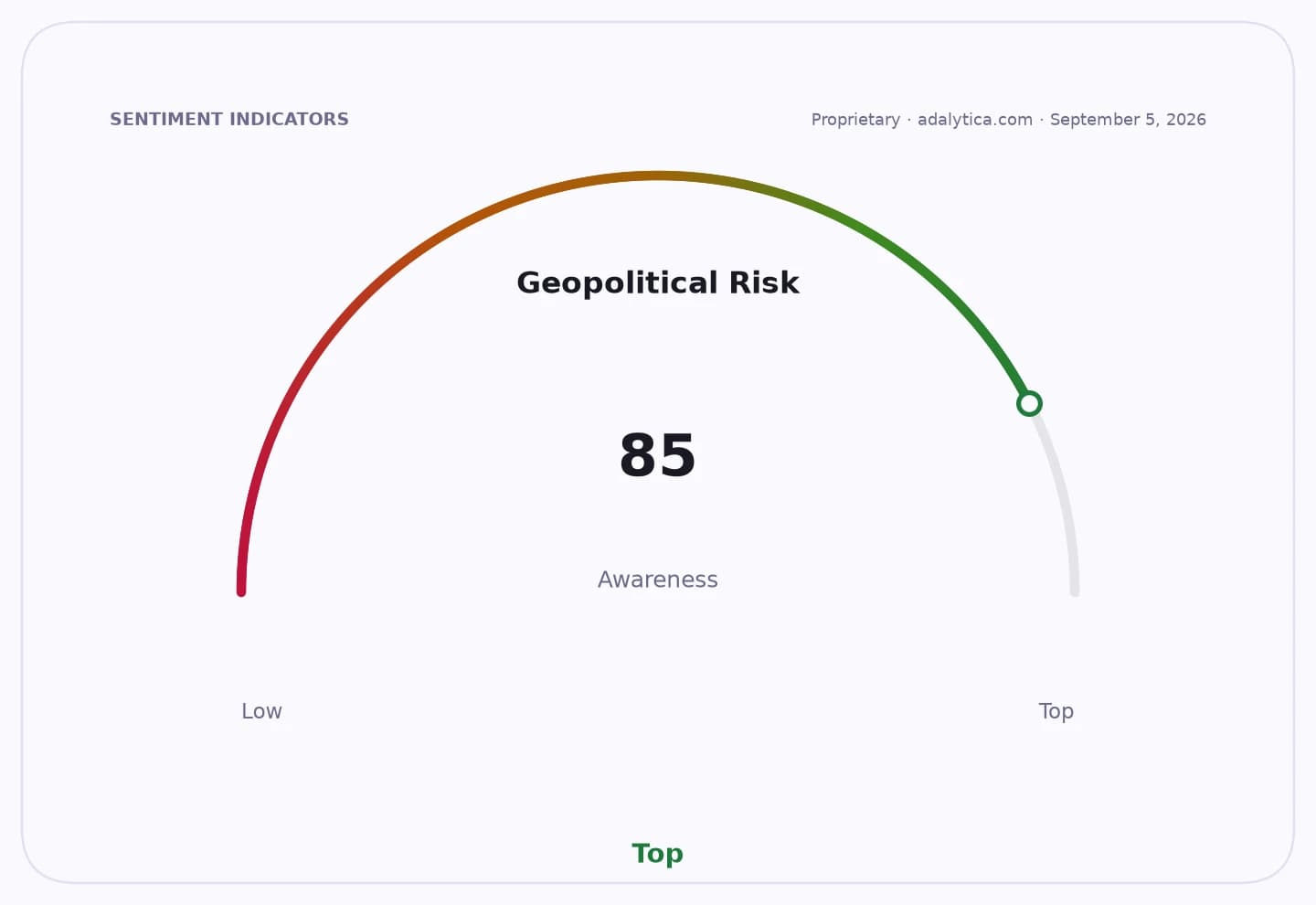
Sentiment IndicatorsⓘProprietary · adalytica.com · September 5, 2026
This is a snapshot — live sentiment, awareness and momentum for 130+ markets update continuously in the dashboard.Open AlphaPulse
Exarchou said the region has not learned enough from its past dependence on Russian gas and risks replacing one vulnerability with another if it fails to lock in broader supply and longer-term contracts. He described U.S. LNG as a “one-way street,” reflecting the reality that buyers facing tight global supply have limited bargaining power. The latest market backdrop supports that view: global LNG prices have climbed to their highest since 2022, Asian buyers are paying up, and supply disruptions linked to geopolitical tensions have tightened availability just as winter storage needs build in Europe.
For investors, the implications are twofold. First, energy-importing European economies face renewed margin pressure in sectors such as manufacturing, chemicals and heavy industry, which are most sensitive to gas and power costs. Second, the argument strengthens the case for assets tied to infrastructure, interconnection and contracted energy transport rather than pure exposure to spot-price volatility. Exarchou’s emphasis on long-term supply deals and diversified suppliers also underscores why capital is flowing toward projects that can reduce dependence on a single route or counterparty.
His comments also reflect a broader policy issue in the EU: the bloc remains divided on energy strategy, with some members pushing harder to sever Russian dependence while others move more cautiously. That fragmentation raises the risk of delayed procurement, higher imported energy bills and uneven industrial competitiveness across member states. In that sense, the economic story is less about a single LNG cargo than about Europe’s ability to secure affordable energy on terms that support investment.
Exarchou contrasted Europe’s position with Greece’s recent effort to attract private capital after using Recovery Fund-driven demand to strengthen the economy’s base. AKTOR itself is betting on that model, saying it raised 1 billion euros to support 3 billion euros of new investments and aims to keep leverage disciplined as it expands into PPP and concession projects. The strategy fits the wider message: in a higher-cost, less forgiving macro environment, the winners will be companies and countries that can secure long-term funding, long-term supply and predictable returns.
| Entity | Gains | Losses |
|---|---|---|
| LNG exporters | ▲Higher selling prices | ▼Demand-side pushback |
| European importers | ▲Supply diversification | ▼Higher energy bills |
| AKTOR / PPP contractors | ▲Infrastructure demand | ▼Traditional public works delays |
| Europe’s industrial users | ▲Some contract certainty | ▼Spot-price volatility |