El Niño is shaping up as an unexpected cushion for Europe’s gas market this winter, raising the odds of stronger winds and warmer-than-normal temperatures just as the region enters its most vulnerable demand season.
Europe gas market El Niño winter outlook

That matters because Europe is still paying up for gas. Benchmark prices are near the highest levels since late 2022, storage is below typical seasonal norms and the system remains heavily dependent on LNG cargoes to balance cold spells and weak renewable output. If El Niño delivers both higher wind generation and a milder heating season, utilities could burn less gas, draw down storage more slowly and trim imports at the margin — a meaningful relief for a market that has spent three years trying to rebuild resilience after Russia’s invasion of Ukraine reshaped energy flows.
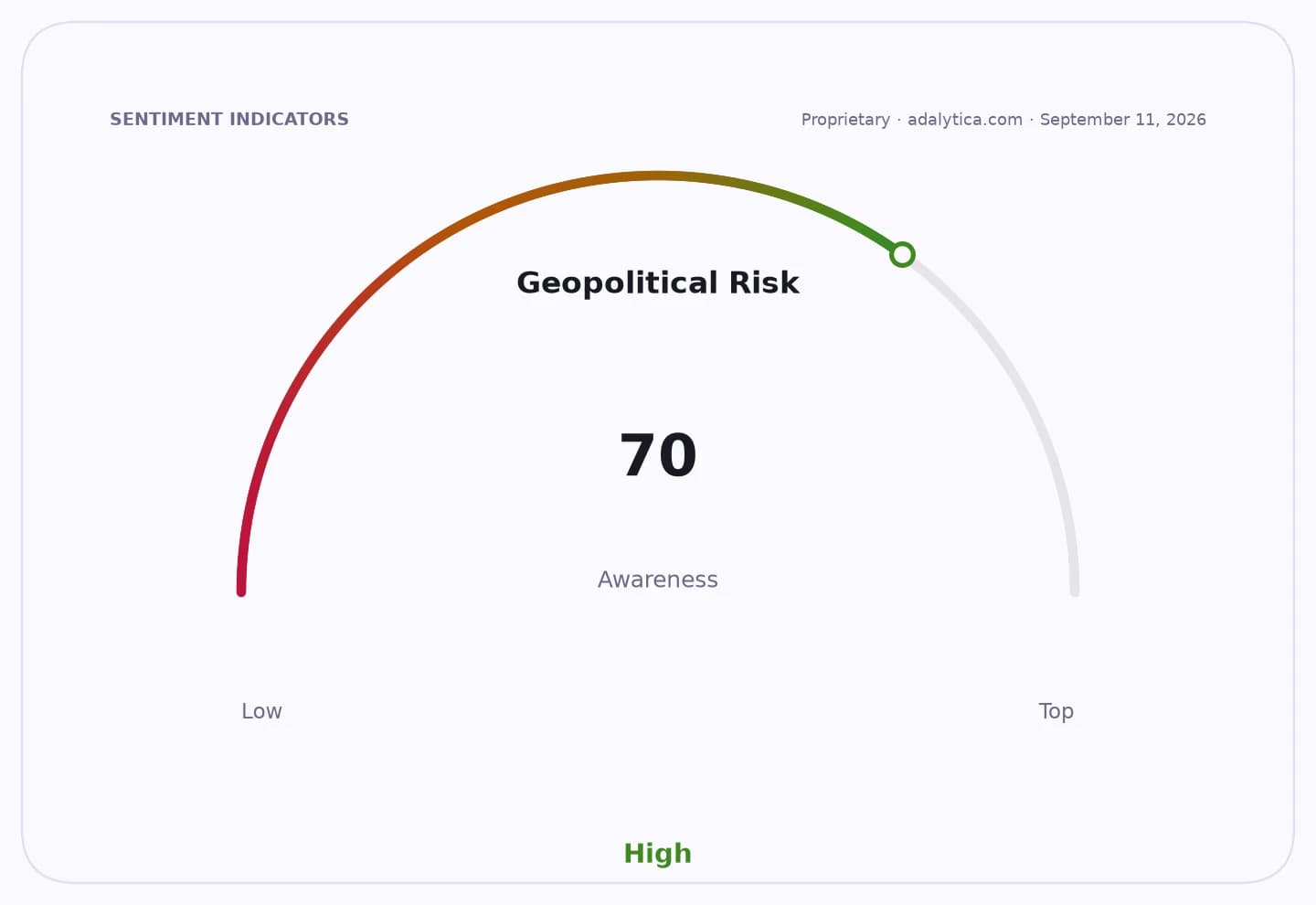
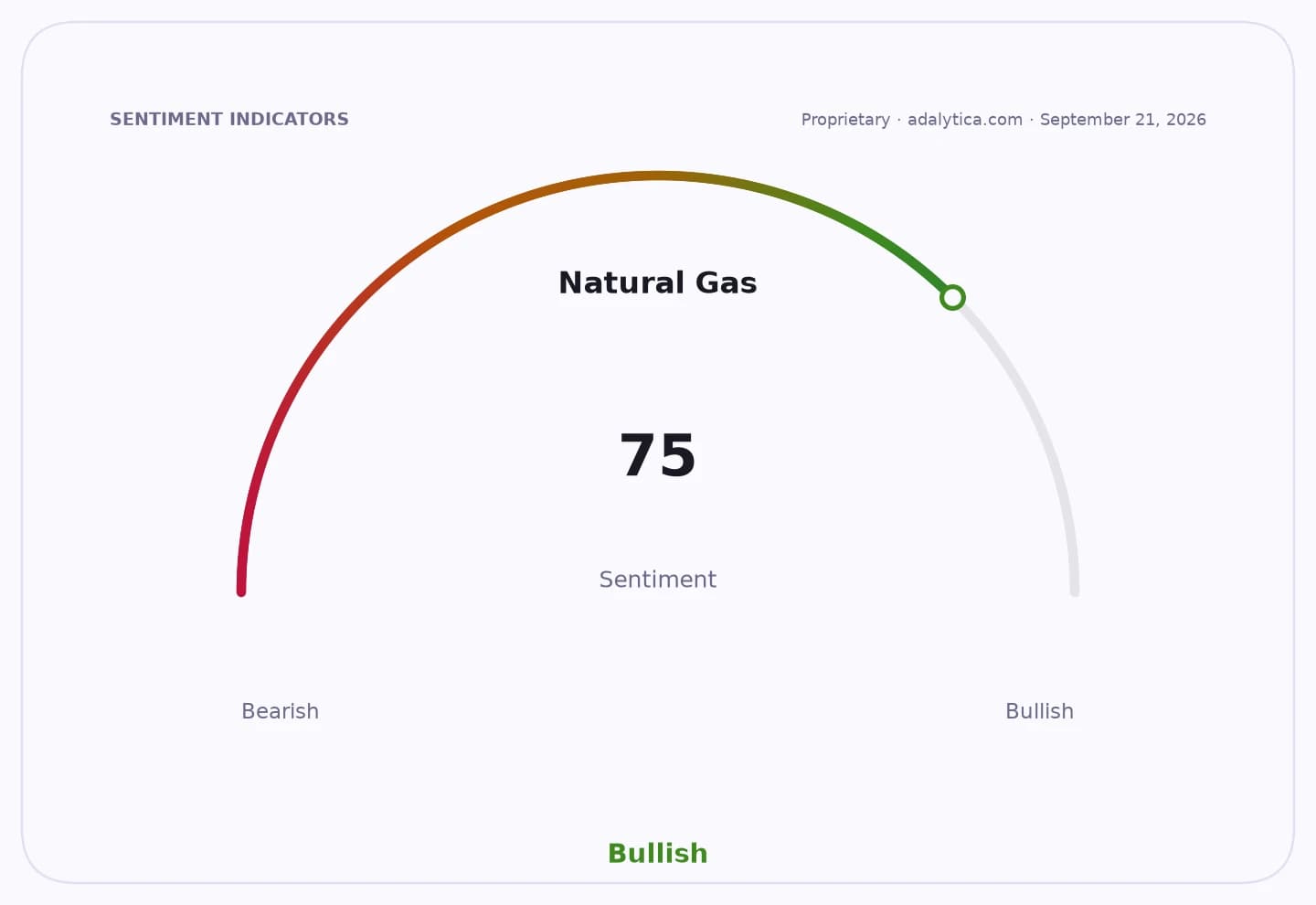
Sentiment IndicatorsⓘProprietary · adalytica.com · September 18, 2026
This is a snapshot — live sentiment, awareness and momentum for 130+ markets update continuously in the dashboard.Open AlphaPulse
The weather channel is not trivial. The World Meteorological Organization has said this year’s El Niño could be stronger than anything seen since record-keeping began, with the peak expected between November and January, the heart of Europe’s winter demand period. Weather forecasters cited in the data say strong El Niño episodes tend to shift pressure patterns in the North Atlantic, sending stronger westerlies toward Britain, the North Sea, Ireland and Scandinavia. In practical terms, that would lift output from wind farms across the North Sea, Germany, Britain and France.
For power markets, that would be a welcome reversal. European utilities have been forced in recent years to lean more on gas and coal when winds fall short, especially in Germany, where the word “Dunkelflaute” has become shorthand for periods when solar and wind generation both fade. Germany’s installed wind capacity has climbed to a record roughly 82 gigawatts, yet production has still been constrained in recent years by weak winds. Any sustained improvement would arrive as a direct substitute for fossil-fuel generation, especially because gas-fired plants are often the marginal source of power when renewables underperform.
Germany is central to the story. Wind now supplies about 28% of electricity delivered by utilities there, ahead of coal at around 20% and gas at 16%. LSEG data show August wind output was at least 30% above the average for the same month over the previous two years, an early sign that the system may already be moving in a more favorable direction. If that pattern persists into late 2026 and early 2027, it could materially reduce the need for gas in Europe’s biggest power market and ease pressure on imports across the continent.
That is why investors are watching not just the weather, but the knock-on effects across energy assets. Lower gas burn would be bearish for LNG exporters and gas-linked trades, while it would support European utilities and power producers that are exposed to wholesale fuel costs. It would also be a relative positive for coal and other backup generators only if renewable output disappoints; under the El Niño scenario, they would likely be displaced first. The latest market signals still show natural gas trading with neutral-to-firm positioning, but the broader energy complex remains sensitive to any change in winter expectations.
The other half of the argument is temperature. Strong El Niño events have historically been associated with milder European winters, which would reduce heating demand across the continent. LSEG meteorologists expect above-normal temperatures in continental Europe and the Black Sea region in the 2026-27 winter outlook, with colder risks concentrated in Scandinavia and northern Russia. A warmer winter would not eliminate gas demand, but it could shave enough off consumption to matter for storage, price volatility and LNG import requirements.
There are obvious risks to the bullish weather thesis. Seasonal forecasts can change quickly, and a strong wind pattern does not guarantee persistent supply through the coldest weeks. Europe’s gas system is still vulnerable to short-lived Arctic outbreaks, infrastructure outages and competition for LNG from Asia. But with storage already below normal and benchmark prices elevated, even a modest demand reprieve would be economically important.
For investors, the key question is whether El Niño becomes a short-term weather anomaly or a material macro input. If the forecasts hold, Europe could enter peak winter with more wind generation, lower gas consumption and a lighter call on LNG — a combination that would cap prices, support utilities and reduce stress across a market that has not fully escaped its post-crisis fragility.
| Entity | Gains | Losses |
|---|---|---|
| European utilities | ▲Lower fuel costs | ▼Less gas-market leverage |
| LNG exporters | ▲Higher cargo demand | ▼Lower European spot demand |
| Wind power operators | ▲More generation | ▼Fewer backup dispatch hours |
| Gas buyers | ▲Softer winter demand | ▼Potentially weaker gas prices |