Europe’s natural gas rally is back to levels not seen since late 2022, and that matters because the market is once again pricing in a winter of tighter supplies, heavier competition for LNG and a bigger risk of disruption. The benchmark TTF contract has climbed to 86 euros per megawatt hour, tripling this year, after the European gas network ENTSO-G warned that storage could be drawn down sharply in most winter scenarios.
Europe Natural Gas Rallies to Late-2022 Levels
For investors, the message is simple: natural gas is regaining its power to move inflation, utility bills and energy-sector cash flows. That is especially important in Europe, where households and governments still remember how quickly an energy shock can morph into a broader economic problem. When gas prices rise this fast, the pressure does not stay in the commodities market. It spreads to power prices, industrial margins, consumer costs and fiscal budgets.
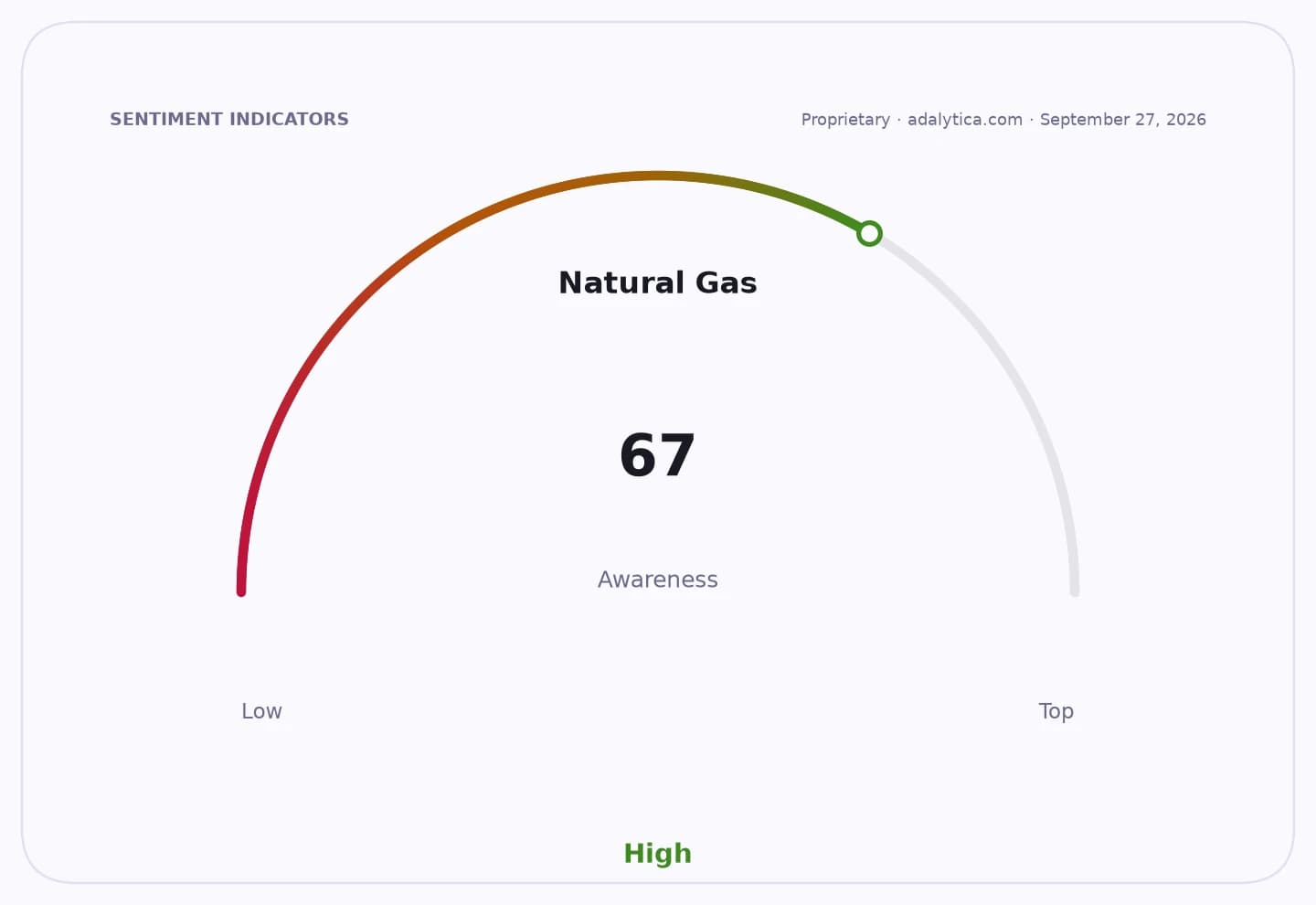
Sentiment IndicatorsⓘProprietary · adalytica.com · October 14, 2026
This is a snapshot — live sentiment, awareness and momentum for 130+ markets update continuously in the dashboard.Open AlphaPulse
The new rally is being driven by a familiar mix of forces. European inventories are expected to start November around 76% to 78% full, but could end the heating season anywhere from 10% to 30%, depending on weather, LNG deliveries and supply disruptions. Asia is also competing aggressively for cargoes, which pushes prices higher for everyone and recreates the kind of global tug-of-war that defined the 2022 crisis. If there is any interruption in LNG flows, Russian transit routes or internal European infrastructure, the market now has very little room to absorb it.
That vulnerability is exactly why the latest move feels so uncomfortable. In 2022, prices surged into the 200-euro to 300-euro range when the supply shock was far more severe, but today’s 86-euro level is high enough to force policymakers and investors to take the risk seriously. Governments are already signaling that they may need to preserve budget room for energy support, while Brussels is being criticized for not doing more to encourage storage refill earlier in the year.
The market impact is broader than just European utilities. Higher gas prices can lift earnings for LNG exporters, producers and pipeline operators, while pressuring import-dependent economies and energy-intensive industries. U.S. gas funds and vehicles tied to the fuel have already shown how violently the trade can swing: UNG and BOIL have been caught in the kind of volatility that punishes short-term traders but can create big opportunities for patient investors who understand the cycle. Technical indicators also show the trade remains stretched, with BOIL well above its 50-day average and UNG hovering near its own moving averages rather than in a stable uptrend, underscoring how quickly sentiment can reverse.
Adalytica.com’s natural gas market signals add to the sense that this is a crowded trade. The snapshot shows extreme greed in sentiment alongside extreme fear in awareness, a combination that often appears when a market is moving on anxiety as much as fundamentals. In plain English: investors are chasing price, but they are still worried about what could happen next.
The bigger lesson for long-term investors is that natural gas is no longer just a fuel story; it is an energy security story. Europe still needs the molecule, Asia still wants it, and global supply chains are still vulnerable to weather, geopolitics and infrastructure shocks. That makes the current rally more than a short-term spike. It is a reminder that the world has not built enough resilience into energy systems yet.
For investors, the winners are producers, LNG exporters and companies with flexible supply access. The losers are Europe’s consumers, industrial buyers and governments trying to cushion the blow without worsening deficits. If you own energy stocks, this is worth watching closely. If you invest for the long term, the smarter move is to focus on resilient cash generators and diversified energy exposure rather than trying to time every swing in the gas market.
| Entity | Gains | Losses |
|---|---|---|
| LNG exporters | ▲Higher realized prices | ▼Buyers facing tighter supply |
| European households | ▲Energy support may follow | ▼Higher heating bills |
| Industrial users | ▲Less dependence on spot markets | ▼Margin pressure |
| Gas producers / funds | ▲Stronger cash flow, trading gains | ▼Short sellers, late buyers |