European shares are under pressure as a fade in quarter-end support collides with rising Middle East risk and renewed selling in semiconductors, even after Wall Street opened firmer and oil-backed energy shares held up.
Europe Slides on Oil Shock and Chip Selling

The pullback matters because it shows how quickly geopolitical shocks can overpower the late-quarter flows that had helped stabilize risk assets. A jump in crude tied to escalating fears around the Strait of Hormuz is feeding inflation concerns just as investors are already sensitive to bond yields, while weakness in chip stocks is hitting one of the market’s most crowded growth trades.
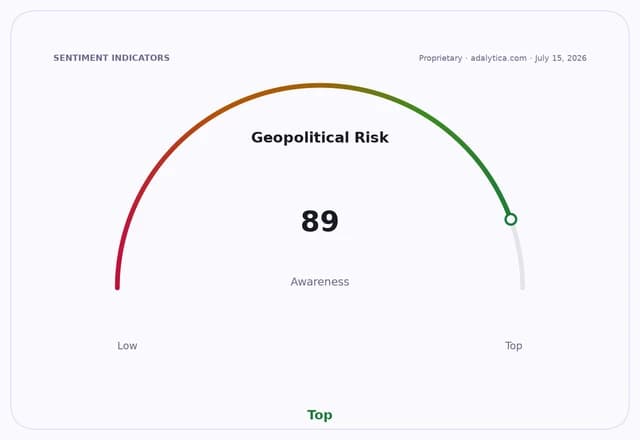
Sentiment IndicatorsⓘProprietary · adalytica.com · July 15, 2026
This is a snapshot — live sentiment, awareness and momentum for 130+ markets update continuously in the dashboard.Open AlphaPulse
Ten-year US Treasury yields are hovering around 4.6%, with the two-year near 4.2%, keeping borrowing costs elevated and limiting appetite for rate-sensitive sectors. Oil has rebounded sharply from early-July lows, with Brent-style moves mirrored by US crude around the upper-$70s a barrel, a swing that supports energy producers but threatens airlines, transport and consumers.
The semiconductor complex is taking the brunt of the risk-off tone. The SMH chip ETF has slipped back toward its 50-day moving average after a sharp run-up earlier this year, while the SOXX ETF is trading below its 50-day average and showing weaker momentum on standard technical indicators including RSI and MACD. That matters for European markets because chipmakers are central to the region’s industrial and AI-linked equity story.
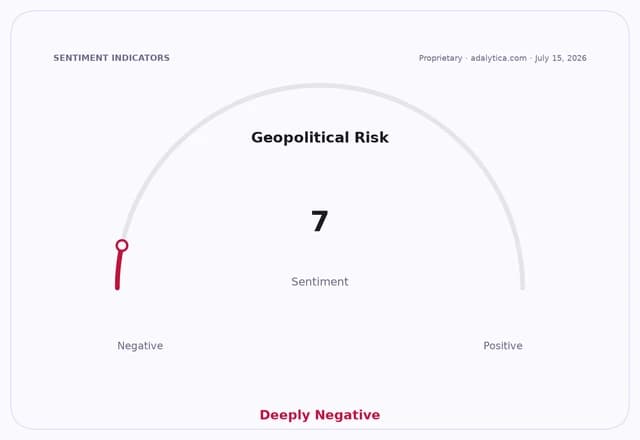
The broader market backdrop is mixed rather than outright defensive. Adalytica’s Global Stability Sentiment gauge is flashing “Extreme Fear” at 7, while awareness remains at “Extreme Greed,” a combination that suggests investors are watching the conflict closely even if they have not fully de-risked. By contrast, the S&P 500 trade signal is neutral, and Wall Street’s firmer tone is helping cap losses in Europe rather than reverse them.
Energy is the main beneficiary. XLE has outperformed on the crude rebound, and European oil majors should continue to see support if tensions keep tanker routes and supply expectations under pressure. The winners are likely to be producers and defense-linked names; the losers remain chipmakers, importers and sectors most exposed to higher fuel costs.
Investors will now watch whether Hormuz risks escalate further and whether the latest oil move feeds into inflation expectations and bond yields. Any fresh disruption to shipping or a larger pullback in semiconductors would likely keep pressure on European equity benchmarks into the next trading session.
| Entity | Gains | Losses |
|---|---|---|
| Energy producers | ▲Higher crude prices | ▼— |
| Semiconductor stocks | ▲— | ▼Risk-off selling |
| European equities | ▲Support from Wall Street strength | ▼Quarter-end bid fades |
| Consumers and transport firms | ▲— | ▼Higher fuel costs |