Inflation does not always mean central banks can fix the problem with higher rates, and markets are increasingly having to price that distinction.
Eurozone CPI Rises to 2.9% in July
The latest inflation backdrop shows why. Eurozone consumer prices edged up to 2.9% in July from 2.8% in June, with energy costs doing part of the work, even as the European Central Bank is expected to keep tightening in September. That reinforces a policy trap that has defined the post-pandemic economy: when inflation is driven by excess demand and easy money, higher rates can cool it; when it is driven by shortages, energy costs or other supply constraints, rate hikes can slow growth faster than they curb prices.
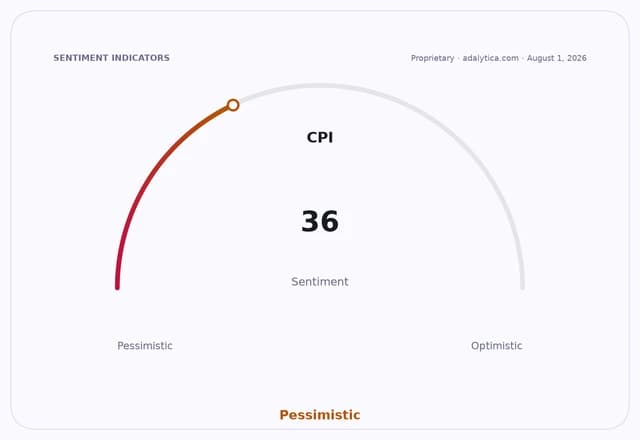
Sentiment IndicatorsⓘProprietary · adalytica.com · August 1, 2026
This is a snapshot — live sentiment, awareness and momentum for 130+ markets update continuously in the dashboard.Open AlphaPulse
That matters economically because monetary tightening works through credit, investment and hiring. If inflation is rooted in supply-side bottlenecks, a higher policy rate does not create more oil, semiconductors, food, housing or labor. It can, however, raise borrowing costs for households and companies, weigh on consumption and investment, and push the economy closer to stagnation. In that case, the medicine risks worsening the disease: prices stay elevated while unemployment rises.
The market has been wrestling with that same trade-off. The S&P 500 ETF, SPY, finished July 31 at 747.03, close to its 50-day moving average of 744.22 and above its 200-day average of 697.41, but its RSI reading of 48.4 and a slightly negative MACD suggest momentum has cooled even as the broader trend remains constructive. Financials, tracked by XLF, closed July 31 at 56.94, well above both its 50-day and 200-day averages, reflecting a sector that typically benefits from higher policy rates through wider net interest margins. Yet the bond proxy TLT ended July 31 at 82.25, below its 200-day average of 85.87, underscoring how quickly duration assets can come under pressure when inflation remains sticky and rate cuts are pushed out.
The message for investors is that the inflation debate is no longer just about the level of prices, but about the source of those prices. If inflation is demand-led, central banks can lean against it and eventually restore balance. If it is supply-led, they face a harsher choice between tolerating higher inflation or inflicting more damage on output and employment. That is why markets tend to reward rate-sensitive banks on tightening days but punish long-duration bonds and parts of cyclical growth when price pressures come from energy, supply chains or labor shortages.
Adalytica’s CPI sentiment snapshot also points to a market that is alert but not panicked: sentiment is neutral at 36, while awareness is elevated at 75, suggesting investors are focused on the inflation issue without yet fully rotating into defensive positioning. By contrast, SPY trade signals show greed at 83 and extreme awareness at 100, implying equities are still holding up even as macro risks remain unresolved.
The near-term test is whether the next inflation prints confirm a broader demand slowdown or simply a temporary easing in headline prices. If the latter, central banks may find that more hikes only prolong the squeeze. For investors, that means distinguishing between disinflation and demand destruction will matter more than whether policy rates move higher in isolation.
| Entity | Gains | Losses |
|---|---|---|
| Central banks | ▲Credibility if inflation is demand-led | ▼Effectiveness if inflation is supply-led |
| Banks / XLF | ▲Wider lending margins | ▼Credit quality if growth slows |
| Bond funds / TLT | ▲Relief if inflation cools | ▼Losses if rates stay higher for longer |
| Equities / SPY | ▲Liquidity if growth holds up | ▼Valuation pressure if tightening hits demand |