The euro’s rebound against the dollar is running into a familiar obstacle: unless EUR/USD can hold above 1.1275, strategists say the pair is unlikely to make a sustained run at 1.1350-1.1400.
EUR/USD Needs 1.1275 for a Run to 1.1400

That matters because the move is not just a chart pattern. It is a test of whether the dollar’s post-election pullback marks the start of a broader shift in relative policy and growth expectations, or merely a short-lived relief rally that leaves the greenback’s structural advantages intact.
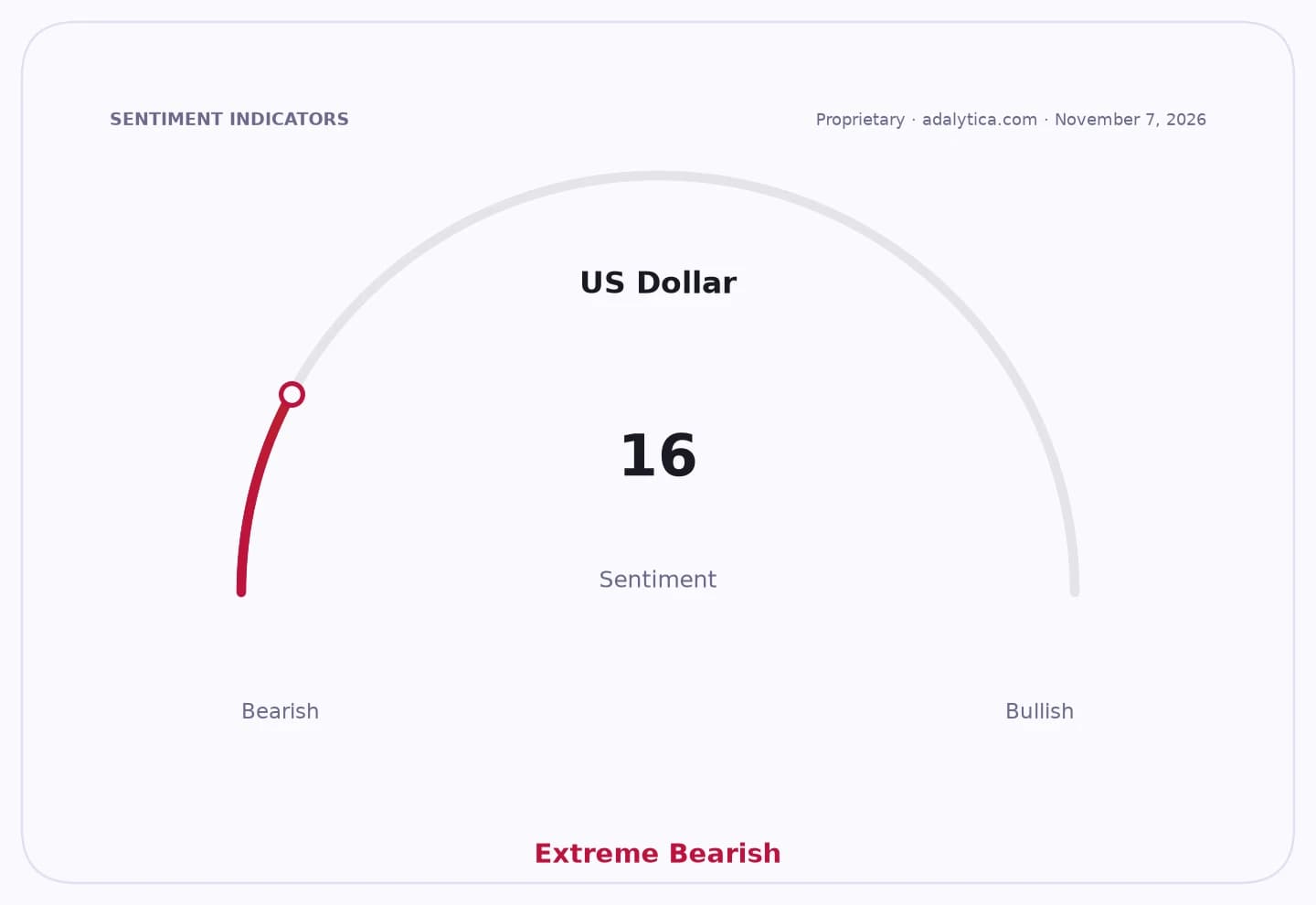
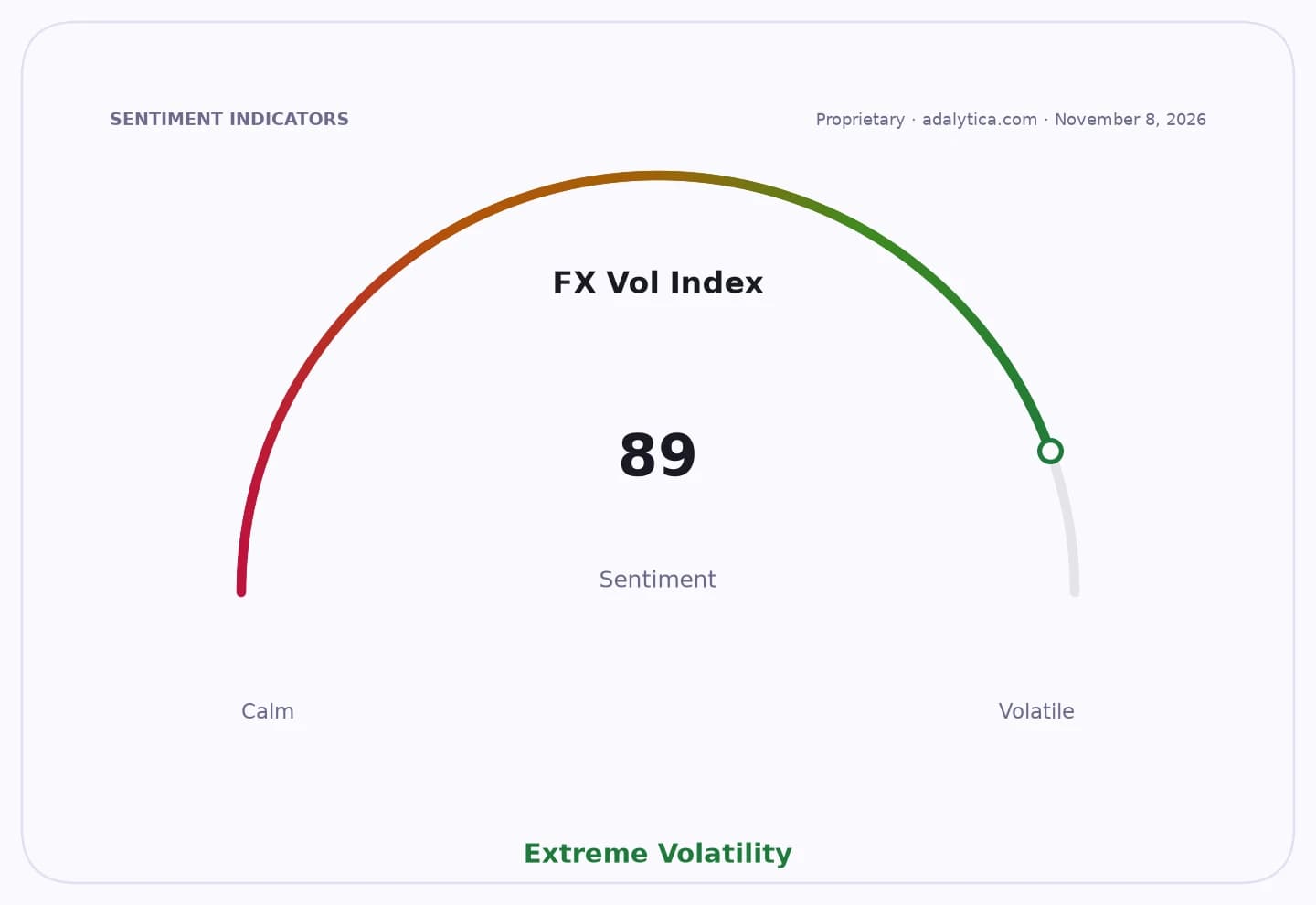
Sentiment Indicators
Euro
Spot EUR/USD was changing hands around $1.1231, up 0.21% on the day after giving back part of an earlier advance that took it to $1.1272, just short of the level Scotiabank says needs to break for a more meaningful recovery. The bank’s Shaun Osborne and Eric Theoret described the near-term tone as neutral to bullish, but said the euro needs a “clear push above 1.1275” to open the way to 1.1350-1.1400.
Technically, the pair remains in a repair phase rather than a breakout. The euro has found support in the low 1.11 area in recent weeks, while the latest rebound has lifted it back above its short-term moving average, but the failure to confirm a breakout keeps the upper end of the range intact. That leaves the market focused on whether buyers have enough conviction to force a decisive move beyond resistance, or whether the rally stalls once again near the top of the recent band.
The broader macro backdrop is mixed for the dollar. The immediate post-election move in currencies reflected some unwinding of dollar long positions, with traders reading the result as a “relief rally” in risk assets and a modest shift in bias away from the dollar’s recent strength. But as Citi’s trading desk noted, the initial reaction came after a period of limited consensus on how to position for the vote, which makes choppy trading unsurprising. In Scotiabank’s framing, the greenback is drifting toward the middle of its so-called “smile” — no longer getting the full boost from US outperformance, but not yet facing a rush into safe-haven demand.
That is why the election result alone may not be enough to sustain euro gains. Democratic control of Congress does not automatically translate into fiscal restraint; if anything, traders will need to weigh the chance of higher spending and a less aggressive drag on demand. That complicates the simple divided-government narrative that would normally argue for slower growth, lower rates and a weaker dollar.
Europe is not offering a clean counterweight either. ECB policymakers have kept the door open to another rate increase in December, with officials including Joachim Nagel, Olaf Sleijpen and Pierre Wunsch sounding more concerned about inflation than some market participants had expected. The central bank has already left its deposit rate at 2.50% while acknowledging that expensive energy threatens both inflation and growth, but it has stopped short of committing to a path, leaving the euro dependent on incoming data and policy signals.
For investors, the immediate question is whether EUR/USD can turn a tactical bounce into something more durable. A sustained break above 1.1275 would strengthen the case for a move toward 1.1350-1.1400 and would suggest the dollar’s recent bid is fading faster than expected. Failure there would keep the pair capped and reinforce the view that the euro is still trapped in a broader range, with the low 1.11s as support.
The longer-term case is still for a gradual euro recovery, but not a fast one. Crédit Agricole’s projections point to EUR/USD at 1.13 in December 2026 and 1.17 in December 2027, underscoring that any meaningful appreciation is likely to depend on a slower convergence in US and euro-area policy rather than a single political event.
| Entity | Gains | Losses |
|---|---|---|
| EUR longs | ▲Breakout above 1.1275 | ▼Rejection at resistance |
| USD bulls | ▲Renewed growth/fiscal support | ▼Further post-election dollar unwinding |
| ECB hawks | ▲Persistent inflation case | ▼If growth weakens too fast |
| US consumers/importers | ▲Stronger euro lowers import pressure | ▼Higher inflation if dollar weakens further |