The most important force for EUR/USD traders right now is the widening interest-rate gap between the U.S. and the euro area, with the 10-year Treasury yield forecast at 4.802% versus 4.375% for the German 10-year equivalent, a spread that keeps the dollar structurally supported against the euro.
EUR/USD Traders Focus on U.S.-Euro Yield Gap

That matters because EUR/USD is driven less by headlines than by relative returns, and the latest rate backdrop still favours dollar assets. When U.S. borrowing costs sit above eurozone yields by roughly 40 basis points at the long end, capital has a stronger incentive to stay in dollars, particularly when growth and policy uncertainty are still elevated. For traders, that means rallies in the euro may continue to struggle unless the European Central Bank turns more hawkish or U.S. data cools enough to bring Treasury yields lower.
Sentiment IndicatorsⓘProprietary · adalytica.com · September 6, 2026
This is a snapshot — live sentiment, awareness and momentum for 130+ markets update continuously in the dashboard.Open AlphaPulse

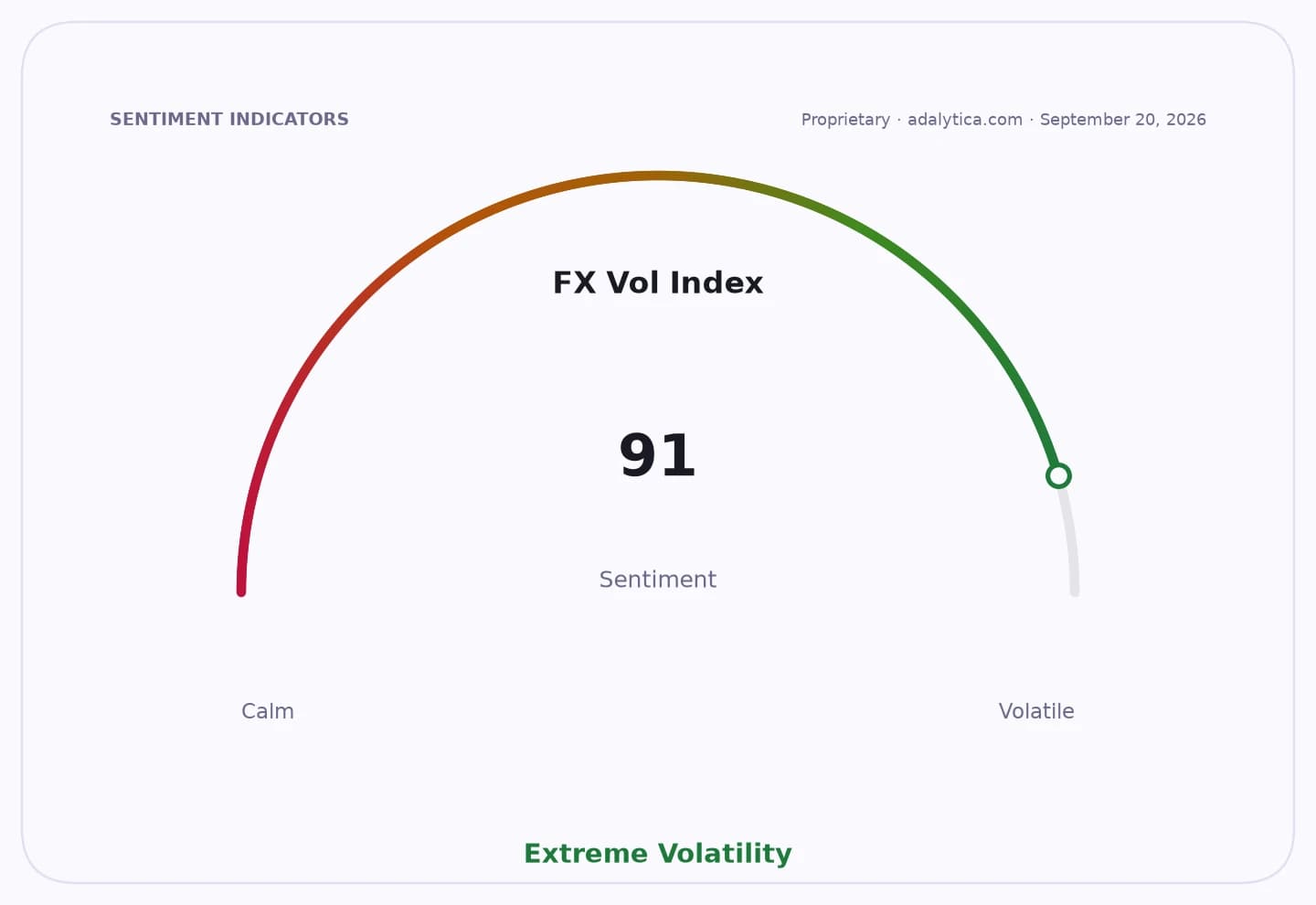
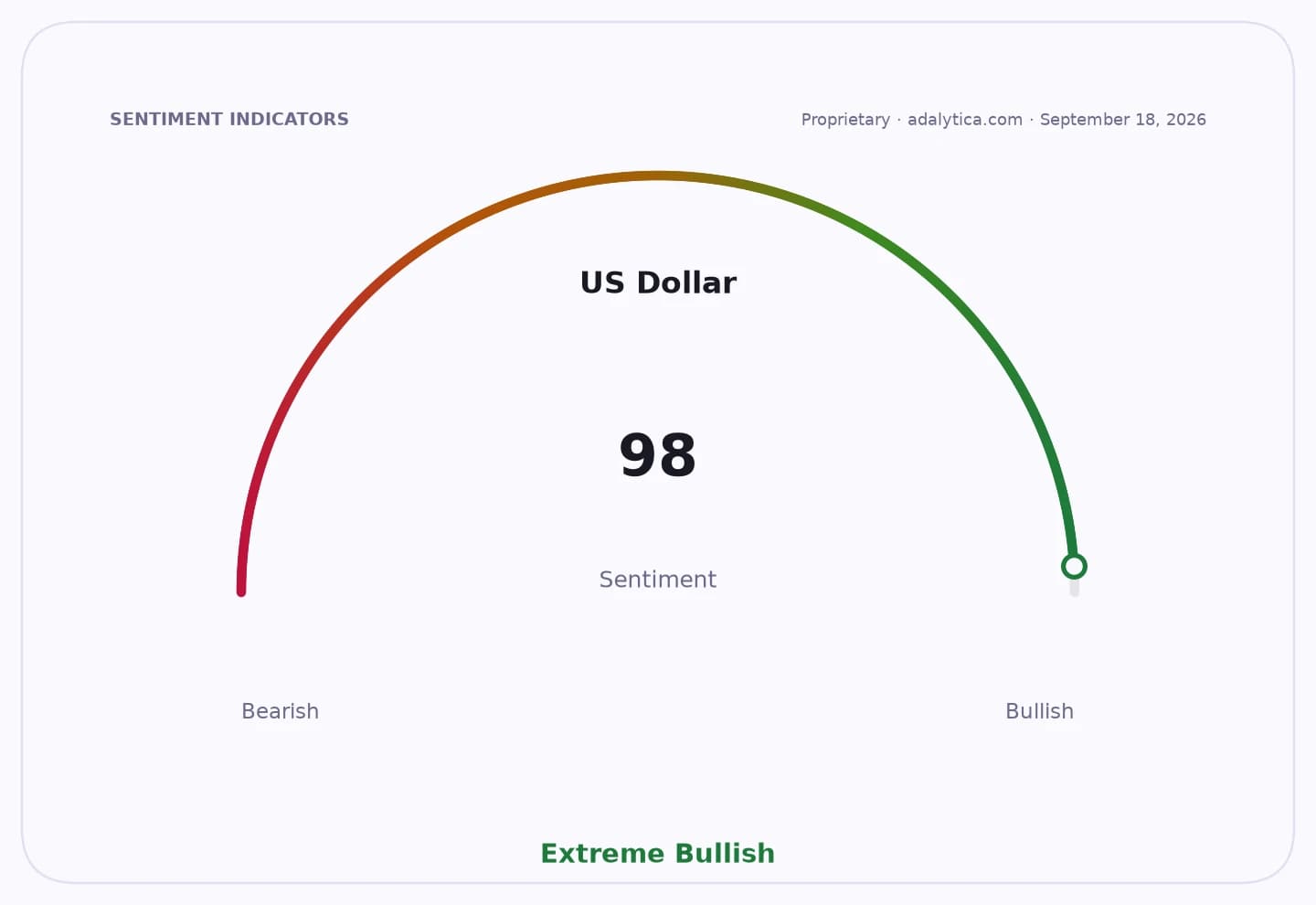
Adalytica’s US Dollar Trade Signals snapshot shows sentiment at 74, in “Greed,” up 5 points on the day and 61 points over seven days, underscoring a renewed bid for the greenback. At the same time, FX volatility sentiment sits at 44, a neutral reading, while awareness is only 4, suggesting the market is not pricing a major volatility regime shift even as positioning has become more dollar-friendly. That combination typically suits range traders more than breakout chasers: the dollar has momentum, but not yet the kind of fear-driven surge that often accompanies a sustained trend leg.
The macro setup also helps explain why EUR/USD remains one of the most traded and liquid currency pairs in the world. Euro-dollar pricing reflects the relative health of the U.S. and eurozone economies, central bank policy, inflation, growth and labour-market data, as well as cross-border capital flows. With the euro still close enough to parity that small moves can be meaningful, even modest shifts in yields or policy expectations can translate into sharp intraday swings for leveraged forex traders.

For investors, the key question is whether the current dollar strength is a tactical move or the start of a more durable trend. The bull case for the euro rests on any sign that U.S. yields have peaked, the Federal Reserve edges toward easing, or eurozone activity stabilises enough to narrow growth differentials. The bear case is that U.S. rates remain elevated, the dollar keeps benefiting from its yield premium, and eurozone growth stays too weak to force a sustained repricing in EUR/USD.
For now, traders should read the pair through the lens of relative rates first and headlines second. Until the yield spread narrows materially, EUR/USD is likely to remain a market where selling strength is easier to justify than aggressively chasing a euro breakout.
| Entity | Gains | Losses |
|---|---|---|
| U.S. dollar bulls | ▲Higher-yield support | ▼None |
| EUR/USD bears | ▲Range-trading opportunities | ▼Breakout upside |
| U.S. Treasury buyers | ▲Attractive returns | ▼Lower price sensitivity |
| Eurozone exporters | ▲More competitive pricing | ▼Imported inflation pressure |