Latin American assets lost momentum as the Federal Reserve kept policy unchanged and left investors leaning toward a longer stretch of elevated U.S. rates, a backdrop that helped pressure regional equities even as currencies traded in opposite directions.
Brazil EWZ Falls 0.8% to 35.47 After Fed Hold
The most important market message is not that the Fed did nothing, but that it did not give emerging markets the all-clear they wanted. The U.S. 10-year Treasury yield edged up to 4.61% on July 28 and the two-year rose to 0.45 percentage point over the 10-year, a sign the market is still pricing a relatively restrictive policy path. That matters for LatAm because higher U.S. yields tend to draw capital back toward dollar assets, tighten financial conditions and cap risk appetite for equities and local currencies alike.
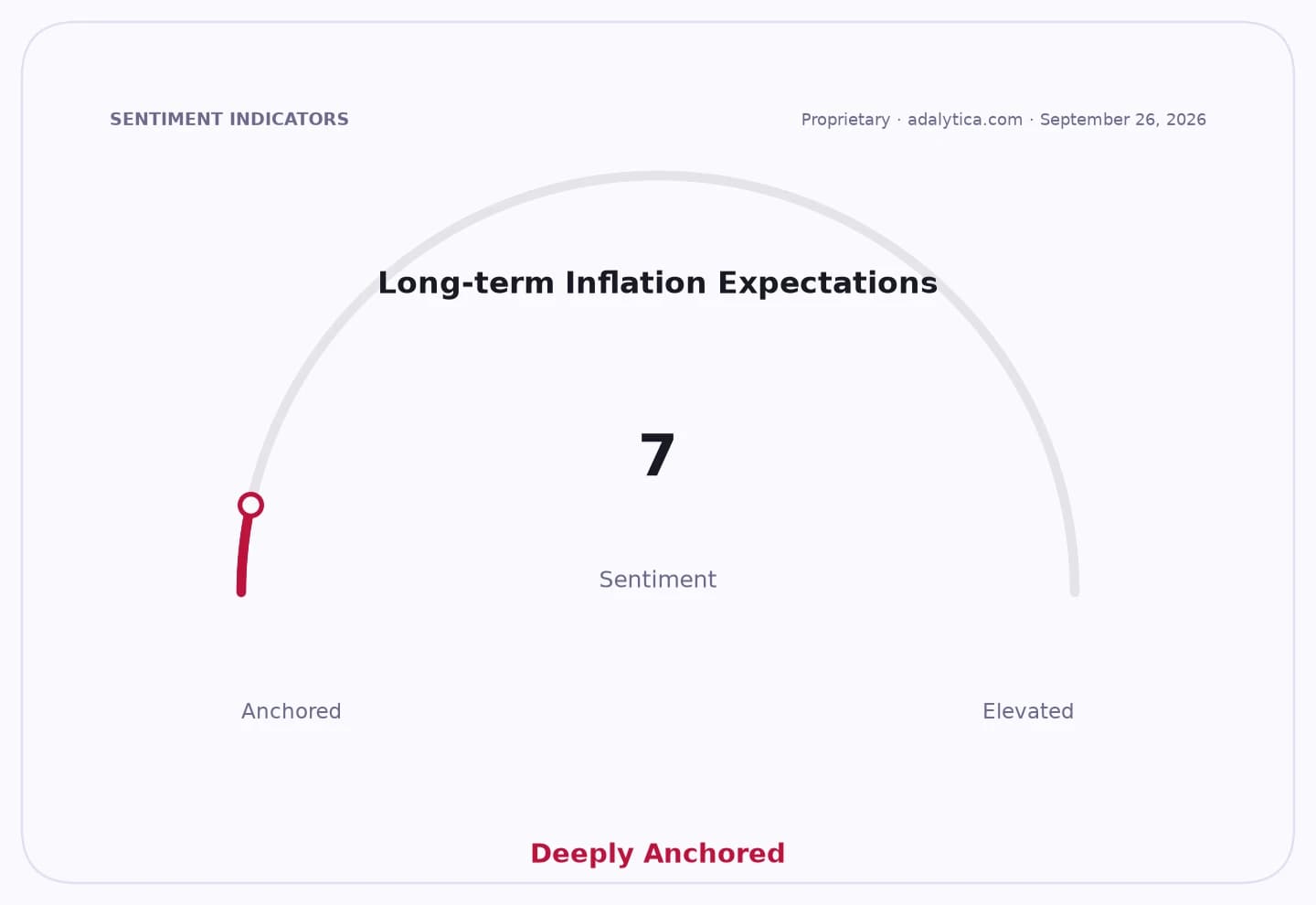
Sentiment IndicatorsⓘProprietary · adalytica.com · July 30, 2026
This is a snapshot — live sentiment, awareness and momentum for 130+ markets update continuously in the dashboard.Open AlphaPulse

The currency response was uneven. Japan’s yen proxy FXY slipped to 56.13 on July 29 and technical readings remained weak, with the fund still below both its 50-day and 200-day moving averages. In Latin America, Brazil’s EWZ ETF fell 0.8% to 35.47 on July 29 after touching 36.05 the day before, while Mexico’s EWW dropped 1.6% to 75.57. Both remain above their 200-day moving averages, but the pullback underscores how sensitive regional stocks are to every shift in U.S. rate expectations.
For investors, the bigger point is that LatAm is still trading as a beta play on the Fed. When U.S. policy is on hold and Treasury yields are stubbornly high, the market rewards countries and companies with cleaner balance sheets, dollar revenues and export exposure, while punishing rate-sensitive domestic sectors. That explains why mixed currencies can coexist with weaker equities: FX is reacting to local fundamentals and trade balances, but stocks are reacting to global discount rates and capital flows.
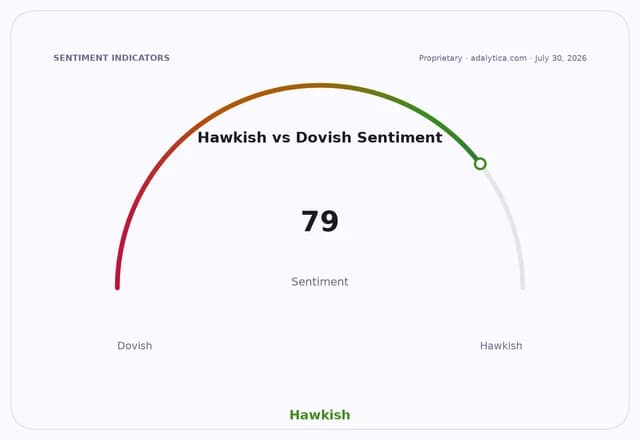
Adalytica’s Hawkish vs Dovish Fed Policy Sentiment gauge underscores that tension. The reading sat at 79, or “Greed,” with awareness at 96, “Extreme Greed,” after a sharp daily pullback. In plain English, traders are still positioned for a relatively hawkish Fed outcome even if the next move is not an immediate hike. That keeps the bar high for a sustained LatAm rally.
The investable implication is straightforward: the market underestimates the duration of this regime. If the Fed stays on hold while U.S. yields remain near 4.6%, LatAm equities are likely to stay choppy and currencies will continue to diverge rather than move in a clean risk-on line. The opportunity is not in chasing the broad index higher; it is in owning the exporters, commodity earners and rate-insulated franchises that can compound even when capital is cautious. For now, that argues for selectivity over index beta in Brazil and Mexico, and for using any dollar strength to build positions rather than to run from the region altogether.
| Entity | Gains | Losses |
|---|---|---|
| U.S. Treasury bulls | ▲Higher yield support | ▼LatAm risk assets |
| Exporters in LatAm | ▲Dollar revenue tailwind | ▼Import-dependent firms |
| Brazil and Mexico stock buyers | ▲Selective entry points | ▼Broad index momentum |
| Dollar holders | ▲Relative-return advantage | ▼Local-currency borrowers |