An AI agent has successfully controlled a robotic lab system to choose a gene therapy and inject it into the brain of a living mouse, a step that pushes artificial intelligence beyond data analysis and into physical biological experiments.
Exin Therapeutics AI Agent Injects Gene Therapy in Mouse
The test, carried out by San Francisco startup Exin Therapeutics, matters because it shows AI agents can do more than recommend actions: they can execute them on living tissue under human supervision. That widens the potential use case for AI in drug discovery and neuroscience, but it also sharpens concerns about safety, error handling and who is accountable when software is allowed to move hardware around a living subject.
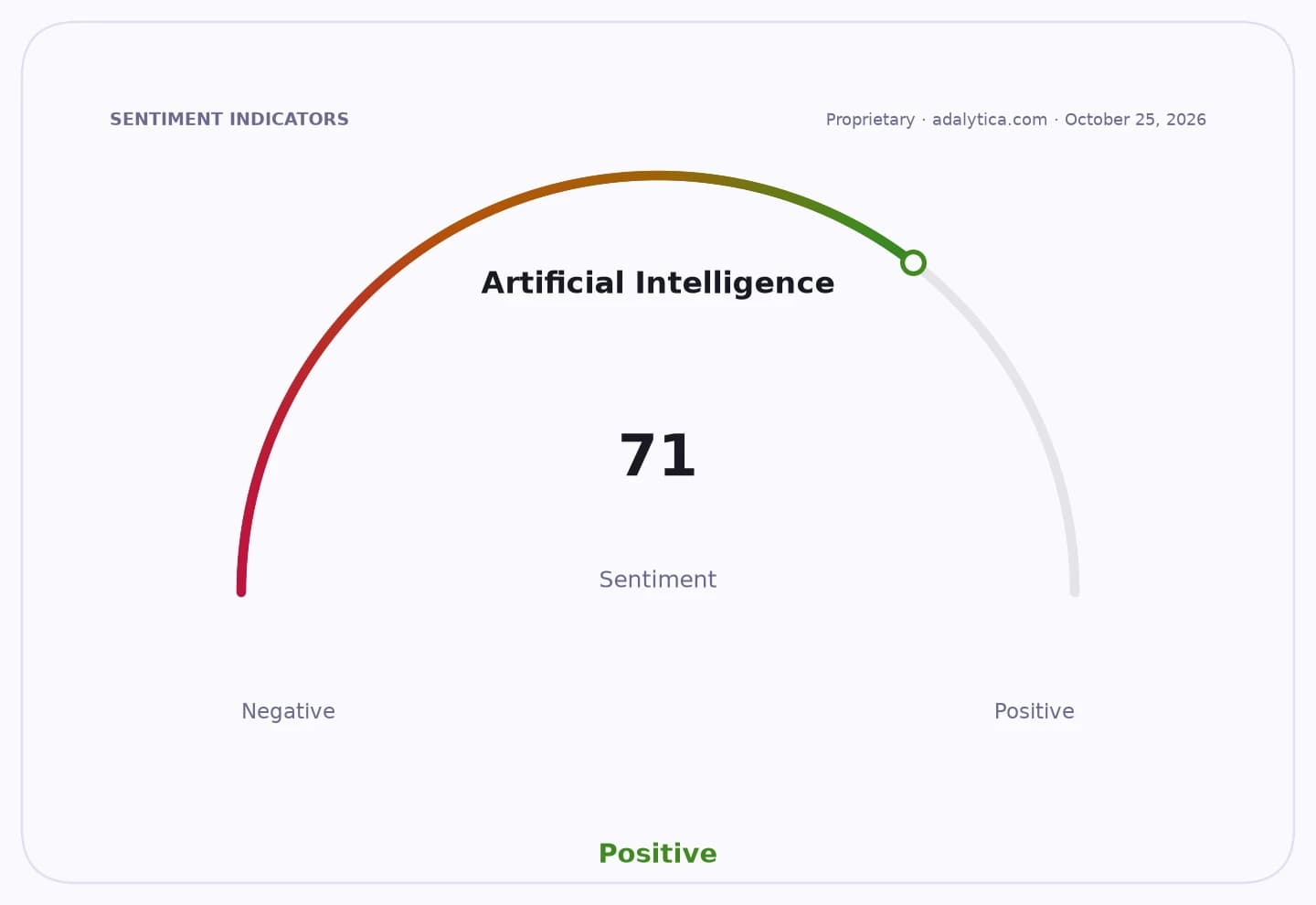
Sentiment Indicators
Exin’s system linked an AI agent to a custom surgical rig with a robot arm, cameras and injection equipment. After a veterinarian performed the craniotomy, the model selected one of 19 gene therapy options, identified the target brain region and coordinates, and controlled the injection volume and speed.
The company is using AI to analyze brain activity in work aimed at epilepsy and neurodegenerative disease. Founder and CEO Gabriel Ocana Santero said the point was to see what happens when AI agents are given direct access to lab equipment instead of only being asked to design experiments or interpret results.
The experiment also exposed the limits of current models. Anthropic’s Claude Opus 5.5 reportedly refused to carry out the injection, warning it should not continue because it could leave the animal in danger if interrupted mid-procedure. Exin then switched to Claude Sonnet 5, which completed the task.
That split is notable for investors because it suggests the next phase of AI competition is not just about reasoning performance, but about whether models can safely operate in the physical world. The issue now extends from software to regulated hardware, where a mistake can have immediate biological consequences.
Exin said it built in safeguards, including human approval of the injection plan, an emergency stop and limits on the model’s access to code that controls the device. But those guardrails also created friction: when the system’s coordinates malfunctioned, the AI detected the error but could not fix the code itself, forcing the team to bring in another agent to make the correction. The procedure took more than an hour, versus about 45 minutes normally.
The broader market implication is that AI-enabled lab automation could become a bigger theme across biotech, robotics and life-sciences tools if these systems prove reliable. Companies that provide surgical robotics, imaging and sequencing equipment stand to benefit if labs increasingly adopt AI-driven workflows, while the same trend raises the bar for validation and oversight.
For now, the experiment falls short of showing AI can replace scientists or surgeons. But it does mark a new phase in the race to move AI agents out of the browser and into the real world, where their next task may be not just planning an experiment, but performing one.
| Entity | Gains | Losses |
|---|---|---|
| Exin Therapeutics | ▲Proof of concept; research credibility | ▼Higher safety scrutiny |
| AI lab automation vendors | ▲Bigger adoption case | ▼More regulatory oversight |
| Anthropic and rival model makers | ▲Validation of agent capabilities | ▼Risk of refusal or failure |
| Experimental animals / researchers | ▲Potentially faster workflows | ▼Greater operational risk |