AstraZeneca is deepening its push into AI-driven drug discovery and automated lab work with a new $1 billion research and laboratory complex in Massachusetts and a separate collaboration worth up to $1.5 billion with AI biotech startup Insitro, underscoring how the industry is racing to replace slower, trial-and-error chemistry with machine-guided discovery.
AstraZeneca Announces $1B Massachusetts Research Site
The new Cambridge, Massachusetts site is designed to house about 1,800 workers across cardiovascular, metabolic and rare disease research, placing AstraZeneca in one of the world’s densest biotech clusters, near Harvard and alongside Moderna, Merck, Biogen and Thermo Fisher Scientific. The facility’s mix of labs and offices is meant to speed the handoff from molecule design to testing and manufacturing, with staff describing robot-filled workflows using “Star Wars” nicknames such as R2 and C-3PO.
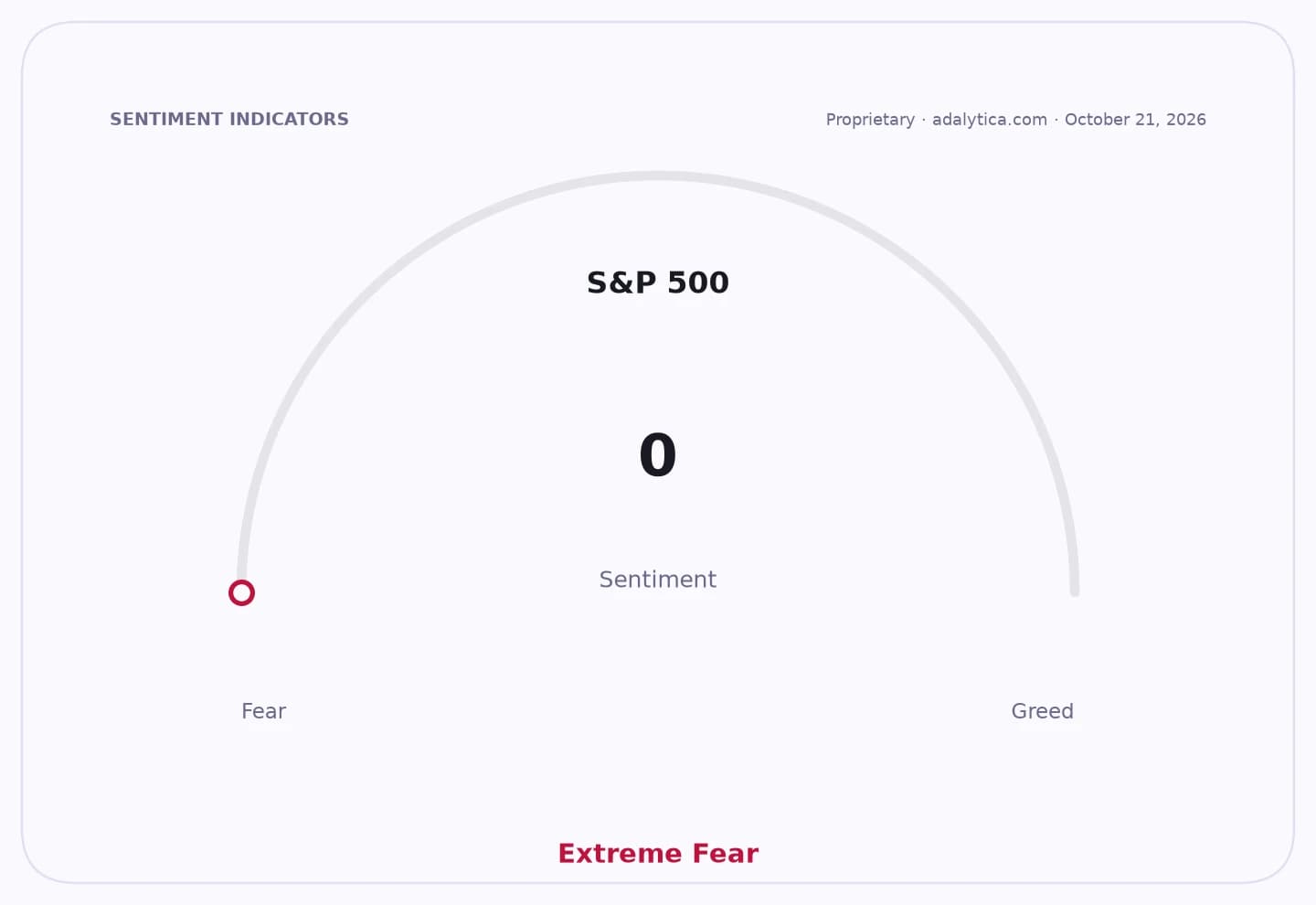
Sentiment IndicatorsⓘProprietary · adalytica.com · October 21, 2026
This is a snapshot — live sentiment, awareness and momentum for 130+ markets update continuously in the dashboard.Open AlphaPulse
For investors, the message is that AstraZeneca is spending heavily to protect and expand its pipeline at a time when big drugmakers are leaning on automation, AI and external partnerships to improve productivity and offset the high cost of R&D. The company’s Insitro pact includes $40 million upfront and as much as $1.46 billion in milestone payments tied to discovery, development and commercialization, giving AstraZeneca exposure to AI-enabled programs in hard-to-treat cardiovascular and metabolic diseases without bearing all the development risk alone.
The timing also matters for the broader biotech sector. Robotics and AI are moving from pilot projects to core infrastructure, and AstraZeneca’s capital commitment signals confidence that the payoff will come in the form of faster target discovery, better molecule design and more efficient scale-up. That could sharpen competition for talent and lab capacity in Cambridge, while putting pressure on rivals to match the same combination of in-house science and outsourced machine intelligence.
AstraZeneca shares have been trading well above their 50-day moving average, and the stock’s recent technical momentum suggests investors are already rewarding the company’s pipeline and strategic investment story. The next catalysts are likely to be data readouts, progress on the Insitro collaboration and any signs that the new site improves research throughput without worsening margins.
| Entity | Gains | Losses |
|---|---|---|
| AstraZeneca | ▲Faster discovery pipeline | ▼Higher upfront spending |
| Insitro | ▲Up to $1.46B milestones | ▼Dependence on AstraZeneca funding |
| Cambridge biotech cluster | ▲More jobs and investment | ▼Tougher competition for talent |
| Rival drugmakers | ▲— | ▼Pressure to match AI investment |