ExxonMobil’s new role in Papua LNG is already running into a basic investor problem: the gas project may be harder to finance, slower to approve and more controversial to build than the company likely wants. For long-term shareholders, that matters because a project that needs a decade of capital, permits and community support can quickly turn from a growth engine into a cash drain.
ExxonMobil Papua LNG faces financing and permit risks
Environmental lawyers representing landowners have asked ExxonMobil to rethink the Papua New Guinea development before a final government decision expected in December, warning that the plan could threaten rare species, fragile forests and mangrove coastlines. The project would require a 320-kilometre pipeline and is designed to eventually produce 5.6 million tonnes of liquefied natural gas a year. That is big enough to matter economically for PNG, where new resource projects can bring jobs, infrastructure and export income, but it is also large enough to attract intense scrutiny from regulators, lenders and activists.
Sentiment Indicators

The warning is not just about scenery. The Centre for Environmental Law and Community Rights said the project area overlaps with 27 terrestrial species already at risk of extinction, including Bulmer’s fruit bat, of which fewer than 200 adults were last counted in the wild. It also said many species in the project zone remain poorly studied, making it difficult to judge the full environmental cost. In a country where land rights and social licence matter as much as engineering, that uncertainty can become a material project risk.
ExxonMobil took over as operator in September from TotalEnergies, with Santos and Kumul Petroleum also involved. The timing is important. Exxon is stepping into a project that has already been shaped by political and financial setbacks, and it now inherits the task of turning it into something bankable. Market Forces said at least 32 banks and export credit agencies have already ruled out financing Papua LNG because of human rights, biodiversity and climate concerns. If that financing wall holds, the project could face higher borrowing costs, a longer timeline or a need for a restructuring that trims returns.
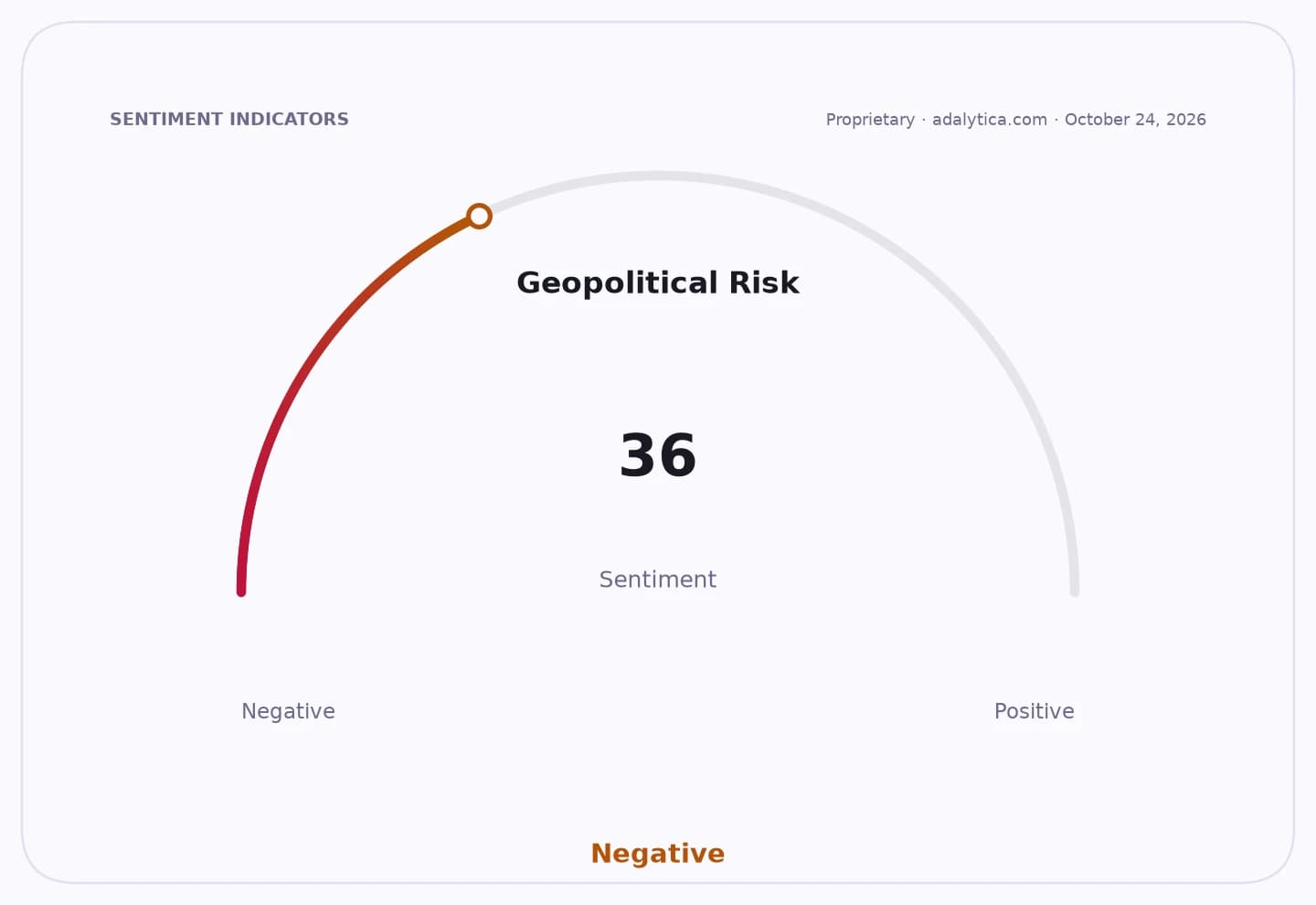
Geopolitical Risk — 30-day sentimentadalytica.com
Explore this data interactively — full history, time series and cross-market comparisons.
For Exxon investors, the key question is not whether Papua LNG is technically possible. It is whether it can be built on acceptable terms in a world where lenders are increasingly selective about long-cycle fossil fuel projects. Exxon has the balance sheet and scale to wait, but patience is not the same as certainty. The company’s shares have been trading well above their 50-day and 200-day moving averages, showing the market’s confidence in its broader oil and gas franchise, yet megaproject risk still matters because it ties up capital that could otherwise go into shorter-payback developments, buybacks or dividends.
The broader backdrop is mixed. Oil prices remain supportive enough to keep upstream investment attractive, but the combination of climate pressure, biodiversity concerns and community opposition has raised the bar for new LNG developments everywhere. That leaves Exxon with a strategic choice: push ahead and accept political and financing friction, or slow down and try to reshape the project around a more durable social licence. Either way, Papua LNG is a useful reminder that in resource investing, the biggest projects can also be the most fragile.
For investors, this is a story to watch, not chase. Exxon’s core business remains resilient, but Papua LNG is the kind of long-horizon project that can either add enduring value or become a distraction if the economics, permits and stakeholder buy-in do not line up.
| Entity | Gains | Losses |
|---|---|---|
| ExxonMobil | ▲Long-term LNG optionality | ▼Near-term project certainty |
| Papua New Guinea government | ▲Potential jobs and export revenue | ▼Environmental and political pressure |
| Local landowners and conservation groups | ▲More leverage over project terms | ▼Faster project approval |
| Banks and export credit agencies | ▲Lower exposure to controversy | ▼Potential financing fees and returns |