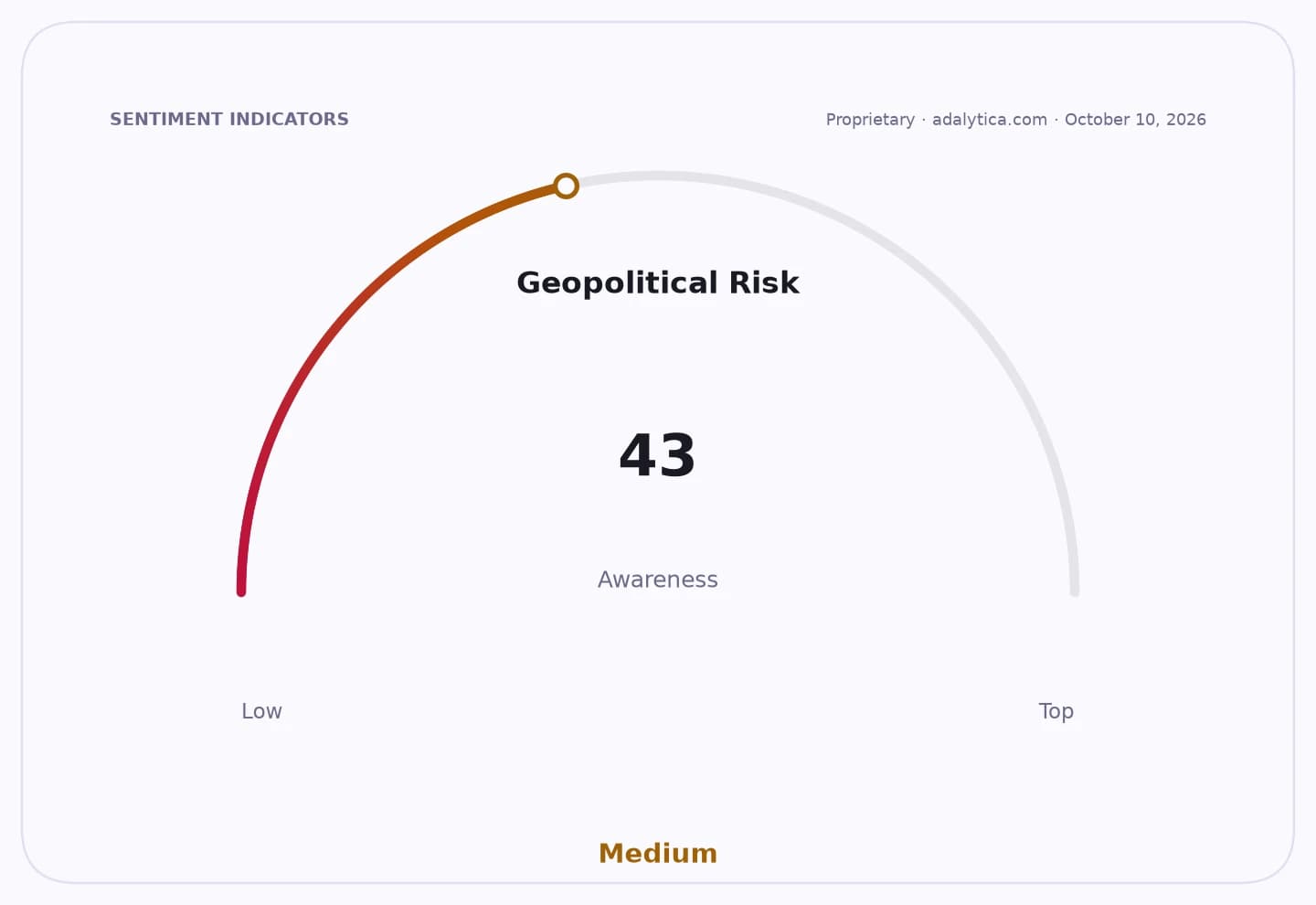
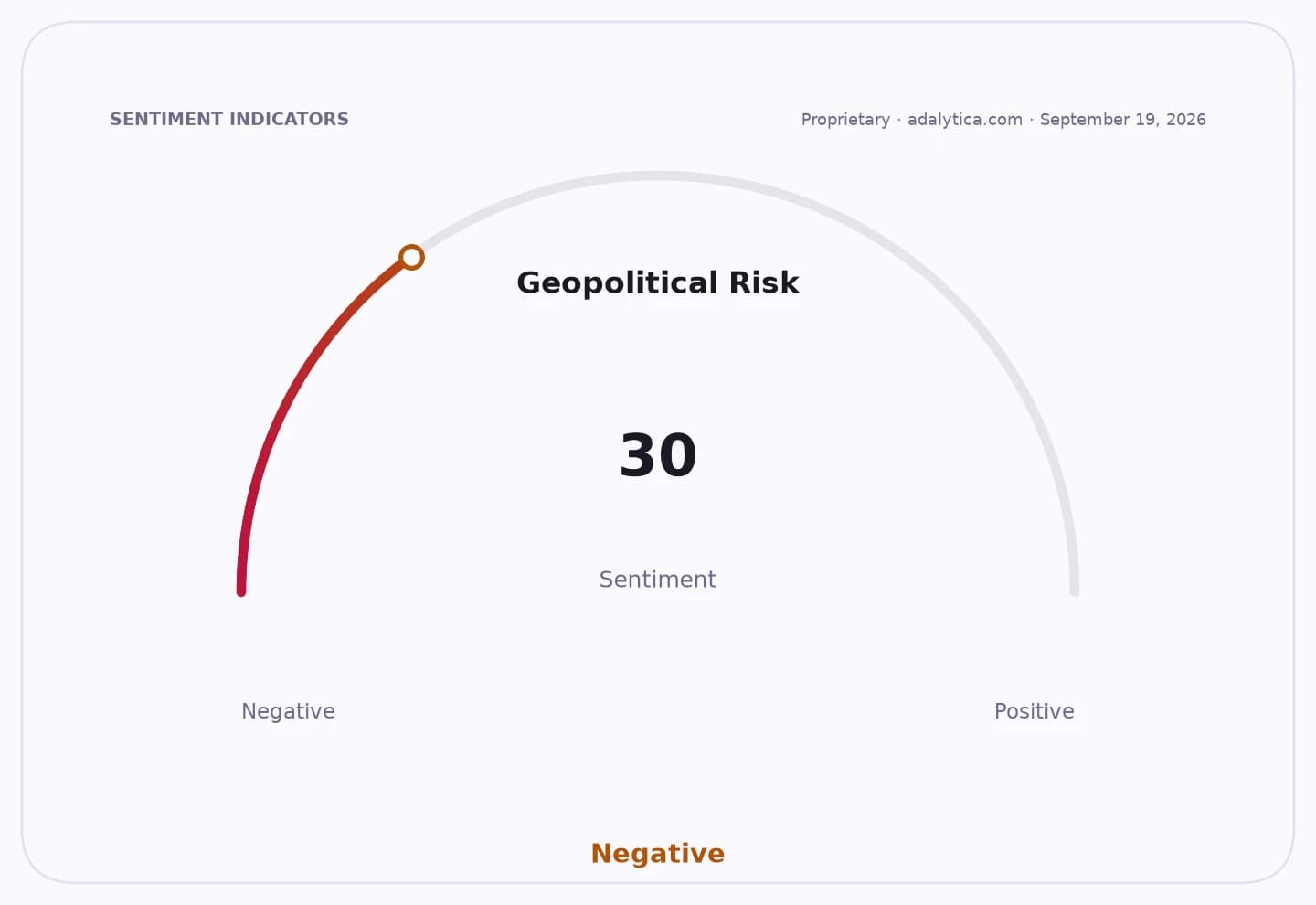
President Donald Trump’s desire to move ahead with F-35 transfers is reviving a politically charged fight over how far Washington is willing to go in using its most advanced fighter jet as a tool of diplomacy, even as the market continues to price in heavy defense spending and geopolitical risk.
F-35 transfer debate lifts defense stocks
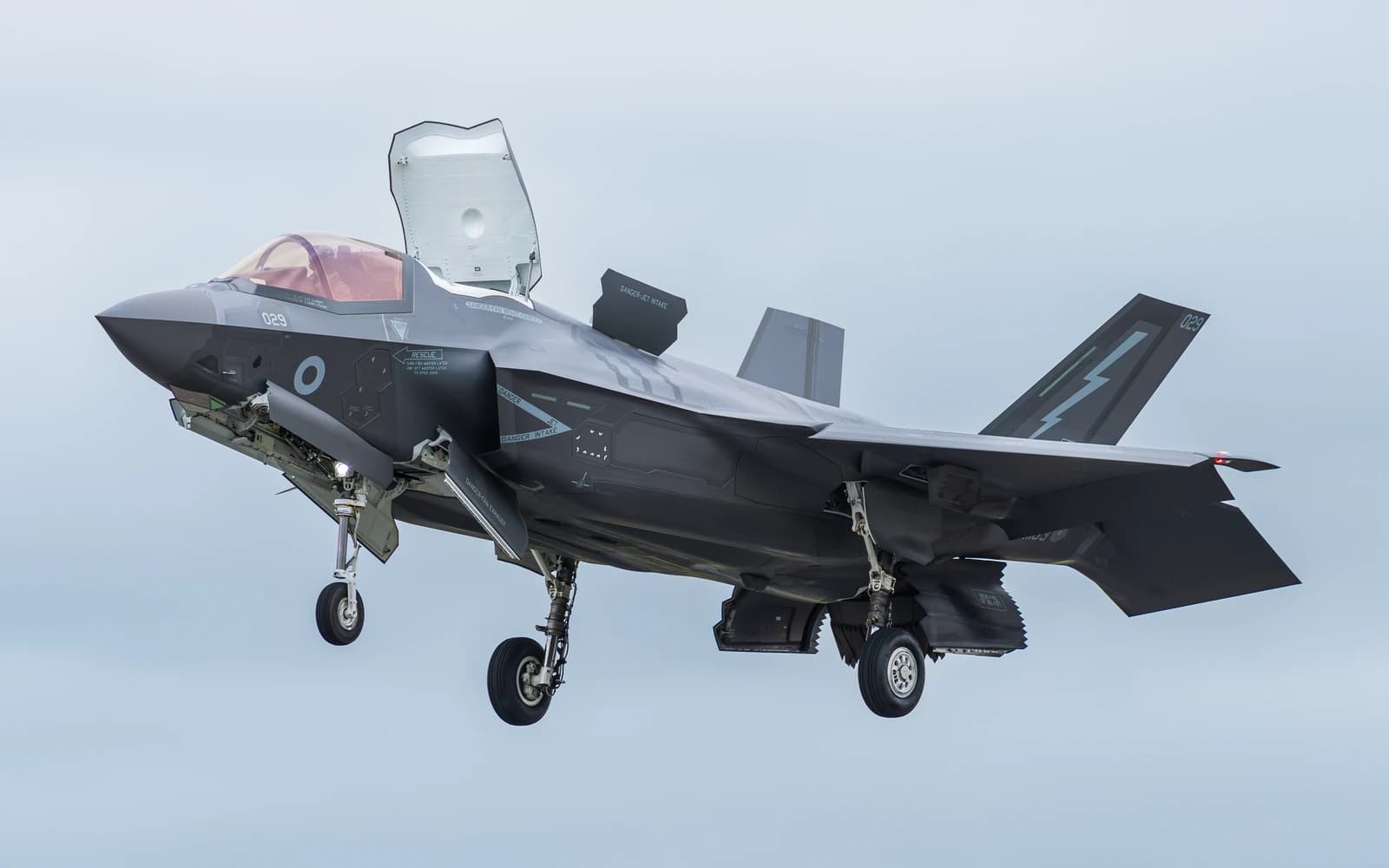
The immediate importance is not just the aircraft itself, but what the proposal says about U.S. security policy, alliance management and future orders across the Pentagon supply chain. Any change in export posture for the F-35 would matter economically because the jet anchors a multi-decade production and support ecosystem spanning Lockheed Martin, RTX, Northrop Grumman and dozens of subcontractors, while also shaping procurement decisions by foreign partners and rivals.
Sentiment IndicatorsⓘProprietary · adalytica.com · October 11, 2026
This is a snapshot — live sentiment, awareness and momentum for 130+ markets update continuously in the dashboard.Open AlphaPulse
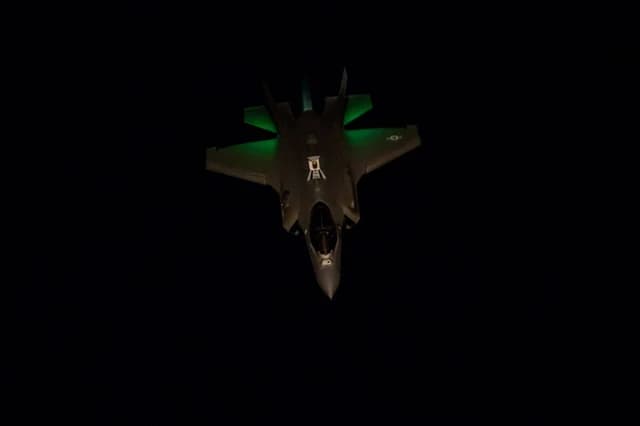
Defense shares reflected that tension at the margin. Lockheed Martin, which builds the F-35, closed at $509.59 on Oct. 9, still well below its 50-day moving average of $547.50 and 200-day average of $557.92, a sign the stock remains in a technical correction despite the long-term program’s strategic importance. RTX finished at $185.97, also below its 50-day average of $203.16, while Northrop Grumman ended at $480.72 versus a 50-day average of $530.83. All three have seen sharp swings this year, underscoring how defense equities now trade as much on policy headlines and budget expectations as on earnings.
For investors, the key question is whether a looser F-35 transfer stance would expand the addressable market for the program or simply redistribute demand and political risk. A more permissive policy could support backlog visibility and sustain revenue for years, particularly if it encourages allies to accelerate fleet upgrades. But it could also invite congressional scrutiny, worsen tensions with regional adversaries and complicate export controls, making the path to incremental sales less certain than the headline suggests.
White House Policy Direction vs LMTadalytica.com
Explore this data interactively — full history, time series and cross-market comparisons.Open AlphaPulse
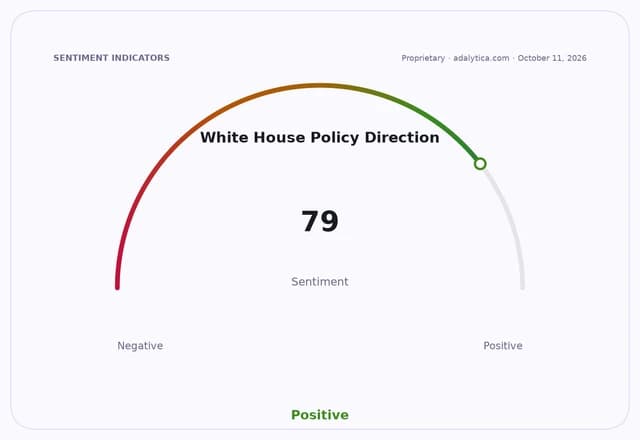
The broader narrative is a familiar one in Washington: advanced weapons systems are no longer just industrial products, but instruments of statecraft. That makes them economically significant well beyond the defense sector. If the White House is prepared to treat the F-35 as a more flexible geopolitical asset, investors will watch whether the move translates into firmer international demand, steadier production rates and stronger pricing power for prime contractors, or whether the political backlash limits the practical impact.
What happens next will depend on whether the administration follows rhetoric with approvals, and whether allies read the signal as an opening or a warning. For now, the market implication is clear: any shift on the F-35 could re-rate the defense complex, but the beneficiaries and the risks will not be evenly shared.
| Entity | Gains | Losses |
|---|---|---|
| Lockheed Martin | ▲Potential F-35 demand | ▼Export-policy uncertainty |
| RTX | ▲Sustainment and avionics work | ▼Margin pressure from delays |
| Northrop Grumman | ▲Mission-system support | ▼Weak program momentum |
| U.S. rivals | ▲— | ▼More capable allied air power |